Rosa Bonheur’s Horse Fair at the Metropolitan Museum

Rain splashed against yellow taxi cabs speeding to make the light on 5th Avenue. The umbrella’s we purchased at CVS on Queen’s Boulevard a few hours previously threatened collapse against a strong wind which roared down the city street. Central Park barricaded behind a tall stone wall gave a brief glimpse of the savage destruction the high wind and rain inflicted on the trees. Tropical Storm Lee unleashed a deluge and rivulets cascaded into the street running through metal grates to the sewer system far below. I thought about Paul McDaid and his cart horse Dream, but was sure that in the storm the carriage drivers had retreated to the stables. Unbeknownst to us, rivers were rising preparing to crest their banks, burst dams and send floodwaters into our neighbors houses back home in the Southern Tier of New York State, but in the city on September 7, 2011 it seemed like an ordinary day except for the downpour.

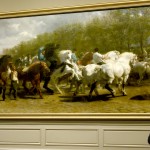
Emma and I hurried up the massive granite stairs of the Metropolitan Museum of Art, glad to have finally reached our destination. Standing in the Great Hall the noise of the pounding rain ceased as if by magic. We stepped into a long dignified line of museum goers waiting to check their belongings. The coat checker took our jackets, umbrellas and packages handing us ticket numbers; briefly we followed a crowd which quickly dispersed into many different galleries. A long, wide staircase led us to the 2nd floor where the European paintings hung. After wandering from one gallery to the next, we stopped to admire ‘The Horse Fair’ painted by Rosa Bonheur (bau-NUR). It wasn’t the first time I’d seen the painting. Many years ago when I lived in the City, I visited the Met often and always found myself admiring Bonheur’s colossal work of art.

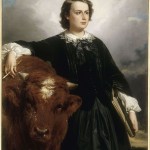
On March 16, 1822, Rosa Bonheur was born into a family of artists; destined to become the most famous female painter of the 19th century. The oldest of four children, Rosa attended an all boys school, but was expelled for being too much of a “tomboy” and disrupting the class. At eleven, her mother died and her father, a landscape and portrait painter, tried to apprentice Rosa to a seamstress but that did not work out so he decided to teach his daughter how to paint.

A unique individual, Rosa loved animals and believed all living creatures possessed a soul. She devoted her life to painting animals and in 1852 began work on ‘The Horse Fair’. She spent a year and a half sketching twice a week at a Paris horse market located on de l’Hoital Boulevard. To facilitate her work at the horse market and to appear less conspicuous, Rosa dressed in men’s attire. Besides dressing in trousers, she smoked cigarettes in public, cut her hair short and rode astride instead of using a side-saddle, all considered unladylike activities for a woman in the 19th century.

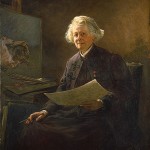
Rosa was 31 years old when she completed her famous painting and exhibited the work at the Salon. ‘The Horse Fair’ won her world recognition as well as a gold medal and financial independence. She purchased Chateau de By located in Thomery, France for a home and studio. Rosa had a menagerie which she kept at her home that included lions, gazelle, wild sheep, horses, and a stag. She worked there for forty years painting and welcoming visitors; many famous people crossed her doorstep including Buffalo Bill Cody.

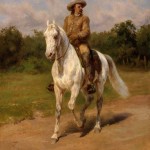
Their friendship began when Cody arrived in France with his Wild West Show to perform at the Universal Exposition of 1889. He made camp on a 30 acre compound for 5 months during which time he granted Rosa free access to the grounds. She painted and sketched Indians, buffaloes, horses and weapons producing approximately 17 paintings. To return the favor, Rosa invited Cody to her studio and painted him wearing a buckskin fringed jacket, riding a white horse. Rosa gave the painting entitled ‘The Buffalo Hunter’ to Cody as a gift which he always treasured.

The museum announced closing in 15 minutes, so we hurried to retrieve our belongings and stepped back into the storm. The rain still pounded the sidewalks, splashing asphalt and cement. A walk down 5th Avenue brought us to the subway and shelter. It wasn’t long before we boarded an Amtrak train and headed north to Albany where our car waited. The last leg of our trip brought us to a highway closure due to flooding and an arduous trip over a winding country road in the dark, but that is another story.

If you make the trip to the City check out the Metropolitan Museum of Art on 5th Avenue. Climb the staircase to the 2nd floor and have a look at Rosa’s painting. Even though ‘The Horse Fair’ was painted a hundred and fifty-seven years ago, the work of art possesses a life of its own.

Sources: Nancy Mowll Mathews, ‘Moving Pictures: American Art and Early Film 1880-1910’, (Hudson Hills Press, 2005) p. 25-28; http://en.wikipedia.org/wiki/Rosa_Bonheur;http://www.metmuseum.org/toah/works-of-art/87.25; http://www.metmuseum.org/Collections/search-the-collections/110000135;http://www.nationalgallery.org.uk/paintings/rosa-bonheur-and-nathalie-micas-the-horse-fair;http://www.arthistoryarchive.com/arthistory/realism/Rosa-Bonheur.html;http://italiangreyhounds.org/errata/2007/12/22/labourages-nivernais%C2%9D-by-rosa-bonheur/;http://www.tourism77.co.uk/heritage-culture-france/homes-of-famous-people/rosa-bonheur.htm#;http://www.artfortune.com/rosalie-(rosa)-marie-bonheur/artist-20532/

Posted in Uncategorized | Tagged , , | Leave a comment

Amish Auction and LeRaysville Cheese Factory

On August 11, I found myself in Karen Sykas’s car headed for the LeRaysville Cheese Factory located far out in the countryside where many Amish farms were situated. She turned the car towards the Athens Bridge, crossed the Susquehanna and followed Cotton Hollow Road which twisted and turned over hills and through woodlands dotted with open fields towards Warren Center, Laceyville and Leraysville. Karen knew the area well having lived for twenty years on a farm near the cheese factory.

The early morning sun hid behind a sheet of warm haze, and as we drove, the haze ascended into the sky forming cumulus clouds surrounded by a rich blue color. We were headed towards several tiny isolated villages which had withstood the march of progress and were hidden by thousands upon thousands of acres. The car traveled further and further out into the countryside where we began to see signs of the Amish. Their farmhouses clung to the gentle rolling hills and their distinctive black buggies were parked near barns.

Karen turned onto Warren Road and after a few miles we came to an Amish farm which was holding an auction. The familiar black buggies with orange caution signs tacked to the back were parked in front of a long metal building. Cars and trucks lined a parking lot near the entrance and a large crowd filled the auction house.

“Want to stop at the auction?” asked Karen.

“Sure,” I replied.

Karen pulled into the parking area. We climbed out of the car to look around and walked into the auction house, registered and received numbers written in black marker on stiff white paper. An attentive crowd sat on folding chairs watching and waiting for their chance to join in the bidding. The auctioneer’s voice rose and fell in a rhythmic melody as different types of cables and chains were sold.

“How about taking a look at the quilts?” said Karen pointing to a clothesline across the street in the yard of a farmhouse.

“Okay,” I replied.

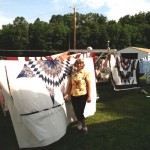
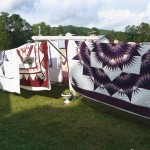
A short walk brought us to the lovely quilts hanging in the farmhouse yard. As we examined the handiwork of the Amish quilters a little girl about 5 years old walked between the hanging bedspreads. She came close to have a better look at us. The child’s mother moved quietly after the little girl straightening the quilts on the line as a couple of older girls watched from the back porch.

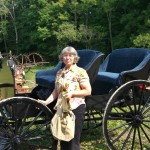
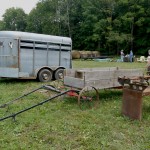
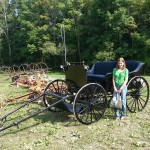
It wasn’t long before we crossed the street again and circled the building, inspecting a carriage, horse trailer and other large farm implements. We stopped at a small hen house and looked inside. On one side of the coop sat a row of nesting boxes.

“I wish they would let us have chickens in the village,” said Karen.

“That would be nice. Behind our barn there is a large piece of slate where a chicken coop stood, but now the town has an ordinance against owning them,” I said.

“Some towns let you have hens,” said Karen.

“I guess it’s the rooster’s that disturb people by crowing early in the morning,” I said.

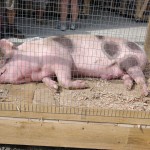
Finally, we arrived at the other entrance to the building where a large pig lay sleeping in a cage. The sun beat down on the poor creature and the animal didn’t stir. Directly behind the pig were many wire cages stacked toward the ceiling containing chickens, ducks and rabbits. The Amish were everywhere, babies, little children, adolescences, men and women. The men and boys were all dressed in dark blue pants, light blue shirts, dark suspenders and yellow straw hats, while the women, regardless of age, wore light blue dresses with white aprons and small white caps covering their hair.

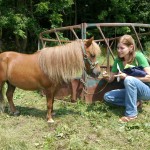
Just outside the building, I noticed a mini-horse with a pink auction sticker stuck to his hindquarters standing next to a round bale feeder. About 10 to 15 Amish men formed a circle around the feeder. They stood side by side quietly talking as the tiny horse ate hay.

“Do you think they will mind if we look at the mini-horse?” I asked.

“I don’t think they will care,” replied Karen.

As we neared the round bale feeder and the men, Karen and I realized they were not men but teenagers. The boys didn’t say anything as we petted the mini-horse and took pictures. We were careful not to point our cameras at the teens. After a few minutes, we walked back toward the auction house. Someone had moved the pig to the other side of the building, into the shade, but the auctioneer still hadn’t begun auctioning the quilts.

Karen and I walked further into the building weaving around boxes filled with household items waiting to be auctioned. We found a small opening where we stood, waited and watched. Directly in front of us a group of children stood behind a sewing machine. A very young boy sat on the sewing machine table. He wore a wide brim straw hat and had an angelic face. Before long another small child who looked like his twin came to sit beside him.

The auctioneer turned his attention to the quilts. Each quilt was carefully folded and rested on a long table. The auctioneer paused and waited for a man to clip the quilt onto a long pole suspended by a rope from the ceiling. Once the quilt was secured, the man hoisted the quilt upward until the bedspread completely opened, revealing the intricate pattern. As soon as the quilt hung before the audience the bidding began. The price of each quilt quickly rose into the hundreds and out of our price range. Many dealers won the bidding and would resell the quilts someplace else for more money.

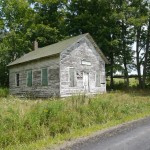
Karen and I left the auction and continued our journey towards the cheese factory. After a few miles, we stopped to take a picture of a small schoolhouse. Maple Grove School, District 7, read the sign above the door. Some of the siding was broken and we could see hay inside the structure. It must have been a long time since any children attended school there.

“I think it must have been an Amish school house,” said Karen.

“Wow, it’s so small,” I replied.

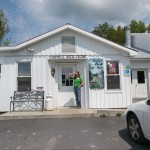
Karen and I drove a little further until we came to a small white building with the words ‘Leraysville Cheese Factory’ painted in black above the door. The cheese factory was built by a group of Old Order Amish farmers in 1978. The current owners continue the Amish tradition of hand making cheese. We entered into the neat, cozy interior and sampled a few different cheeses. The factory made and sold a wide variety of pasteurized whole milk Cheddars, Swiss, Limburger, Jack and Havarti style cheeses.

After we made our purchases we left the cheese factory and continued our journey to the Country Goose Studio where we met the energetic artist and owner, Sharon Morales. She was busy painting one of her projects. Her studio/shop was filled with unique hand painted motifs which included decorated pots and pans to hand painted furniture and saws. Sharon handed me a packet filled with fliers describing other unique shops in the area; Elmo’s Crafts, Home Textile Tool Museum, Antler Ridge Winery and many more.

Karen turned the car towards home and drove back over the hills and woodlands dotted with fields. We passed Amish farms and non-Amish farms buried within the wilds of the Endless Mountains of Northeastern PA. Our day’s adventure came to a close as we left the country life behind and returned to the populated village. Even so, we know the quieter side of life is but a short drive away.

Posted in Uncategorized | Tagged , , , | Leave a comment

Horse Flies and Other Pests

Oppressive heat and biting flies require that the horses stay in the barn at Ballentine’s Horse Heaven during the hot summer months. Horse flies pose a constant irritation and potential health problems. Outside in the pasture the flies are merciless, buzzing around the animals, landing and biting. The horses soon become annoyed by the constant attack and stand just outside the barn door waiting to get away from the ornery insects.

Johnn maintains an area in each stall where fly parasites breed and feed on the larva of pest flies which lay eggs in manure. Fly parasites are gnat-sized, nocturnal, burrowing insects which reproduce by laying their eggs in the pupa of other flies. The fly parasites kill pest flies before they hatch thus reducing their population. The system works pretty well and has eliminated most of the flies in the barn. The problem comes when we saddle up and leave the barn for a ride through the countryside.

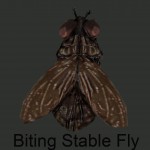
Fly spray doesn’t do much to dissuade deer flies and horse flies seeking blood to lay their eggs. They are short-horned flies which use their maxillae and mandibles in a scissor like motion to slice open their victim, drink the blood then fly off to lay their eggs. Horse flies also prey on humans and for those of us who have been bitten realize the insect’s bite is no joking matter. The open wound left by the insect bite provides an ideal place for infection. Additionally, horse flies are known to transmit Anthrax to horses and other livestock.

The biting flies have extremely good vision and locate their victims through sight rather than smell. Large dark objects attract them and as we move down the road, especially in the open near fields of tall grass, the flies make a beeline for the horse; circling, briefly landing then circling again for a another attack. The horse fly’s loud buzzing coupled with their agile flight maneuvers cause both rider and horse to become nervous. The flies hover just out of striking distance then quickly land on the rump, belly or neck of the horse. The insects can follow an animal for miles.

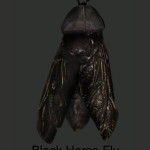
Yesterday, I met Anne Shaffer for an evening ride and brought with me an aquarium fish net which I purchased at Wal-Mart. I saddled up and gripped tightly to the net as we headed up the road. Earlier in the day, I read about short-horned flies in Stephen Marshall’s book about insects. He explained that entomologists sometimes use their collecting nets to capture and kill deer flies which attack from above and hover over a hiker’s head. This gave me the idea that a small net might help me capture and kill the huge Black Horse Flies which hover around the horse’s tail and manes often just out of reach.

“There’s one,” said Anne watching to see if I would catch it.

I saw the insect resting for a moment on Pepper’s rump near her tail. I quickly placed the net over the insect but had difficulty squishing the bug. I let the rein rest on Pepper’s neck and reached around with my other hand to grab the insect when to my surprise the horse fly wiggled out from under the net and flew off.

“It’s not as easy as I thought,” I said.

Before I could capture another horse fly with the net, Pepper swished the insect away with her tail. As we proceeded up the road, I finally managed to get a fly in my net and squished the bug. Anne just squished the pests with her hand and between the two of us we killed over ten horse flies. Once we reached the woods the sun began to set and the flies were less active. It wasn’t long before we returned to the barn and put the horses out to pasture for the night, glad to finally be rid of the flies.

Sources:
Simon and Schuster’s Guide to Insects, Dr. Ross H. Arnett, Jr., Dr. Richard L. Jacques, Jr., published Simon & Schuster, Inc. 1981; The Audubon Society Field Guide to North American Insects & Spiders, Lorus & Margery Milne, Alfred A Knopf, Inc, 1980; Insects Their Natural History & Diversity, Stephen A. Marshall, pg 395-396, Firefly Books, Ltd, 2006; http://www.gardeninsects.com/flyParasites.asp

Posted in Uncategorized | Tagged , , , , , , | 2 Comments

Skaneateles Polo

I became interested in polo when Michele Wells, the leader of my writing group, told me that when she was growing up in Unadilla people played polo at Susquahanna Stables a short distance from her home. Although I realized polo was played at Cornell University, I was surprised to hear that people played the sport off campus. After reading an article about polo in Skaneateles, a small town in the Finger Lakes Region of NY State, I decided to see firsthand how the game was played. There was no charge, all we needed to do was bring a blanket to sit on the sidelines and during intermission ‘divot’ the field, which the article stated was stomping down the upturned clumps of grass left by the running horses.

Last week, tornadoes ripped through Chemung County bringing cooler temperatures to the Valley area. Sunday morning, overcast and warm, proved just right for a ride into the park and down the trails along the Westside of the mountaintop. By the time Emma and I returned to the barn, the clouds lifted and blue skies promised a beautiful day. We headed home for a quick lunch and climbed into the car for a long ride up Route 34, through Ithaca, along Cayuga Lake until we reached East Skaneateles and the polo grounds just outside of town. The tournament was already underway when we reached the 160 X 300 yard field. Emma parked the car, we spread a blanket under a tree and sat down to watch the game.

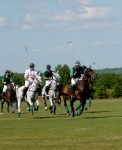
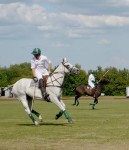
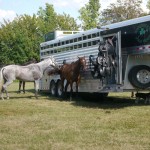
An announcer called each play as the horses rushed up and down the field towards goal posts not far from where we sat on a small knoll. Long polo mallets swung in a semi-arch over the player’s heads as the horses galloped in a tight group pursuing a white plastic ball. The horses quickly changed direction, swerving to follow the moving ball as their nimble hooves gripped the turf. The game reminded me of field hockey which I played years ago in my high school PE class. At the eastside of the polo field, trailers stood with extra horses saddled and waiting to enter the game.

The morning haze vanished except for a few puffy white clouds that floated far above us. Each team consisted of four riders. Every rider had 3 or 4 horses which allowed play to continue and the horses to have a rest between matches. The competition consisted of matches called chukkers lasting 7 1/2 minutes each. Usually a polo game had 6 chukkers, however this game only had 4.

After the game, I walked across the level field to find out more about how polo was played; not quite sure what I would find or how things worked. I came to a small pavilion where a few players sat on folding chairs. John Walsh stood talking to his team, the Shamrocks, and cordially introduced me to the players and explained the game.

“How often does the team play in Skaneateles?” I asked.

“We play here in the summer and in winter we play in Florida,” John replied.

“Do the teams that compete here consist mostly of local players?” I asked.

“Some people are local. I live not far from here, but we have teams from all over. There is a team from Ohio here today,” John said pausing for a moment then continued, “I wish I could have played but due to injuries I didn’t play in today’s tournament. It’s hard to find a replacement because the person has to have the same handicap as I do. Brandon Van Lune, a student from Cornell, came down to take my place.”

“This is the first polo game I’ve seen. I don’t really know much about the sport,” I said.

“Many people think we use ponies but the horses used in the game are Thoroughbreds. Some horses come off the track. They’re horses that didn’t make it in racing and are retrained for polo. The head of the mallet is hardwood from the root of a tree which grows in Argentina. The handle is made of manau-cane not bamboo and easily absorbs vibrations. The length of the mallet depends on the height of the horse,” said John bending the polo mallet to illustrate its flexibility.

“I’m surprised how much that bends,” I said.

“Polo is a rugged sport. The ball travels over a hundred miles per hour. It can knock out a few teeth if it hits you square in the face,” John said.

“It sounds rough,” I replied.

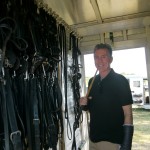
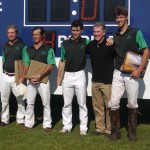
He introduced me to the team; his son, Hayden Walsh, Max Secunda an Englishman, Brandon Van Lune from Cornell, Garrick Steele from Virginia. Then Mr. Walsh showed me some of the equipment used in the game. He explained that each horse had their own saddle and bridle. The tack was housed in a large horse trailer behind the pavilion. A few minutes later, John joined his team for photos and they received trophies for winning today’s tournament. After the pictures were taken, I spoke with Hayden Walsh.

“So how long have you been playing polo?” I asked.

“Since 2004, when I was 9 years old,” Hayden said.

“And what do you like about the sport?” I asked.

“I really enjoy playing polo with my Dad. I like coming to Skaneateles in summers because there are more younger players than in Florida. Fewer and fewer young people are going into the sport. Cornell and Cortland have polo teams and many of their players compete here,” Hayden said.

“Have you played polo anywhere else?” I asked.

“I’ve been in polo matches all over the East coast, Morocco, India, Beijing China, Ireland and England. My mother foxhunts, so the whole family is very involved with horses,” Hayden said.

“That’s wonderful. Horses are amazing animals,” I said.

I thanked John and Hayden for helping me understand the game of polo and walked back across the field to our car. Secretly, I had thought the sport looked like a lot of fun, but after hearing about the dangers of being hit with the ball and possibly a mallet, not to mention falling underneath the pounding hooves of the running horses, I decided I would stay on Roundtop Mountain and enjoy tranquil rides through the wilderness. However, it was pretty exciting watching from the lawn under the shade of a pleasant tree as the horses dashed up and down the field.

Polo games are every Sunday in July and August beginning at 3:00 in the afternoon; there is no admission. The games are only cancelled due to extreme weather conditions like a thunderstorm; the teams play in a light rain as long as the field is safe. If you find yourself near Skaneateles Lake stop by and watch the game, I think you’ll be glad you did.

Sources: http://en.wikipedia.org/wiki/Polo; http://www.skaneatelesjournal.com/sports/recreation/local-family-shares-passion-for-polo/article_90b5d278-b865-11e0-a03d-001cc4c002e0.html

Posted in Uncategorized | Tagged , , , , , | Leave a comment

Summer Riding and the Heat Index

Every summer beginning in June, the horses at Ballentine’s stables are kept in the barn during the heat of the day with turn out at night. Fans are set up to circulate air when temperatures get exceedingly high. Riding routines change because of the heat; we ride either in the early morning or late afternoon when the heat breaks and the temperature drops. Before riding and after, I make sure the horse has plenty of water to prevent dehydration. Usually, I ride through Round Top Park where plenty of trees shade the gravel roads and trails. A gentle breeze often blows off the hillside and the cooler temperatures under the trees provide relief from the blazing sun. After the ride a bath helps the horse cool down.

Since the weather was unrelentingly hot, hosing off the horse became a standard routine. Cooling down Pepper provided me with a cool off too, as inevitably I got sprayed by the hose. The bath started with the horse’s feet and legs, and then I worked my way up the chest, down the neck and across the barrel. By starting with the lower extremities, the horse became used to cold water and enjoyed the bath. The scraper’s purpose was to rid excess water from clinging to the horse’s hair. If left on the horse, the excess water actually made the animal hotter.

Last month, Anne and I rode down to Murray Creek just below the barn and let the horses put their feet in the water. Pepper hated the water, but she still walked through the creek. A culvert cut under the roadway allowed the creek to flow under the street and created a small waterfall. Huge oak trees overhung the stream near a deep pool which provided a tranquil retreat from the sun’s rays. Unfortunately as the weeks passed, Murray Creek slowly dried up exposing a rocky streambed.

The extreme temperature made riding problematic. The Heat Index, a simple equation, helps riders determine how safe it is to ride in hot weather. The equation is: Temperature (F) + Relative Humidity = Heat Index. As a general rule of thumb, when the Heat Index is less than 130 it is safe to ride, at 150 you should ride less strenuously and over 180 you shouldn’t ride at all. On superhot days, the best time to ride is either in early morning or late afternoon when the temperature is cooler.

So far this summer the weather has been boiling hot. Sizzling heat scorched the entire US beginning in mid-June when the country experienced record-breaking temperatures. For intensity and duration, climatologist reported the summer heat wave broke most of the nation’s previous records. Although our region experienced extremely dry conditions, the Endless Mountain’s temperatures were in the 80’s and 90’s which was cooler than most of the nation. US Today reported that 64% of the country had drought conditions. The US Drought Monitor reported that 54% of the nation’s pastures were in poor condition and corn crops had dried up with 38% of the nation’s corn in poor to very poor condition. Are we headed for a new Dust Bowl? Environmentalists claim that these are all signs of global warming; others say the weather is simply the result of ordinary fluctuations in climate. Whatever the case may be, the extreme heat with little to no rain certainly has an impact on horses.

Sources:
NOAA National Climatic Data Center, State of the Climate: National Overview for June 2012, published online July 2012, retrieved on July 20, 2012 from http://www.ncdc.noaa.gov/sotc/national/2012/6.; http://animalscience.ag.utk.edu/Horse/pdf/HorseExpress/HrseExp%20V.21%20No.3.pdf; http://news.softpedia.com/news/This-Year-s-June-and-July-Bring-Us-Record-Breaking-Temperatures-280090.shtml;http://droughtmonitor.unl.edu/; http://www.usatoday.com/weather/drought/story/2012-07-19/drought-conditions/56345586/1

Posted in Uncategorized | Tagged , , , , , , , | Leave a comment

Horses and Motorized Vehicles on PA Roads

A couple weeks ago, I rode CJ in the park and circled towards home. The sun, low in the sky cast the setting in muted hues and not a bird or deer could be seen. A tranquil quiet rested over the countryside as dark shadows stretched across lawns. We traveled up the long hill on Sutliff Hill Road towards the barn. Suddenly at the top of the hill a light brown Jeep traveling way too fast on the gravel road headed towards us. CJ and I stood at the road’s edge, a deep ditch bordered the road and a steep cliff rose from the ditch. A cloud of dust enveloped the Jeep as the driver sped down the hill towards us. I raised my left arm in an attempt to get the driver to slow down and see me and the horse. CJ behaves unpredictably when cars come close to him, especially at high speeds. It became clear that the driver wasn’t going to slow down and I thought CJ would bolt. Dust enveloped the entire hillside and the vehicle didn’t move over. I urged CJ forward into a slow trot, held a tight rein and hoped for the best as the Jeep whizzed by us. CJ took little notice of the Jeep and I breathed a sigh of relief. A minute later another, bigger vehicle appeared at the top of the hill, traveling at high speed through the floating dust. I said to myself ‘oh crap not again’ and stuck out my arm not expecting the driver to pay any attention to me. To my surprise, this time, the vehicle stopped and I realized the driver was an Athens policeman.

“Did you see a brown Jeep go down this road?” asked the officer.

“Yes, a brown Jeep just passed me doing at least 60 mph. I tried to get her to slow down but she wouldn’t,” I said.

“Were there two people or one person in the vehicle?” he asked.

“I really can’t say for sure. I think just one person. All I could see was a silhouette of the driver against the sun and a lot of dust,” I said.

“Did you see if the Jeep turned up towards the park or turned left at the stop sign at the bottom of the hill,” he asked.

“I didn’t see which way the Jeep went,” I said.

The Officer drove off down the road in pursuit of the Jeep. CJ and I rode up the road through the dust in the fading light of day back to the barn. I hadn’t expected to be involved in a high speed chase and wondered if the policeman ever caught up with the Jeep.

Cars and horses on the road can be a volatile mix. Whenever possible, I rein my horse completely off the road and let the vehicle pass, but there are places on the road where this isn’t feasible. Most motorist, motorcycles and four-wheelers I meet on the road and trails are very cautious and careful when they approach a horse. Donna warns drivers to slow down when they come close to her while horseback riding. I have adopted her practice of waving at motorist to indicate they are traveling too fast. Most people are considerate, slow down, or pull over and completely stop for us to pass; aware that horses can be skittish around automobiles. However a few, usually the ones traveling too fast to begin with, don’t slow down (it now seems apparent that some of these people are fugitives from the law).

It’s important for motorist to remember that horses are prey animals and easily scared especially when unfamiliar events happen. Young and inexperienced horses can be flighty and unpredictable. Not all horses behave the same way; some may not mind a truck barreling past them at full speed while others will be thrown into a panic. Motorist need to respect the horse’s space, use caution when passing and not make unusually loud noises like blowing the horn.

The laws in PA give horses and horse drawn vehicles the same rights to travel on roads as automobiles. The PA Driver’s Manual states:

“Many horse-drawn vehicles are dark in color and therefore are difficult to see at dawn, dusk or night. When following or stopped behind a horse-drawn vehicle, be sure to leave plenty of room between the two(2) vehicles. After stopping, horse-drawn vehicles often roll backward, and following too close limits the horse drawn vehicle driver’s ability to see you. This will also provide adequate space for when you prepare to pass. When you pass a horse-drawn vehicle or horseback rider, do not drive too fast or blow your horn, as this may spook the horse. Also, to avoid spooking the horse after passing, be sure to leave enough space between your vehicle and the horse before pulling back into the right lane. Always remember, when on the road everyone has the same rights.”

It’s interesting to note that in PA there is a law still on the books dating back to when cars first appeared on roads. The law states:

“Any motorist who sights a team of horses coming toward him must pull well off the road, cover his car with a blanket or canvas that blends with the countryside, and let the horses pass. If the horses appear skittish, the motorist must take his car apart, piece by piece, and hide it under the nearest bushes.”

People’s perceptions certainly change over time. I will settle for motorist simply giving my horse some space on the road and I’ll move over as far as possible. Happy traveling to everyone and be safe.

Sources:
http://www.dmv.state.pa.us/pdotforms/pa_driversmanual/chapter_3.pdf; http://blog.chron.com/hoofbeats/2008/03/more-strange-horse-laws/ leapt; http://www.legalzoom.com/us-law/more-us-law/top-craziest-laws-still; http://www.businesscarmanager.co.uk/dont-put-the-car-before-the-horse/

Posted in Uncategorized | Tagged , , , , , | 2 Comments

Pueblo Indians Acquire Horses

Francisco Vazquez de Coronado began his journey from Compostela Mexico, traveling through SE Arizona, New Mexico, Texas, Oklahoma and Kansas. His quest to find Cibola, the seven cities made of gold, reportedly seen by Friar Marcos de Niza, never materialized. The cities whereabouts fell into myth and legend, while Coronado was forced to return to Mexico empty handed and heavily in debt.

The common belief that the Plains Indians acquired horses from Coronado is in all probability untrue. Coronado’s expedition of 1540-1542 utilized 558 horses; however, only 2 of the horses were mares making it highly improbable that the Indians acquired any breeding stock. Additionally, the Plains Indians had never seen horses before, nor did they know how to handle the animals. Whatever horses he lost were through injury or death.

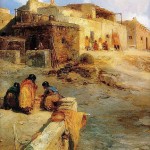
In all probability, the Indians obtained horses brought into the area by Don Juan de Onate y Salazar (1550-1626), the colonial governor of the New Spain province, New Mexico. To establish his colony Onate brought with him thousands of domesticated animals including hundreds of mares and stallions. The Spanish planned to establish a European style feudal system of peasants and serfs in the New World. On the Spanish ranches in New Mexico, the Pueblo Indians were forced to work as slaves. The colonist tried to prevent the Indians from gaining knowledge of how to handle horses; however, this proved impossible to implement as the Indians inevitably worked with the animals.

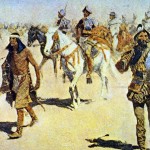
As the Indians gained knowledge of horses and horsemanship, the Spanish herds were raided. Indians began to build their own herds. In the mid 1600’s Navajos stole horses from the Spanish and the Apache traded Spanish captives for horses. However, the real windfall for the Indians came under the leadership of Pope when he and several other Pueblo leaders organized the Pueblo Revolt.

Pope sent runners to all the Pueblos. Each runner carried knotted cords which they gave to the leaders in each Pueblo. The knots signified the number of days remaining until the Indians would rise up and attack in unison. Every morning the Indian leader untied a knot, when the last knot was untied the Indians would attack the Spanish. One day before the planned attack two Tesuque Pueblo runners were captured by the Spanish and the colonist learned of the rebellion. Realizing their plans had been discovered, Pope immediately ordered the attack on August 10, 1680, before the Spanish could muster arms and put down the revolt.

The attack began in Taos with the killing of 21 of the province’s 40 Franciscan friars and 380 Spanish settlers. The Indians continued their attack throughout the New Mexican colony; killing settlers and burning their churches and ranches. The Spanish were forced to flee to Santa Fe for safe haven. In the interim Pope’s insurgents surrounded Santa Fe cutting off the city’s water supply. The New Mexico Governor, Antonio de Otermin, and all the settlers were finally forced to retreat from the colony on August 21. They headed for El Paso del Norte in Mexico leaving New Mexico free of Spanish domination.

The Pueblo Indians captured thousands of horses. They managed the herds and some horses were traded to other tribes including the Kiowa and Comanche. By 1745 French traders reported seeing the Cheyenne Indians in Kansas with horses. The horse quickly replaced the dog as beast of burden allowing the Plains Indians greater mobility and speed. Now the stage was set for the horse to become an integral part of the Plains Indian’s way of life.

Sources:
http://www.texasindians.com/horse.htm; http://en.wikipedia.org/wiki/Plains_Indianshttp://en.wikipedia.org/wiki/Plains_Indians#cite_note-3; http://www.horseoftheamericas.com/Sphrseast.pdf; http://en.wikipedia.org/wiki/Juan_de_O%C3%B1ate; http://en.wikipedia.org/wiki/Pueblo_Revolt;http://www.americanjourneys.org/aj-009b/summary/index.asp;http://www.neh.gov/news/humanities/2002-11/pueblorevolt.html
http://www.newmexicohistory.org/filedetails.php?fileID=423; http://historymatters.gmu.edu/d/6527/ establish; http://en.wikipedia.org/wiki/Francisco_V%C3%A1squez_de_Coronado; http://science.nationalgeographic.com/science/archaeology/seven-cities-of-cibola/; http://historicaltextarchive.com/sections.php?action=read&artid=736; http://www.pbs.org/weta/thewest/resources/archives/one/corona3.htm; http://www.britannica.com/EBchecked/media/88731/; http://native-way.blogspot.com/2006/08/pueblo-revolt-1680.html

Posted in Uncategorized | Tagged , , , , | Leave a comment

Training Session with Gene Fletcher and Deb Yoder – Lunging

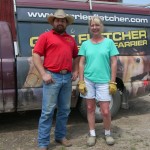
On May 24th I climbed into my SUV and headed south on Route 220. I wasn’t quite sure where I was going; a farm on Route 6 just outside West Burlington, PA near Mount Pisgah State Park. When my children were young our family enjoyed the park, so I was familiar with the road. All I had to do was look for Gene’s distinctive truck. If it was parked anywhere near the road I couldn’t miss it. A few miles after Burlington, I began to worry, and then I rounded a bend in the road and spotted the truck. I pulled into the driveway where Deb Yoder and Gene Fletcher waited for me. I was there to watch a one hour training session with Deb and her horse Willow.

A little less than two years ago, Deb’s daughter, Charrissa, decided to purchase a horse. After looking on-line at pictures of horses for sale, she saw a pretty 4 month old filly. She called the owner and decided to buy the horse. One evening, Deb and Galen Yoder, with they’re trailer hitched to a truck met Charrissa and her husband, Ed, for a trip to Germanville, Pa, where they would pick up the filly. The owner brought out Willow and lunged her. Charissa began to understand that this young filly was high spirited and excitable. She decided Willow wasn’t the horse for her; however, Deb fell in love with the dynamic foal.

“What should we do? Put her in the trailer?” asked Galen.

“Yes, put the horse in the trailer. I’ll take her,” Deb said.

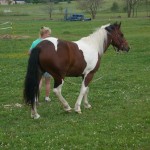
Willow began a new life on the Yoder cattle farm. Willow had her own pasture some distance from her stall in a large barn and the Angus herd. Gene Fletcher came down to trim her hooves every 8 weeks. Everyday Deb walked the filly back and forth between the barn and the pasture. One evening in June of 2011, Willow began to act up, rearing, pulling away, running around Deb, not listening and completely out of control. Finally, she managed to get the horse back in the barn. In a panic, she immediately knew who to call. Around 7 o’clock that evening, Gene pulled into the driveway in front of the barn, and Willow’s training began. Gene worked with Deb and Willow until dark.

“Willow was a wild horse, a firecracker and I felt Deb wouldn’t keep her,” said Gene.

“I always wanted a horse and love Willow. I didn’t want to give her up,” said Deb.

“Deb did all the work. I just told her what to do. I only worked with Willow in the beginning to understand what the horse was doing and why. Each horse is an individual. Before I can help the owner connect with their horse, I need to understand the horse,” said Gene.

“In the beginning, Gene came down about twice a week. There were a lot of problems to work out with the horse. Now, we have a training session twice a month or more often if I experience a problem with Willow,” said Deb.

“My method is to work with both the owner and the horse. An experienced trainer can quickly get a horse to do what he wants, but that doesn’t mean that an inexperienced owner will get the same results. I have the owner work with the horse under my instruction. That way the owner understands his/her horse and begins to build a bond with the animal. After each session, I give Deb homework to do with Willow. When I come back if they pass we go on to the next level of training, if not we work on correcting the problem,” said Gene.

“I work with Willow every day, take her out, bring her back and forth from pasture to barn, groom her, clean her feet,” said Deb.

“Willow is the cleanest horse in Bradford County,” said Gene.

“Do you work year round with Willow?” I asked.

“We don’t work in the winter, but as soon as the weather warms the work with the horse begins. This is the first training session since last fall. Right now, we are working with ground handling and lunging,” said Gene.

“How do you start?” I asked.

“I use a technique called Heeding developed by Ron Meredith from Meredith Manor Equine College where I learned to be a farrier. The method uses body language to control the horse and develop a friendship with the animal,” said Gene.

The Heeding technique is based on a simple premise; a trainer introduces a pressure to the horse then pays close attention to how the horse reacts to it. The method uses psychological techniques that the horse perceives as a shape.The best way to understand this is to watch how horses interact socially in a herd. Horse communication is based in large part on physical body language. If a horse trainer understands equine body language and uses it with the horse, he/she and the horse will come to understand each other. The trainer modifies pressure as the horse responses to his/her demands. How each horse reacts depends on the horse’s personality. Thus the more horses a trainer works with the greater his understanding of how to use Heeding.

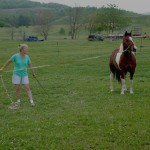
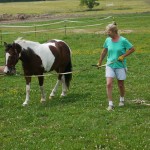
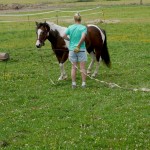
Deb walked Willow from the barn to an open pasture a short distance away. Gene and I followed. We stood some distance from the horse and owner. Deb began to lunge Willow. She started lunging by walking in a tiny circle, taking small steps, extending the lunge line, moving her body to indicate what response she wanted from the horse. The whip was held by the hilt, whip end down dragging behind her as she walked. Willow responded by matching her steps with Deb’s. She released more rope when Willow behaved. If Willow drifted toward her or wanted to stop, Deb sent her back out into the circle. She never looked directly at the horse, but where she wanted the horse to go. The horse followed Deb’s footsteps. When Deb wanted the horse to trot, Deb took small trotting steps, and then when she asked for a canter, Deb made small cantering steps at the center of the circle. To stop Willow, Deb turned her body and shoulder toward the horse, brought the whip behind her back, extended her arm and then held the whip out in front and perpendicular to the animal.

“Eventually, the whip goes away, a halter isn’t needed. Just the person alone will be able to control the horse through natural body language the horse understands,” said Gene.

“That’s amazing,” I said.

“After Willow and Deb have mastered lunging, a surcingle will be used to simulate the girth. The horse will be lunged with the surcingle on. Gradually, other things will be added; a bridle and bit, reins, blanket, saddle and finally a rider. At each step the horse will continue to be lunged and given time to accept the new addition. Once Willow is ready to accept a rider, either Deb or I will first lean on the horse’s back to make sure Willow won’t buck. The idea is that the horse should never buck. When we are sure the horse is ready to accept a rider, one of us will get on. The person on the ground will lead the horse while the other person rides. Once Willow accepts a rider, she will be lunged with a rider. At the end of the entire process the horse should be able to be ridden without a bridle or halter,” said Gene.

“How long does it normally take?” I asked.

“The process can take as little as a month or as long as 3 years. It depends on the rider and their confidence level,” said Gene.

Deb asked Willow to reverse. She exchanging hands with the whip and the lunge line. Willow turned around and began walking in the other direction. At one point Willow lost attention, stopped and looked off across the pasture. When this happened Deb pulled on the lunge line, redirecting the horse’s head toward her. Once the horse regained focus, Deb asked the horse to walk around the circle. Another time Willow made a little, hoppy buck then continued cantering.

“Many times when the horse bucks people focus on the rear end and the kicking. The important thing is to not let the horse get into position to kick, which means stay focused on the where the head is. The horse’s head needs to be turned slightly into the circle when lunging,” said Gene.

The training session came to an end. We followed Deb and Willow out of the pasture. It wasn’t long before Deb put the horse back in her stall and joined us. Gene and Deb reviewed Willow’s progress with suggestions on how to improve the horse.

“Repetition is important in working with horses. Show the horse once then repeat it. The horse helps you along the way. The horse will show you what you have to do and will bring out of you what you need to do. They are great teachers,” said Gene.

“I know when I haven’t spent enough time with Willow. The training will go downhill,” said Deb.

“Another important thing to remember when working with horses is patience. Give the horse options, the horse eventually will make up its own mind to do what you are asking it to do. For example, if you’re walking the horse to a field and the horse rears and acts up, let the horse work through that, and then still go to the field. After awhile the horse will exhaust itself and realize that acting up is a useless endeavor. The horse realizes it takes too much energy to misbehave, in the end the horse is going to have to do what you asked of it. Just don’t give up, be patient. If you give up and let the horse get away with not doing what you ask, the horse will think its behavior is ok. There will be a turning point for the owner and the horse when they begin to understand each other and lines of communication will open,” said Gene.

“Gene makes it look easy but there are subtle body motions the horse picks up on. At first none of this seemed natural. Charissa made videotapes of me lunging and working with Willow when Gene wasn’t here. The videos are helpful. I can watch and play them over and over again. That way, I can see myself and the mistakes I am making,” said Deb.

“That’s a good idea. Did you ride horses when you were growing up? I asked.

“Not really, when I was 10 years old, my uncle had a black horse which I rode a few times. The horse was a little wild. My uncle didn’t have him long, maybe a summer, and then the horse was sold. I did some organized trail riding, but didn’t like it. The horses just walked behind each other. It wasn’t really riding,” said Deb.

“I’ve done that on vacation. You’re right it’s not like having your own horse,” I said.

“The horses are used to the routine in those places. Recently I heard a concession near Wellsboro closed their business and sold all their horses. A lot of people went up there to buy horses thinking that the horses were dead broke. They paid huge prices, in the thousands for each horse. Once the horses were brought home they acted up. The animals had simply learned a routine; they walked on the same trail with a lot of other horses over and over again. When the horse was taken out of that everyday ritual, they were very different. Horses look for patterns and repetition. They’re creatures of habit and notice when something is different,” said Gene.

“That’s true, I ride Pepper in the park over the same route. If anything is different, a new bench or a picnic table has been moved, even a new road marker, she is leery of it,” I said.

“It’s always good to remember that horses are prey animals and their fear is a survival instinct. You aren’t going to completely change that. You can desensitize the fear a bit, but it will always be there. It’s important to understand their fear and think about what type of things spook a horse,” said Gene.

“Anything else we should remember?” I asked.

“Always leave the training session on a good note. At Meredith Manor we were taught that a good note equals reinforcement, a bad note equals bad behavior,” said Gene.

“When do you think Willow and Deb will be ready to take the next step in training?” I asked.

“That all depends when Deb is ready,” said Gene.

“I have purchased the surcingle. I think sometime this summer,” said Deb.

The blazing sun shone down on us as we exchanged stories, chatted small talk and enjoyed each other’s company. Before long it was time to make the long drive home. I waved farewell to Gene and Deb, pulled away from the farm and headed down Route 6, past the filling station in Burlington and on towards the junction at Route 220.

Sources:
www.meredithmanor.com and www.meredithmanor.edu

Posted in Uncategorized | Tagged , , , , | Leave a comment

Dr. Robin Rodgers – Veterinarian

The morning proved humid and warmer than usual with the thermometer pushing into the 80’s. Connie and I passed the time chatting in the barn as we waited for Dr. Rodgers’s arrival. Five horses needed their yearly vaccinations: Pepper, CJ, Sam, Myrtle and Jupiter. Connie and Dr. Robin Rodgers had known each other for many years and CJ owed his life to the country vet.

On Christmas Eve in 2003, CJ came in to the barn with a leg injury. Blood and synovial joint fluid oozed from a puncture wound near his fetlock. Immediately, Connie called the best horse vet she knew. Dr. Rodgers took the young colt to her barn, hooked him up to an IV, administered antibiotics, cleaned and drained the wound. CJ’s flexor tendon sheath was injured and infected, which in most instances results in death or serious lameness, ending with the horse being euthanized. CJ stayed on total stall rest in the vet’s barn until March, and then he returned to Ballentine’s stables. Dr. Rodgers told Connie to keep CJ on glucosamine and watch him as it is common for the infection to return. However in CJ’s case he recovered 100%, no infection or lameness, which prompted Dr. Rodgers to nickname him the miracle horse.

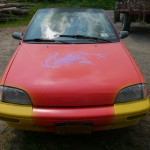
Dr. Rodgers stopped her small, sporty car in front of the barn. The reddish orange and yellow stripped convertible had a blue dolphin painted on the hood. She stepped out of the car and walked to where Connie and I waited.

“Where’s the truck?” asked Connie.

“I’m just doing shots so I don’t need any big equipment. The convertible gets 40 miles to the gallon. It’s good for the economy and the environment,” said Dr. Rodgers.

“Nice paint job,” said Connie.

“I painted it myself,” replied Dr. Rodgers.

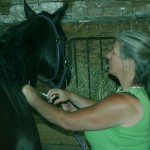
The vet took a few syringes from an insulated bag, drew vaccine and capped the needles. We followed her to Sam’s stall where Dr. Rodgers administered shots, and then proceeded to Myrtle’s stall where she quickly vaccinated the mare.

“So when did you first start with horses?” I asked.

“When I was 2 my parents put me on a carousel and I’ve been in love with horses ever since. Horses are a disease that you’re born with. There is no cure for it. It’s a lifelong affliction. I inherited the ‘horse gene’ from my Dutch grandmother. She loved horses and was the only person who could handle my grandfather’s horse,” said Dr. Rodgers.

“Didn’t your grandfather ride the horse?” I asked.

“Only when he had to, he was a General and Generals need a horse for parades and ceremonial functions. Otherwise, he didn’t have much to do with the horse. My grandmother took care of the horse and rode it when nobody was around,” replied Dr. Rodgers.

“Are you from Holland?” I asked.

“I was born there. My parents traveled around Europe for a few years and ended up in Saint Thomas. We moved to NJ when I was 6 years old. We lived next to a farmer who owned a Friesian, which is a Dutch carriage horse. When I turned 8 years old, the farmer let me gallop his horse through the woods,” Dr. Rodgers replied.

After completing a Bachelor’s of Science degree, Robin enrolled in Cornell Vet School. While attending vet school, she rented a place in Spencer. She enjoyed the beautiful countryside and culture of the Ithaca area. Dr. Rodgers decided to remain in Spencer, beginning her veterinary practice after graduation in 1995. Interested in preventive pet healthcare, she created a Wellness Wagon; a mobile clinic for dogs and cats. She parked the unit at her house and made visits to local farms. The Wellness Wagon made regular pet checkups easier and allowed Dr. Rodgers to offer affordable healthcare to pet owners. She has treated all types of animals, cows, emus, big horn sheep, lamas, and pot belly pigs to name a few. Additionally, she rehabilitates injured wildlife and has helped red-tail hawks, possums, and raccoons return to their native environments.

Ten years ago, Dr. Rodgers suffered serious injury in a motorcycle accident. She was completely paralyzed for 2 weeks. Gradually, she regained muscle control, but didn’t return to riding her motorcycle for a year. Scarring on her spinal cord prevented rotation of her neck. After corrective surgery, she began riding her motorcycle.

“The worst thing about being paralyzed was not being able to reach out and touch another person. I had to ask someone to touch me. I couldn’t even pet my dog. The accident changed my balance. I put more lightness into life and became interested in preventative medicine. I discovered the bottom of the ocean and the beauty of the underwater environment, which prompted me to buy the economy car,” said Dr. Rodgers.

Connie and I followed Dr. Rodgers to the other end of the barn where Jupiter, Pepper and CJ waited in their stalls. Connie held Jupiter and Pepper for the vet and when CJ’s turn came I held him. All the horses were calm and didn’t seem to mind the needle.

“I tell everyone to hold the horse by the lead rope. If you hold the animal by the halter and the horse pulls away or rears because he doesn’t like the shot you could pull your rotator cuff. By holding onto the lead rope, the worst you’ll get is a rope burn,” said Dr. Rodgers.

She finished with Pepper’s shots, the last horse, and walked towards the barn entrance. The sun had risen in the sky and the clock ticked past noon.

“We have a new boarder coming to the stables from Missouri. She keeps her horse in her backyard there and plans to trailer the horse herself. Anything I should tell her before she brings the horse?” asked Connie.

“It’s good she’s using her own horse trailer. The commercial truckers load a bunch of horses into their trailers and by the time the horses get to where they are going they’re all sick,” she paused for a moment then continued, “The horse should be isolated from the other horses for 5 weeks because of Strangles. She should get a health certification for Coggins since she’s crossing state-lines. I’d have her check with the states she’s crossing; every state has their own regulations.”

Stranges is caused by the bacterium, Streptococcus equi. The disease is highly contagious and causes serious infection. The disease is ably named as once the animal becomes ill pus fills the head and throat placing a strangle hold on the horse. Mucosa in the head and throat become inflamed and swollen, eyes may swell shut and infection drips from nostrils and eyes. The animal’s lymph nodes often rupture. Some call Stranges the ‘bubonic plague of horses’ and many animals die from the disease.

Dr. Rodgers and I sat in the barn near the saddle stands, grain barrels and mounting block. We talked about horses. Over a 30 year period, Dr. Rodgers has worked with horses and for the last 17 years been a vet. She owns 9 horses, including mini-horses and a 3 year old Spotted Draft which she uses for dressage.

“I do dressage, indoors in winter when the weather outside is bitter. It keeps me sane and gives me something to do. Dressage keeps the horses fit, and was originally used to train war horse’s enabling the animals to be a useful partner in battle. Any horse can do dressage. I also practice Western reining which is really a type of dressage. Recently, I rode in a 50 mile competitive trail ride in Burdett, NY. We camped, about 50 people attended,” said Dr. Rodgers.

“And what do you do with your mini-horses?” I asked.

“I hitch them to a cart and they make me laugh,” replied Dr. Rodgers.

“I used to think ‘What can you do with a mini? They are so small.’ but then I went to the NY State Fair and saw the minis compete, pulling their owners in little carts. I realized they do have a purpose other than just being a pet,” I said.

“They are a great way to stay in touch with horses when you’re old and can’t ride any longer,” said Dr. Rodgers.

“What made you decide to become a vet?” I asked.

“It’s a sad story. I wanted to help animals. I love preventive healthcare. It’s sad to see animals ill or injured and frustrating when many problems could have been prevented except for ignorance. I find the fire engine stuff depressing; arriving just in the nick of time to save an animal, seeing horses gravely injured,” replied Dr. Rodgers.

“Over the years you must have seen some tragic events,” I said.

“Recently, I cared for a horse that skinned himself on a piece of rebar attached to a concrete feeder. He peeled the skin completely off his belly, up both sides to his flanks to the hip. When I got there a massive piece of skin, still attached, hung near the horses back legs, it had blood supply and pulse so I decided to suture it back onto the horse and give him antibiotics,” said Dr. Rodgers.

“How is the horse doing?” I asked.

“He’s recovering nicely. It happened in April and 80% of the area reattached. The other section will just have to grow back. It will take some time but should be ok,” Dr. Rodgers said.

“Are flies a problem?” I asked.

“Maggots can be a problem, but actually they help by feeding on dead tissue. They clean up the wound; but Screwworm larvae are another story. They don’t stop at the dead stuff, but eat right through an animal. Luckily, they have been eradicated in the US,” Dr. Rodgers replied.

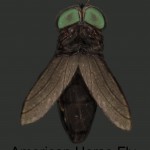
The Screwworm is the larvae of a greenish-blue fly with large reddish-orange eyes about twice the size of the ordinary housefly. After mating, the female Screwworm fly lays her eggs on open wounds. One fly can lay up to 400 eggs at a time. When the eggs hatch into larvae within 12 hours, the larvae feed on the animal eventually killing it, literally eating the animal alive. Millions of dollars have been spent by the US government to eradicate the insect. In 1966 the US eliminated the insect from within its borders and Mexico became Screwworm free by 1991. Currently, Screwworms inhabit Central America. The US and Mexico are vigilant on making sure the insect does not reappear on their soil.

I waved goodbye to Dr. Rodgers as she pulled out of the driveway; headed for another farm visit. The day rocketed into the 90’s. All the horses remained inside the barn because of the heat and would be turned out in the evening when the temperature cooled. The summer schedule had begun.

Sources: http://www.omafsa.gov.on.ca/english/livestock/horses/facts/03-037.htm; https://www.addl.purdue.edu/newsletters/2000/fall/screwworm.shtml

Posted in Uncategorized | Tagged , , , , , | 1 Comment

That Darn Goat Again

Monday proved to be hot but by afternoon the temperature cooled, the sky turned blue with white puffy clouds and a slight breeze blew off the mountain. Around 6:00, Donna and I met at the barn for an evening ride. She planned to ride Sam. He hadn’t been handled much and we wanted to know how he rode. I brushed down Pepper, slipped on her boots and saddled up.

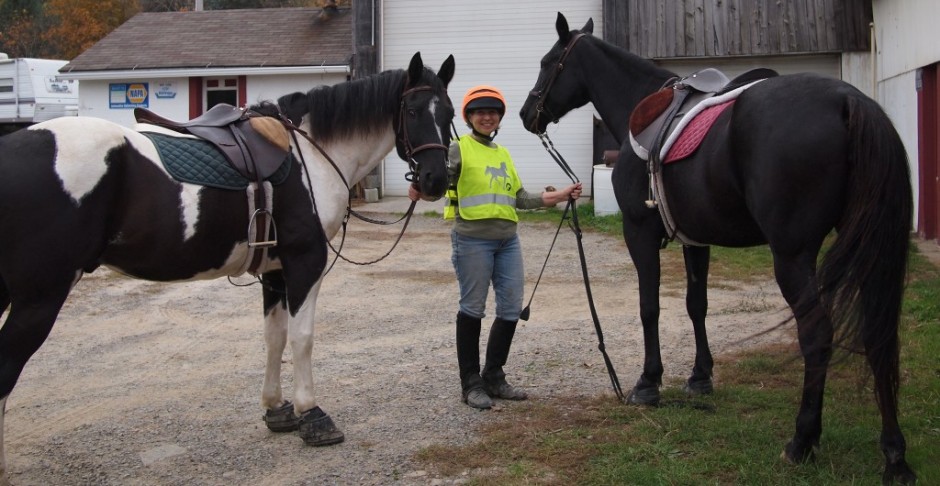
Donna led Sam, a huge aging Belgian, out of the barn. Recently, Johnn moved a larger, taller mounting block to the driveway, placing it not far from the manure pile. The mounting block proved to be incredibly useful in getting on the peaceful giant. We mounted our horses and began a memorable afternoon ride; although, the trip started out in the usual uneventful fashion.

Sam walked behind Pepper. He didn’t enjoy walking down the steep hills we needed to traverse to get to the park. On past outings, Cristina had encountered difficulty with Sam at several points on the road. Donna, a more experienced rider, found gentle encouragement with the crop and a few kicks from her heels kept the huge horse on course, although, steering seemed to be a constant activity. We enjoyed a pleasant conversation and the horses enjoyed each other’s company as we rounded the intersection near the pond and proceeded up West Park Road.

The horses passed the baseball field, picnic pavilion overlook and outhouse. The gravel road entered the woods. A combination of early spring weather interspersed with an abundance of rainfall created a dense perfusion of plant life. Bushes sported a multitude of leaves; trees overhung the lane and rabbits popped out onto the trail from their hiding places among tail grasses tipped with seeds.

Although Sam had never entered the park, he walked along at a steady even gait not worried by anything on the road, in the fields or woodlands. Pepper, ever vigilant of bogymen, walked next to the large Belgian without a problem. We stopped for a moment to exchange a few words with a couple walking their dogs and then rode up a long winding hill, passed the open entrance gate and left the park. Once out of the park, we picked up Weaver Road which twisted a short distance through the woods towards the Slocum place, but before we got there Donna experienced a minor mishap.

“Oh no, I dropped my crop,” she said.

We both looked down at the crop laying on the hard packed clay and gravel road. There was no way Donna would ever be able to get back on the huge horse if she got off.

“Maybe we could just drive back and get it?” I said.

“I’ll get it,” she said.

“You better not get off… I’ll get it.”

I jumped off Pepper, picked up the crop and handed it to Donna. Since Pepper was tall and I am short, the only way I could get onto her back without a mounting block was to lengthen my leather, which I did. I stepped into the iron and Pepper eager to continue her journey to the barn began to walk off. I pulled on the reins which didn’t do much good. Pepper kept walking. Quickly, I swung my leg over the horse’s back and sat down in the saddle. I signaled for Pepper to stop, which she did. I readjusted the leather, and then everything was right with the world and we continued our journey.

“I’m sorry,” said Donna.

“That’s ok; sometimes I have to get off if she loses one of her boots. She’s pretty good about that and waits for me to put the boot back on,” I said.

“She must know it protects her feet from the rocks,” replied Donna.

We rode on a bit further and quickly came to the Slocum driveway and pastures. At the top of a rolling hill which overlooked the lower pastures and their barn, I listened for Roxy’s familiar bleating.

“I don’t hear Roxy,” I said.

“I don’t hear her either,” said Donna.

Sam walked on in a steady march happily making his way back to the stables, totally oblivious of the new surroundings. Pepper stepped onto a wide grassy expanse between the road and the pasture’s fence. Halfway past the Slocum’s pasture, we saw a horse and a spotted pony in the field. The pony started to whinny and wouldn’t stop.

“I wonder where the other pony is? They usually hang out together,” I said.

“Probably further down in the pasture,” replied Donna.

In the distance, a group of horses and the other pony became visible as we continued riding parallel to the fence. Suddenly, we hear Roxy’s familiar bleating and saw the goat among the horses. She was pretty far away and by this time we had almost come to the end of her pasture. Suddenly, the goat began to trot towards us.

“I see Roxy and she’s coming,” I said.

“Oh, she can’t possible catch-up with us. She’s too far away,” said Donna.

The horses walked along; unaware that Roxy was headed for them. Sam plodded and Pepper moved at a faster pace. I pulled Pepper to a stop to wait for Sam, turned around in the saddle and spied Roxy making a beeline for the fence.

“Donna, Roxy’s coming!” I shouted.

Donna turned her head, saw Roxy trotting towards us and said, “That little rascal.”

Roxy ducked her head and horns under the fence and ran straight for us.

“Maybe we can out distance her…lets trot,” I said.

Sam and Pepper began to trot but it was no use the goat’s trot turned into a dead run, and then she was upon us.

“Maybe if I walk back towards the pasture she’ll follow Pepper and go home,” I said.

“It’s worth a try,” said Donna.

I turned Pepper around and walked back the way we had come. Roxy followed but when we approached the fence the goat stopped and refused to go back to her pasture.

“I don’t think she’s wants to go home,” I said.

“We’ll just have to bring her back after we put the horses away,” said Donna.

“I guess that’s all we can do,” I said.

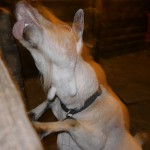
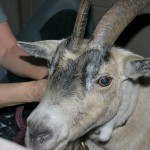
Roxy trotted between the horses. When a car approached, the goat paid no attention letting the vehicle weave around us. Roxy’s behavior left a lot to be desired. She went back and forth between the two horses making trouble. First, she ran in front of Sam, jumped up and hooked her front legs on his leg, and then started nibbling on the horse. When Sam stopped, she jumped in front of him and butted his chest with her horns. Sam paid absolutely no attention to the goat and walked on so Roxy decide to do the same thing to Pepper, this time grabbing hold of Pepper’s back leg. The horse didn’t like this and broke loose, prompting Roxy to try to get in front of Pepper. Meanwhile, Donna and I tapped the goat with our crops every chance we got. Finally, Roxy backed off enough to leave the horses alone. Our little group reached Sutliff Hill Road and turned towards the barn. Roxy hesitated for a moment and looked back up the street. It was as if the goat said to herself, ‘I’m pretty far from home, oh well, I might as well keep going. It’s too far to go back now’.

The sunset turned the clouds pink and a wind blew through the shrubs and tall weeds alongside the road. Suddenly, a deer hidden near a ditch at the road’s edge leapt up the bank and ran away towards a field. Pepper jumped, Sam just kept walking and the goat could have cared less. When we reached the creek near our pasture, I trotted up a short hill attempting to take some spunk out of the goat. Glancing over my shoulder, I saw Roxy’s little legs moving in a blur. I couldn’t believe a goat could run that fast, but by the time she reached the hilltop she was visibly tired and walked peacefully down the road towards our barn.

CJ and Shadow grazing in their pasture saw the goat approaching and picked up their heads. They quickly walked up to the fence, stood close together, one a black and white Paint and the other a dabble grey. The horses arched their necks and pointed their ears forward in Roxy’s direction. They looked like two mischievous school boys standing side by side trying to encourage the goat to chase them.

“What if Roxy goes into the pasture?” I asked.

“If she goes in there she’s on her own,” said Donna.

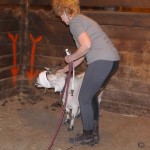
But Roxy didn’t join the pasture horses for a game of chase; instead she walked calmly next to Pepper and Sam. The horses turned the corner into the barn’s driveway and I jumped off Pepper. A stirrup keeper lay on the mounting block where I had left it. Quickly, I grabbed it intent on using the short rope with two clips on either side as a leash. Roxy walked towards me. Before she could start butting and jumping on me, I grabbed her collar, snapped on the improvised leash and led the goat with Pepper into the barn. I pushed open the empty stall door and put Roxy into Ginger’s old stall as Donna had suggested, then quickly locked the door so Roxie couldn’t get out.

Donna and I unsaddled the horses, groomed them and turned the horses out to pasture. Roxy seemed to be happy in her temporary home. Donna looked over the stall gate and down at the goat. Roxy jumped at her, rapidly sticking out her tongue in a vain attempt to attack Donna. Unfazed, Donna took a towel and tied it over Roxy’s eyes hoping to relax the goat, and then she led Roxy out of the barn. By now it was dark outside and the clouds opened up releasing rain in a torrent.

“We can try to lift her into the back of my Forerunner,” I said.

“Are you sure?” said Donna.

“It’ll be ok. My husband just came back from the dump. The black garbage bags he put down to protect the carpet are still there. Roxy should fit. Do you mind riding back there with her?” I asked.

“I can do that,” said Donna.

The rain came down heavier and heavier, but we didn’t notice as our focus was on getting the goat into the back of the SUV. Donna took hold of Roxy’s front half and I grabbed the goat’s rear-end. Not liking the fact that we were picking her up, the goat rocked backwards and forwards. I couldn’t get a good hold around Roxy’s fat belly so she tipped towards Donna.

“Maybe we can move the tall mounting block over. Do you think it will be too heavy?” asked Donna.

“Why don’t we try the smaller one first,” I said.

I ran to the barn, retrieved the small, green mounting block and placed it next to the rear of the SUV. Donna stepped into the back of the vehicle pulling the goat in behind her as I lifted and pushed Roxy’s hindquarters. The goat made it into the car and laid down next to Donna in total contentment. I turned on the ignition, flipped on the headlights and wipers and pulled away from the stables. Darkness filled the night and a heavy rain drummed on the windshield.

“How is she doing?” I asked.

“Fine, she’s very quiet. She must have ridden in a car before,” said Donna.

“That’s good. I was afraid she might give you a hard time,” I said.

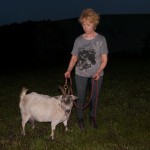
I pulled into the Slocum driveway, turned off the car, took the keys out of the ignition and ran around to open the rear door. Roxy easily jumped to the ground and Donna led her to the pasture fence where she released the goat. Roxy quietly walked away and disappeared into darkness.

“That goat is a handful,” I said.

“She sure is,” replied Donna.

We hurried back to the SUV and climbed into the front seats. I reached into my pocket for the keys but they weren’t there. I felt in the cup holder between the seats and the keys weren’t there either.

“I don’t have the keys. Maybe I dropped them when I opened the back,” I said.

I ran around the SUV, opened the back and looked into the vehicle feeling for the keys. No keys, so I looked on the wet ground near the car.

“Pat, here they are. I was sitting on them,” said Donna.

“Oh, I’m glad you found them,” I said.

I sat behind the wheel, turned the key, and heard the engine roar. We pulled out of the driveway headed for our barn. Once we arrived back at the stables, Donna climbed into her car and drove away down Murray Creek Road. I followed Donna’s car watching the red taillights flash against the black night. Rain gushed out of the darkness marking an end to our goat adventure.
Posted in Uncategorized | Tagged , , , | 1 Comment