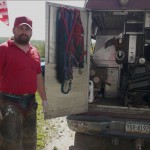
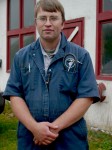
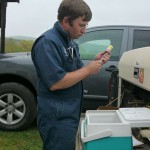
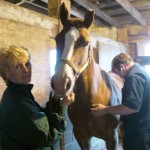
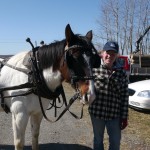
Gene Fletcher visits Ballentine’s Horse Heaven

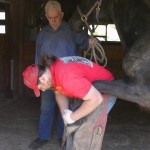
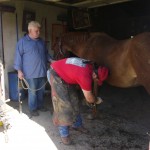
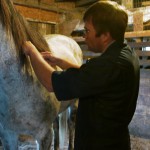
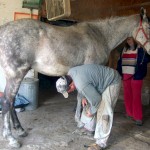
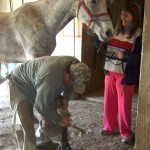
By the time I pulled my car in front of the barn, Gene Fletcher had already trimmed three of Sam’s hooves. The farrier finished up and placed the big Belgian’s hoof squarely back on the ground. He moved on to trim up Myrtle, the other Belgian in Ballentine’s barn. Her hooves were two to three times bigger than the average riding horse. One misstep and she could easily break a few toes. I watched as Gene skillfully worked on the huge mare, trimming, filing and balancing her hooves.

“How’s everything going for you?” I asked.

“Not too bad…busy,” replied Gene.

“Anything new?” I asked.

“Well, I’m going to be a guest speaker this summer at a rodeo in Benton, PA. I’m speaking about a non-profit organization called Hunters for Healing,” said Gene.

“I’ve never heard of them,” I said.

“They take disabled veterans out hunting to help them heal spiritually. They also provide hunting and fishing equipment and mentors to work one on one with the veteran. I’ve been involved with them for a year. I went pheasant and turkey hunting. Some good memories, next year they are organizing a bear hunt in Canada. I live close to their headquarters and hope to become a mentor for other post 9/11 disabled veterans,” said Gene.

Hunters for Healing was founded in February of 2009 to help wounded soldiers returning from military service in Iraq and Afghanistan. The veterans participate in a variety of outdoor programs including hunter safety, clay target shooting, pheasant and small game hunting, fishing and camping. Currently, events are in Northeastern Pennsylvania. The programs present challenges to veterans and provide social interaction with other people to help veterans transition to civilian life.

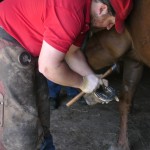
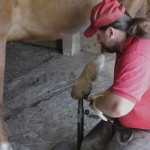
Gene moved on to the next horse, he had 4 horses to trim and 1 to shoe. Quickly, he trimmed CJ and Pepper’s hooves moving on to the last horse. Jupiter started out ok, but had a habit of pulling away towards the end of the shoeing job. Gene hammered in the first nails, secured the shoe and crimped off the sharp nail ends.

“It looks like being a farrier could be a dangerous job,” I said.

“Being a farrier isn’t that dangerous. If the horse pulls his foot out from my hand while I’m shoeing him, the nail causes a problem. Last year, Jupiter did that and the nail ripped a hole straight down the leg of my jeans,” he said.

“Well at least you weren’t injured,” I said.

“Not that time, but I have had my calf muscle cut open from a sharp nail. That’s why it’s important for horse owners to work with their horse’s and get the animals used to picking up their feet. It’s when the horse starts acting like an idiot that things can get hazardous,” he said.

Gene shod Jupiter. He gathered his tools and returned them to the truck. The morning gathered heat creating a hazy, humid grayness to the sky.

“Do you still have your on-line course?” I asked.

“I’m still doing the course through Alfred State University. I’ve been thinking about doing a horse clinic, but I have to balance my time with the farrier business,” replied Gene.

“I went to a horse training clinic at Meadowgate a few years ago. It was interesting,” I said.

“If you’re interested, I’m working with a woman and her horse in Burlington, PA. You could come down and watch,” he said.

“I’d love to!”

“I just have to check with the woman to see if it’s ok with her. I’ll call you,” he said.

“I’ll look forward to the call.”

Gene pulled his farrier truck onto Murray Creek Road and headed south for another job. Later that day, I received a phone call from Gene; it was ok for me to come to the training session. I circled May 24th and wrote ‘2 PM meet Gene’ on my calendar. A few days later, I met Deb Yoder and her beautiful Paint, Willow. But that story is for another day and another blog – watch for ‘Training Session with Gene Fletcher – Lunging’ to be released on June 27th.

Posted in Uncategorized | Tagged , , , | Leave a comment

Dr. Andy Wilcox and Spring Equine Shots

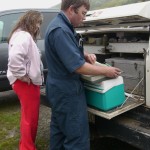
The horses at Ballentine’s Horse Heaven received shots every year to protect them from a variety of ailments. Socks and Shadow waited in their stalls. Donna Horton and Ann Shaffer passed the time brushing down their horses and chatting about local news. It wasn’t long before Dr. Andy Wilcox from Laurel Hill Veterinary Services arrived at the stables for a farm call. He backed his vehicle up to the front of the barn, and opened up the back of his truck which had all his instruments and medicines. As we watched, he prepared shots for Socks and later Shadow.

The old adage, an ounce of prevention is worth a pound of cure, is as true today as it has ever been. Each spring horses receive vaccinations to prevent the occurrence of deadly diseases which plaque the equine community. Dr. Wilcox prepared a number of shots. The first shot was 5 in 1: Rabies, West Nile Virus, Tetanus, East and West Encephalitis. The other shots were for Equine Rhinopnemonitis/Infuenza, also called Flu Rhino. As a standard, horses receive these shots once a year to avert serious diseases.

Rabies in Latin means “madness”. The disease has been known and feared by mankind for thousands of years. The virus is transmitted through saliva from an infected animal, usually from a bite. Horses get the disease by being bitten or eating food which has been infected with the virus. Any warm-blooded mammal can get and transmit the disease. Once an animal or person contracts rabies, the virus travels to the brain. It takes awhile before signs of the disease appear in the victim, but once the virus reaches the central nervous system the infection is untreatable and death occurs within a few days. The early symptoms of rabies are malaise, headache, and fever which progresses to acute pain, violent movements, uncontrollable excitement, depression and hydrophobia. Dogs receive a vaccine for rabies and a booster shot every 3 years; however, horses are given the shot every year. Occasionally, a horse is bitten by a wild animal, usually a fox, skunk, raccoon or bat. At that point, the horse is given a booster shot even if the animal has already been vaccinated, just to be on the safe side.

As everyone who enjoys the outdoor environment knows, mosquitoes are everywhere in summer. The insect is prevalent in regions with high humidity and rainfall. Mosquitoes lay their eggs in standing water which collects in old tires, gutters, birdbaths, ponds and swampy areas. The mosquito is a notorious carrier of diseases such as West Nile Virus (WNV), East and West encephalitis and malaria to name a few. When the Northern House Mosquito feeds on birds ( primarily crows and blue jays) infected with West Nile Virus, the insect acquires the virus. Once the mosquito has the virus it spreads the disease everytime it feeds on the blood of people or animals. WNV can cause encephalitis or meningitis which is an infection of the brain and spinal cord. Prior to 1999, West Nile Virus was only found in Africa, Asia, and southern Europe; currently, the disease has spread throughout the US. Once a horse has acquired the WNV there is no specific treatment; therefore, vaccination is recommended.

The source of Tetanus or Lockjaw is found primarily in soil, dust and manure; however, the spores can be found anywhere. The bacteria once introduced into living muscle tissue through a scratch or wound produce toxin which affects the brain and nervous system. The toxin result in muscle stiffness, muscle spasms, and serious breathing problems. As the disease progresses muscles become rigid and convulsions, paralysis and death may occur. Once the horse has contracted the disease there isn’t much that can be done; therefore, prevention is the best cure.

East Equine Encephalitis (EEE) is sometimes called sleeping sickness. The virus infects a wide range of animals, including mammals, birds, reptiles and amphibians. Similar to West Nile Virus, mosquitoes become carriers after feeding on infected birds. The virus increases throughout the summer as more and more animals are infected. Once infected, the virus travels through the lymphatic system to the lymph nodes. Symptoms begin with a high fever, signs of nervousness, sensitivity to sound, excitement and restlessness. As the disease progresses, brain lesions develop causing drowsiness, drooping ears, inability to swallow , restlessness, and other signs of disorientation. The mortality rate in horses is 70 to 90%. Paralysis and death occur 2 to 4 days after symptoms appear. There is no cure for the disease; however, EEE is easily prevented through vaccination.

Rhinopneumonitis is caused by equine herpes virus which almost all horses acquire during the first months of life. Once the horse is infected, the virus hibernates in the lymph nodes of the respiratory system where it lives throughout the horse’s life. The horse’s immune system keeps the virus in check. When the immune system is compromised the virus is released resulting in inflammation of the mucus lining in nasal cavities and lungs. The disease is rarely fatal, but can reoccur. Equine influenza is easily transmitted from horse to horse and has a short incubation time of 1 to 5 days. The symptoms are fever, hacking cough, runny nose and reluctance to eat or drink. The horse usually recovers within 2 to 3 weeks. The Flu Rhino shot vaccinates for both diseases.

I watched Dr. Wilcox carefully inject Socks with vaccine. He administered the first shots into the horse’s chest muscles. Through movement and exercise, the horse would eliminate whatever stiffness occurred as a result of the shot. He finished with Socks and moved on to Shadow.

“Is rabies common in horses?” I asked.

“I haven’t seen a case; most horses receive the vaccine for rabies. Many years ago, before I became a vet there was a case of a raccoon biting a horse. The horse was given a booster shot just to be on the safe side and was fine,” replied Dr. Wilcox.

“Why did you choose to become a vet,” I asked.

“I became a vet in 2005, basically following in my father’s footsteps. Before I became a vet, I helped my Dad out on farm calls. When he retired, I took over his practice,” replied Dr. Wilcox.

Dr. James G. Wilcox graduated from the University of Pennsylvania vet school in 1968 and attended a yearlong internship there. Dr. Keeler, the local vet who lived just up the street from James, unexpectedly passed away. James returned to East Smithfield to fill the need for a vet in the area. He purchased equipment, supplies and rented Dr. Keeler’s old office. In 1980, he moved and worked out of his garage until 1988 when he purchased land and built the Laurel Hill Clinic. His son, Andy, helped by assisting with farm calls. As the years passed he hired other vets to work in the practice. James witnessed a change in the community as small farms were sold and dairy herds deceased in number. When he started his practice, approximately 90% of his clients were dairy farmers. Currently, that number has dropped to about 30%. Conversely, his small animal practice has increased. Dr. Andy Wilcox joined the practice in 2005 when he graduated from the University of Pennsylvania vet school. Dr. James Wilcox retired and left the practice to his son.Laurel Hill Veternary Services cares for all types of animals; primarily cows, horses,dogs and cats.

“So where do you go from here?” I asked.

“I have other farm calls, mostly dairy farms. There are 2 other vets at the clinic. We rotate between farm calls and staying at the clinic to help small animal owners with their dogs and cats. I’m usually on the road 2 to 3 days a week. I travel in about a 50 mile radius of the clinic,” replied Dr. Wilcox.

The late morning sky remained grey. Donna turned Socks out to pasture and returned to work. The temperature began to warm as the clock ticked passed 10:00. Ann and I watched Dr. Wilcox pull his truck out of the driveway and head into the countryside to treat other horses and cows.

Sources:
http://ohioline.osu.edu/wnv-fact/pdf/1007.pdf; http://en.wikipedia.org/wiki/Rabies, http://www.laurelhillvet.com/encyc.cfm;http://www.cyberhorse.net.au/csl/tetanus.htm;
http://www.aaep.org/eee_wee.htm; http://en.wikipedia.org/wiki/Western_equine_encephalitis_virus;

Posted in Uncategorized | Tagged , , , , , , , , , | 1 Comment

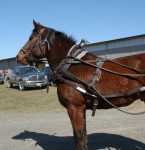
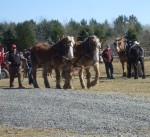
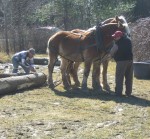
Draft Horses at Plow Days

The Endless Mountains Draft Horse Club’s annual Plow Days began early on May 5th. The sunshine melted away the early dew as horse trailers pulled into Elsbree’s field just off Route 220 not far from Top’s grocery store. I looked across the road at the field where the Blue Swan Airport used to be. New factory buildings were under construction at one end of the old runway. The ultra-lights and small planes have been gone for a long time.

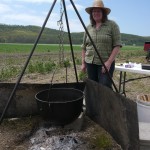
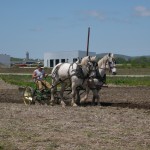
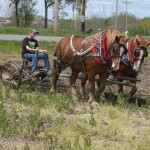
Emma and I walked by teams of horses plowing in the field, and headed towards a pavilion which covered rows of picnic tables. Not far off, Claudie Wilson prepared bean soup over an open fire the same way people did hundreds of years ago. She stood next to a three legged metal tripod which suspended a cast-iron pot called a Dutch oven. This heavy cast-iron pot was developed in the early 1700’s and remained popular well into the 1800’s.

Last year the club hosted Plow Days in a field just outside of Lockwood, NY on Route 34. Club members came from Pennsylvania and New York State to participate and demonstrate to the public how draft horses were used in farming. Besides being able to witness the horses plowing the field there were horse drawn wagon rides. The event was open to the public with free parking.

Draft horses were in great demand during the first part of the Industrial Revolution from 1750 to 1850. Animal power was needed to build America making large, heavy horses important in transportation, the building trades and essential to agricultural. The 19th Century saw the development of modern day draft horse breeds and by the 1920’s, there were approximately 26 million draft horses in the US. However, with the invention of the internal combustion engine all horses were quickly replaced on streets by the automobile. By the 1950’s tractors had replaced most draft horses except on Amish farms. Plow Days offers an exciting glimpse into the past and a splendid opportunity to see the beauty and power of the draft horse.

At the pavilion I met Alice Mark, the club secretary. I remembered Alice from last year. She and her family traveled from Groton, NY, located just north of Ithaca, to attend Plow Days. They brought their trailer and the family camped for the weekend. Her grandsons Lance and Loren Coit brought their team of black Percherons to demonstrate plowing.

“What’s going on?” I asked.

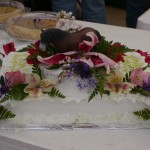
“Well, at 4:00 the club holds an auction to raise money. Carol Elsbree makes a cake for the auction which I always bid on and win. My top bid is always $30.00. Nobody wants to bid against me, except other family members. So someone in my family always takes home the cake,” said Alice showing us a beautiful cake decorated with a toy horse and flowers.

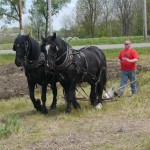
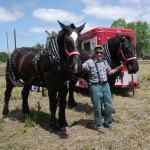
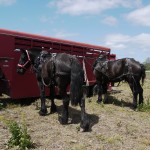
Emma and I walked further down the field where trailers were lined up. Charles Kellogg untied his Percherons from their trailer and turned them around for me to take a picture. He came from his home in New Albany, PA which is about 40 miles away to attend. For the past 7 years, Charles has been coming to the event. This year he brought his team of black Percherons, Tom and Jerry.

“Why do you come?” I asked.

“Just for the fun of it,” he replied.

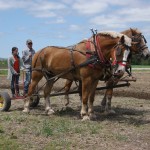
We watched a man driving a forecart pulled by a team of Belgians head down the field. I stopped for a moment to speak with Cindi McCarty.

“I come to help Robert Bundle with his horses,” said Cindi.

“Where are you from?” I asked.

“We come from Dushore. PA. I run the Red Barn Farm Market on Route 220 about a mile south of New Albany. I enjoy coming to Plow Days. It’s a great way to get together with other people who enjoy draft horses. We also come to Corn Days in the fall. At Corn Days, the men bundle the corn and load it onto wagons drawn by horses. It’s really something to see”” replied Cindi.

“I wanted to see that, but last year Corn Days was cancelled because of the flood,” I said.

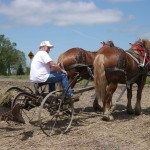
I briefly glanced over my shoulder and saw that Emma had hopped a ride on Robert’s forecart. The team of Belgians traveled up and down the field and before long stopped near where Cindi and I stood.

Emma jumped off the forecart and Robert Bundled said, “Would you like a ride?”

“Sure,” I replied climbing aboard.

I held on to a metal bar that ran along the front and side of the cart. Robert signaled the team to walk and the forecart sprang forward. I felt dwarfed by the huge horses. The uneven ground created a surprisingly bumpy ride. The horses worked in perfect unison. We traveled past other teams plowing furrows in the field.

“How long have you been working with horses,” I asked.

“I started working with horses 5 years ago. For the past 2 years, I’ve attended the Pine Valley Maple Festival organized by Maxine and Charles Kellogg. I’m not really into plowing. My team is trained to pull heavy weights,” replied Robert.

A horse pulling completion involves a harnessed team or single horse hitched to a stone-boat or weighted sled. The winner is the team which can pull the greatest weight over a short distance. The weight a horse pulls at a horse pulling competition is determined by a machine called a Dynamometer. The machine tests the maximum pulling power of the horse or team of horses. The dynamometer is set at a starting load of 1500 pounds. If a team can’t pull the weight they are removed from the competition. The remaining teams pull increasing heavy weights until a winner is determined.

“Where do you pull weights with your horses?” I asked.

“A few weeks ago I took them to the Maplefest in Troy, PA. They pulled 7,200 pounds a distance of 11 feet, a full pull is 26 feet. That’s the heaviest load any horse I’ve owned has ever pulled,” he replied.

“That is a lot of weight,” I said.

“It is but we came in last place. Out of 14 teams, the winner pulled 9,000 pounds for 26 feet. I was just happy to be there and gain the experience,” he said.

“Draft horses are really powerful animals. I didn’t know they could pull that much weight,” I said.

“Well, you can’t start out pulling large weights with a team. You have to start with small loads and build the horses up to the higher weights,” he said.

Robert stopped the forecart next to Cindi and Emma. I thanked him for the ride and stepped down. Emma and I walked back toward the pavilion, teams of horses worked in the field, and Claudia stood next to the iron kettle filled with bean soup. The afternoon turned hot but the big fluffy clouds still dotted the blue sky. We waved farewell to Alice and Claudia, and made our way back to our car parked at the side of the road. I already have plans to attend Corn Days in the fall, weather permitting.

Sources:
https://www.drafthorsejournal.com/index.php/about/drafthorsehistory; en.wikipedia.org/wiki/Horse_pullingp

Posted in Uncategorized | Tagged , , , , , | Leave a comment

Horseback Riding in South American

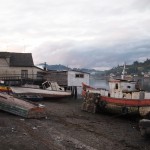
Warm, dry and windy days marked summers in Bariloche, Argentina. The picturesque ski town at the foot of snowcapped mountains and on the shores of Nahuel Huapi Lake, long ago cut by glaciers, attracted tourists from all over the world. On the southern shores of the lake, Nahuel Huapi National Park encompasses several million acres of wild landscapes within the Patagonian Andes. The town developed into a major international tourist destination during the 1940’s, attracting mountain climbers, skiers or people just looking to relax and enjoy the many restaurants, high-end designer stores, cafés, ice cream and chocolate shops. Scientist also came to conduct research at Centro Atomico Bariloche and Instituto Balseiro in the fields of technology, physical sciences, nuclear and mechanical engineering and physics. The Spanish school, La Montana, located in the center of town, offered Spanish courses and arranged for visiting students to stay with local families. Many young people from all over the world entered the school to improve their Spanish skills and then set out to explore the region.

In January of 2011, Emma waited at Kennedy airport to catch a night flight headed for Bariloche with a stopover in Buenos Aires, Argentina. After saying farewell to Mom, Dad and her favorite Aunt, she boarded the plane and set off on a 6 month adventure in Patagonia and Chile. The plane ride took over 21 hours with two stopovers, including a taxi ride between airports in Buenos Aires. When she finally arrived in Bariloche, Emma had left the frigid winter behind and stepped into a balmy summer evening.

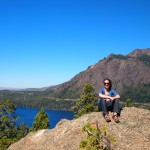
In the following days, Emma enrolled at La Montana, met her new host family and the other students at the language school. After class activities were offered at the school or students were free to explore the region on foot or by bus. A rustic ferry ride crossed the blue waters of Lake Nahuel Huapi and trails lead to glaciers in the Cerro Lopez Mountains.

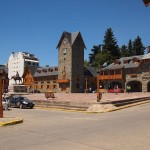
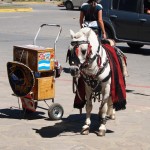
One afternoon Emma joined several girls and boarded a local bus for a short ride to El Bolson. The town sported a pond with paddle boat rentals and a counterculture craft and farmer’s market established in the 1960’s. Located in a fertile valley tucked away within the Andes and surrounded by small farms, the town had changed little in the past 50 years. The girls walked off the bus and on their way to the outdoor market saw a man standing in the street with a pony. The mini-horse decked out with a saddle and bridle stood motionless next to his owner waiting for customers. The girls were sure that the little horse was a fake; either stuffed or some type of big toy, until the tiny horse turned his head in their direction.

The pleasant summer days passed by and Emma finished school, said good-bye to her host family and friends. She bought a ticket and climbed aboard another bus. The double-decker bus traveled around the shores of Lake Nahuel Huapi towards Chiloe Island. Emma was headed for an organic farm in Chepu located just off the coast of Chile in the Pacific Ocean. For the remaining few months of her stay in South America, Emma planned to be a volunteer on small organic farms as part of the WWOOF organization. WWOOF was established as a worldwide exchange for organic farmers and volunteers. The farmers were provided with labor and the volunteers gained knowledge about organic farming and received room and board.

The bus slowed to a stop at the border crossing between Argentina and Chile. Police officers crowded the gate blocking the road and watched the bus come to a stop. All of the passengers disembarked and retrieved their bags from the storage compartment. Dutifully the travelers stood near the bus with their luggage as policemen with trained dogs walked back and forth looking for illegal drugs and smuggled goods. Without incident, the police signaled the all’s clear and everyone returned to their seats. The bus driver put the vehicle into gear, pulled away from the border crossing and entered Chile.

The modern tour bus let Emma off in Porta Montt; a small, quiet village on the Pacific Ocean. She stayed in a youth hostel for a few days, explored the town and then boarded a local bus to Chiloe Island. The old, dilapidated bus rumbled along the rural roads, crossed the lake by ferry and continued on towards Chepu.

Bus companies in Chile employed middle-aged bus drivers and young men to take tickets and made sure passengers got off at the right stop. The ticket taker helped travelers with luggage and answered questions. The young ticket taker on Emma’s bus became concerned that she didn’t know where she was going.

“Señorita ¿cuál es su destino?” asked the young man.

“Mi destino es Chepu”, replied Emma.

“¿Donde en Chepu?” he asked again.

At this point, Emma could only repeat her answer. The farmer she had communicated with and arranged to work for had simply emailed: ‘Board the bus for Chepu on Chiloe Island. When it’s time for you to get off I’ll stop the bus.’ To make matters more confusing, the ticket taker had a heavy accent and communication was difficult.

Finally, the young man turned to a venerable gentlemen with gray hair known to everyone on the bus and asked, “Señor, ¿sería usted tan amable de hablar con la joven y saber a dónde va?

The older man and Emma spoke for a few minutes, when suddenly the bus pulled over to the side of the road and a Belgian farmer climbed aboard. He stood next to the driver and peered into the dark bus full of people.

“Is Emma Miran here?” said the farmer.

“I’m Emma,” she said rising to her feet.

Jeroen, a short man with curly blonde hair in his 30’s, politely chatted with the elderly gentleman in Spanish, and then took Emma’s bags. They walked the short distance to his farm which rested on a slight knoll overlooking the scenic countryside. Built of huge picture windows, the farmhouse in essences was a glasshouse. Solar panels provided hot water and a huge cast-iron wood burning stove supplied additional heat. The glass windows let in so much sunlight that the Northern windows needed to be draped to lessen the heat. A short hike from the farmhouse stood a smaller building where WWOOF volunteers stayed. When the two reached the worker’s cabin Emma stowed her gear, and they walked back to the farmhouse for dinner.

Emma stepped into Jeroen’s home and immediately was struck by the size of the furniture. An oversized table and chairs created a fairytale quality to the rooms. The table was already set with plates, and silverware neatly engraved with Jeroen’s family name. Freshly baked bread and homemade jams graced the wooden table. The soft-spoken gentleman suggested Emma sit down as he retreated into the kitchen and retrieved the main course. He placed the food on the table and sat down.

“Why did you move to Chiloe Island?” asked Emma.

“It’s a long story. I studied languages in school. The program I enrolled in only graduated a handful of students every year. Although, I speak ten languages and passed all my foreign language exams, I failed my native language and was not chosen to pass the course. After that I entered culinary school and became a chef. I worked for a while then decided to immigrate to Australia as housing prices were extremely high at home. Before I visited Australia, I took a trip to Patagonia and found prices reasonable and fell in love with the countryside. So I purchased land and moved here,” said Jeroen.

“That’s amazing. How did you build the house?” she asked.

“I designed the house and built it with the help of local workmen. I also made all of the furniture,” he replied.

Emma smiled and wondered why all the furniture was so large but didn’t ask. She helped herself to another slice of bread.

“The bread is very good if you put a slice of cheese on it with jam,” he said passing her a bowl filled with jam.

She sliced the cheese, placed it on the bread and smeared strawberry jam on top. “Yum, this is delicious,” she said.

“Thank you, I bake bread every morning and make my own jam. The cheese is made on a neighboring farm,” he replied.

Emma worked in the fields harvesting potatoes, in large containers she planted fruit tree seeds and collected seeds from plants. Jeroen operated his farm as a minimalist; there were no animals and few crops. Like a modern day Johnny Appleseed, he planted trees and collected seeds. A few days after Emma arrived, another WWOOFer joined her. The two women worked all day in the fields and in the evening joined Jeroen for dinner.

One evening at dinner Jeroen said, “I suggest that on the weekend volunteers leave the farm and explore the local countryside. There are many interesting places to visit.”

“Where do you suggest?” asked Sarah.

“I always send people to a local bed and breakfast not far from here. They have horses and you can take a ride to the beach,” he replied.

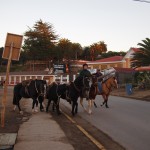
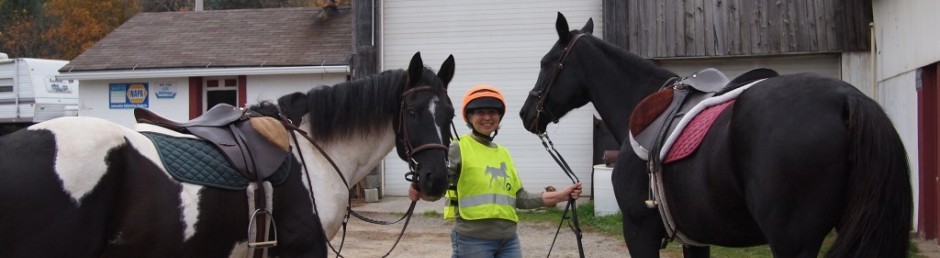
The young women threw a few things into their backpacks, boarded a dilapidated local bus and arrived at Los Senderos de Chepu. The rustic bed and breakfast was situated on a hill with views of the Pacific Ocean in the distance. Senora Enriqueta and Don Fernando, the owners, warmly greeted Emma and Sarah. Although they spoke little English, the owners were very friendly and welcoming. Emma and Sarah enjoyed the delicious meals and visited a neighboring farm which sold homemade organic cheese. The next day Don Fernando suggested the women take a half-day trip by horseback to the beach.

Fernando brought the small horses from their pasture and saddled them. The women came down from the house, ready to ride. Emma had ridden horses before, but for Sarah this was her first time.

“Emma your horse is the smallest, only 13.2 hands. Sarah’s horse doesn’t like your horse and will kick if you ride too close. Be careful and don’t fall off,” said Fernando.

“Don’t worry I won’t fall off,” said Emma.

The three riders headed for the beach. The horses slowly walked down the dirt road, with Sarah’s horse lagging behind.

“Give him a kick,” called Fernando.

Grey clouds overcast the sky. The dirt road turned into sandy dunes which lead to a small river about 3 feet deep. The river led to the beach. When the horses reached the river, they prepared to cross.

“Take your feet out of the stirrups when you enter the river. The water is deep,” said Fernando.

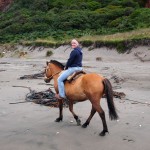
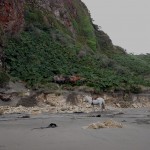
The horses crossed the river easily and made their way onto a beach dotted with towering rocks crowned with vegetation. They galloped through the surf passing fisherman with long poles, until the horses stopped. The riders dismounted and walked on foot taking photos. Sarah was glad to be on solid ground as she didn’t feel comfortable going so fast on horseback.

The time came to return home and Fernando decided to take a shortcut across a cow pasture. As soon as Emma’s horse saw the cows, the mare tried to circle and chase the cattle. Emma managed to stop the little white horse from running after the cows when suddenly a young pinto horse appeared. The yearling ran up to Emma’s horse and began following her. Sarah’s horse took an immediate dislike to the young horse and tried to kick him. Fernando and Emma took their whips to the animal trying to drive him off, but it didn’t work. The horse trailed behind trying to stay close to Emma’s horse, intent on following them home.

Suddenly, Emma’s horse took off at a dead run up a long hill leaving the other two horses far behind. Perhaps she could outrun the horse. However that wasn’t the case, the yearling simply ran alongside the little white horse until the trio arrived at the bed and breakfast and stopped. Emma gave up trying to get rid of the little pinto yearling and let her horse eat the grass until Fernando and Sarah caught up with her.

“You are a good horsewoman,” said Fernando.

Without warning, the clouds opened up and a heavy rain fell. The yearling disappeared as quickly as he had appeared, and the riders dismounted. Fernando took the horses and Emma and Sarah returned to the house.

The next morning, Sarah and Emma decided to visit the other end of Chiloe Island and stay in a local youth hostel. A friend of Enriqueta and Fernando stopped by after breakfast and offered the girls a ride in his truck.

“Can we pay you for the trip?” asked Sarah.

“No, there is no need to,” he said.

“We should give you something,” said Emma.

“Well, you can give me just one American dollar. My daughter would like to see it,” he replied.

Sarah and Emma’s stay at the youth hostel was uneventful. They sat in the hostel’s common room as the afternoon turned into evening. The women began to wonder how they would get back to the farm for another week of work. The conversation turned to their wild horse adventure, when suddenly they heard a familiar voice coming from the laundry room. A few moments later, Jeroen walked into the room.

“How was the bed and breakfast?” asked Jeroen.

“I didn’t really enjoy the horses. I’ve never ridden before and the ride was a little scary,” replied Sarah.

“Did anyone fall off?” asked Jeroen.

“No, but I could have,” replied Sarah.

“The last person I sent up there fell off the horse. Next time I’ll make sure I only send experienced riders,” said Jeroen.

“Why are you here?” asked Emma.

“I’m friends with the owner and always do my laundry on Sunday afternoons here,” replied Jeroen.

It wasn’t long before the three traveled back to the farm in Jeroen’s jeep. The weekend adventures came to a close. Sarah and Emma stayed on Chiloe Island for a week and then headed north to another farm in Chile.

Sources:
http://en.wikipedia.org/wiki/San_Carlos_de_Bariloche; http://en.wikipedia.org/wiki/Chilo%C3%A9_Island; http://wwoof.org/
Posted in Uncategorized | Tagged , , , , , , , , , , , , , , | 1 Comment

Riding Season Begins at Ballentine’s Horse Heaven

My late evening ride through Round Top park reverberated with periodic drumming produced by woodpeckers searching for grubs in dead trees. A golden sun cast long slender shadows across open woodlands illuminating a few patches of green grass surrounded by old leaves. Tender new buds just beginning to unfold sprouted from tree branches and random dogwoods offered a spray of white flowers which seemed to dance among maples and oaks.

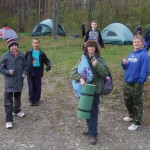
Pepper trotted up West Park road to a baseball field dotted with domed two man tents. A few Boy Scouts worked on raising their tents as others settled in for the night. Several scouts hurried over to see Pepper. After a greeting and exchanging a few words, Pepper and I headed towards the pond following power line poles. Not far up an access road sat a huge porcupine. The animal saw Pepper, turned, faced us and rose up on his back legs. He tucked in his front legs and sharp quills trembled on his back. For a brief moment Pepper looked at the creature, then continued to walk forward as the porcupine hurried for cover under dense undergrowth. It wasn’t long before I unsaddled Pepper. The evening sun ducked behind soft, blue mountains and twilight deepened shadows threatening total darkness.

Warm spring days brought people to Ballentine’s Horse Heaven to ride. Cristina came to learn basic horsemanship. She leased Johnn’s horse, Sam, a few weeks ago. Sam, an amenable Belgium, stood patiently as she brushed and saddled him; although, once outside couldn’t resist nibbling the rich green grass.

Early Monday morning, Anne Shaffer and Donna Horton came to Horse Heaven to meet with farrier, Kenny Bellis. Shadow and Socks needed to be shod for riding season. Socks received a new pair of steel shoes and quietly returned to his stall. Anne brought Shadow into an open area in front of the barn doors, for now it was his turn. Donna sat down on a grain barrel to watch. Suddenly Shadow reared straight up not wanting any part of what Kenny had to offer in the way of shoes. Donna jumped out of the way and decided it was time to head back to work.

My SUV bumped along Murray Creek road. Just before I reached the barn, Donna’s car pulled onto the lane. She steered her car towards Athens but stopped when she saw me and rolled down the window.

“I’ve got to go back to work, but we’ll ride together soon,” she said smiling.

“Sounds good to me,” I replied.

I pulled my vehicle in front of the barn and grabbed my tack from where it sat on the rear seat. Kenny already had a shoe on Shadow’s back hoof. He reached down to pick up the other hoof when I came over to watch. It wasn’t long before Shadow had his trim, new shoes and nails crimped.

“How long have you been a farrier,” I asked.

“19 years,” replied Kenny returning his equipment to the back of a mini-van.

“Mainly in the Valley?” I asked.

“Well actually I travel all over ….every 8 weeks I go to Tennessee,” replied Kenny smiling.

“Tennessee, isn’t that far to go to shoe horses?” I asked.

“About 700 miles one way….a few years ago some people from here moved to Athens, Tennessee. They asked me to come down and take care of their horses. It wasn’t long before their neighbors wanted me to shoe their horses too. So now, I travel down there every 8 weeks,” replied Kenny.

Kenny finished packing up his files, horseshoes and tool box. He turned out of the driveway headed for another barn and another job. Anne brushed Shadow and began saddling up for our morning ride while I hurried into the pasture, halter in hand, looking for Pepper. The horse picked up her head as I drew near and waited for me to slip on the halter. By the time Pepper and I arrived back at the barn, Anne and Shadow were ready to go.

Anne and I rode up Oakfield Drive past Johnn’s hayfield towards a huge barn on top of the hill. At Highland Drive we turned and galloped the horses to the top of another hill, where we reined in our mounts anticipating a steep slope on the other side of the rise. We turned left onto Meadowlack Drive. The gravel road twisted through tranquil countryside until it reached a farm. A red dairy barn sat a few feet from the road with a farmhouse directly across the lane. Here our horses hesitated, not wanting to pass a long line of black water troughs nestled next to a wire fence. Once we traveled away from the farm our horses settled down and we picked up another segment of Highland Drive. The street meandered along a mountain creek lined with evergreens and grey slate rocks stained by moss. Highland Drive ended at a stop sign. We turned Shadow and Pepper onto Mile Lane and shortly picked up Tutelow Creek road. Near the intersection of Tutelow Creek and Mile Lane a backhoe blocked our way. Two men worked positioning a drainage pipe into rocky ground near a stream. When the work crew saw us, the backhoe driver pulled his vehicle out of the road and turned off his engine for us to pass by.

“…A problem with the road?” I asked pausing a moment, letting Pepper relax next to the massive earthmoving equipment.

“Damage from the flood,” he replied.

“So much destruction,” I said.

Shadow and Pepper headed towards home. Tutelow Creek road forked and we took Dunkley Hill road which branched off to the left. A Croft delivery truck rumbled down the street towards us. I decided to hang back near the fork in the road until the truck passed. After the truck disappeared around a bend in the road Pepper trotted to catch-up with Shadow, and then the horses cantered up a long hill. At Beaver Pond road we turned right and traveled until we picked up Murry Creek road.

We had ridden in a full circle and came back to Horse Heaven. All of Shadow’s shoes still gripped his hooves. His new horseshoes didn’t give him any discomfort. Thanks to Kenny, Shadow was officially ready for riding season.

Posted in Uncategorized | Tagged , , , | Leave a comment

Pegasus the Winged Horse

For thousands of years, stories about horses have circulated among people and between cultures. There have been true and fictional stories of racehorses, faithful horses, ordinary horses, war horses and mythical horses. Perhaps one of the strangest and oldest stories concerning a horse is Pegasus, a mythical horse, created by the ancient Greeks.

Pegasus’s mother, Medusa, angered Athena by claiming that the goddess was jealous of her beauty. Another version of the tale equates Athena’s rage to Medusa having sexual relations with the god Poseidon in Athena’s temple. Whichever is the case; Athena punished Medusa by turning her into a hideous winged creature with snakes for hair. And if that wasn’t enough for good measure, the goddess cursed her so that anyone looking upon Medusa would be turned to stone.

There are several versions of how Pegasus’s father, Poseidon the god of horses and the sea, impregnated Medusa. Either by turning himself into a horse or a bird; Poseidon fathered the twins, Pegasus and Chrysasor. Of course, Pegasus’s birth wasn’t at all ordinary either. Pegasus’s life begins with a tale of maternal death and defeat.

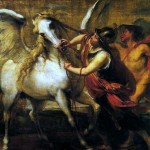
The heroic task of killing Medusa fell upon Perseus. Several gods helped Perseus by giving him magical weapons; a bronze shield which functioned as a mirror, an unbreakable sword, winged sandals, and a helmet which turned him invisible. When he beheaded the pregnant Medusa, blood gushed out of the creature’s neck, and from the blood sprang forth a boy, Chrysasor, and the winged horse Pegasus.

Now that the winged horse was alive and kicking, it was time for some adventures. The most famous tales concerned his rider, Bellerophon. Again, Athena comes into the picture giving Bellerophon a magic bit or bridle to tame the spirited horse. She also suggested the hero sacrifice a white bull to the horse’s father, Poseidon, to seal the deal. In any case, Bellerophon captures Pegasus and rides off to slay fire-breathing Chimaera.

Bellerophon made a cardinal mistake when he decided to ride Pegasus to Olympus. He believed because of his triumph over the evil Chimaera, he deserved to fly to the realm of the gods. Pegasus with Bellerophon on his back headed towards the heavens, however, the hero never made it. Zeus in his fury sent a gad-fly to bite the horse causing Pegasus to buck off his rider. Bellerophon fell back to earth; some say to his death others say that the hero wandered aimlessly as a blind hermit. In any case, Pegasus continued the flight and made it to Mount Olympus.

At Olympus, Pegasus joined Zeus’s stables becoming the mount of Eos, goddess of the dawn and Apollo, god of light and the sun. The horse served Zeus by carrying the thunder and lightning needed to make thunderbolts. Finally, Pegasus earned a place in the heavens as one of the constellations.

Perhaps fact is stranger than fiction, but in this case the Greek myth of Pegasus, the flying horse, has to be the most imaginative story I’ve ever heard. Philosophers, psychologist and scholars have had a heyday with the myth finding hidden meanings behind the story. They’ve had a long time to analyze it. Perhaps after all is said, the myth is just an extremely entertaining story which has been around for a very, very long time.

Sources:
http://www.theoi.com/Ther/HipposPegasos.html, http://en.wikipedia.org/wiki/Pegasus

Posted in Uncategorized | Tagged , , , , | Leave a comment

The Safe Way to Tie Up a Horse


There comes a time when a horse needs to be tied up, whether to momentarily restrain the horse while saddling up or leaving the horse hitched while pursuing some other activity. It’s good to know a few safety knots commonly used for tying up a horse. Most of the knots are based on the slipknot, which is probably the easiest knot to tie. The above videos teach the slipknot, slipknot with half-hitch, quick release knot, and the bank robber’s knot. All good knots to know when working around horses.

Old dried out ropes and leather are not recommended for tying up a horse. The stiff leather or rope doesn’t provide sufficient flexibility and prevents the knot from quickly releasing when pulled. Instead find a flexible lead rope which offers less resistance yet ties securely.

Even the “kid safe” horse at times may become frightened, spook or do the unexpected; therefore, the safety knot provides a fast release in such a situation. If the horse rears back suddenly, a quick release knot can prevent serious injury to the horse’s head and neck. It’s always good to remember that the horse is a prey animal and in some situations will feel the need for immediate escape, even though to us the situation may seem silly, to the horse it’s pure instinct.

Fortunately, I’ve never experienced a serious problem while hitching up a horse. I did experience a minor problem when trying to tie CJ to the outside hitching ring in order to saddle and clean his feet. He felt uncomfortable, restless and nervous. I finally decided saddling, grooming and cleaning his feet were easier in his stall than outside where he was scared. Even though I don’t tie him in the stall, I do slip the lead rope through the metal bars of the hay rack when I saddle or pick out his feet. CJ doesn’t care for the girth and on occasion has tried to nip me. If he decides to reach towards me for a little nip all I have to do is gently pull the rope and continue securing the girth. The same thing works pretty well for cleaning his hooves. Instead of CJ dancing around his stall and pulling away from me, one easy pull on the rope tells him to stay put. The rope through the hay rack allows me to decide how much head room he is going to have without having to totally restrain the horse.

The horse’s bridle is not meant for tying up the animal. There are basically two reasons for this. First, if the tied animal pulls back the bit may cause pain or injury to the horse’s mouth. Second the bridle and reins are made of thin leather which easily breaks under pressure. If a horse needs to be tied up while bridled put a halter on over the bridle and tie the horse using the halter and a lead rope.

Some trail riders ride with a halter and a bridle. When the rider dismounts to take a break on a long ride, he/she can easily tie up their horse. I have ridden with both a halter and bridle; usually the halter is placed under the bridle. When I rode this way it was mainly for extra leverage with a green broke horse. I have never been on a trail ride where I found it necessary to tie up my horse, however, for those who plan to picnic, go fishing or camp, putting on the halter seems like an excellent idea.

There are lots of interesting knots to learn and I’m sure there must be others used to tie up a horse; these are the basic knots. As with everything concerning horses, what seems simple in reality isn’t so the more you know the better. Happy trails to everyone, have fun and be safe.

Posted in Uncategorized | Tagged , , , , | 2 Comments

Karen Sykas’s Experiences with Horses

Watchung Reservation, a county park located in Union County, NJ, derived its name from the Lenni Lenape Indian word “Wachunk” meaning “high hills”. The park encompasses woodlands, open fields, lakes, streams, picnic areas, nature center, historic village, riding stables, and miles upon miles of bridle and hiking trails. Created in the 1920’s by the local community in order to preserve the area’s natural beauty, the park offers people easy access to the outdoors, including horseback riding, golfing, fishing, picnicking and hiking.

Watchung Stables, located within the Reservation and owned by the county since 1933, has provided an opportunity for all people to learn how to ride, improve equestrian skills or simply enjoy the 26 miles of bridle trails which wander through the park’s 2,000 acre forest. In 1957, the stables burnt to the ground and operated out of tents for a year until the barns and arenas were rebuilt. Plans were laid in the mid-1970’s to extend Interstate 78 through the Watchung Reservation and the stables. Environmentalist and residents opposed construction of the highway. Concessions were made, the stables relocated in 1985 to the former NIKE missile site within the Reservation, and finally the Watchung portion of I-78 opened in 1986. Currently, Watchung Stables maintains a horse barn capable of stabling 99 horses, 4 riding rings, show ring, outside hunter course and an equestrian summer camp for kids ages 9 through 17.

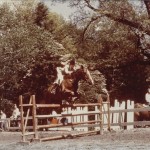
Years ago, a young 12 year old named Karen Walsh decided horses needed to be part of her life and it was her good fortune that her parents agreed. Her parents decided Watchung Stables would provide their daughter with an affordable and excellent introduction to horsemanship. And as luck would have it, the stable was located just up the road from their home. Karen began English riding lessons, and it wasn’t long before she was entering Hunter Jumping events at the many horse shows put on by Watchung and other stables in the area. Sometimes mounted troopers rode at the stables and the young girl watched the police horses execute their rider’s commands. At other times, Karen enjoyed the solitude of riding for miles on trails through the forests of Watchung Reservation.

A few years later, Karen went to summer camp for several weeks at Four Seasons Horse Farm, a private stables not far from Watchung. At Four Seasons, Karen focused on improving her seat, perfecting her equestrian skills, and expanding her knowledge of how to set the horse up for a jump. The teenager rode with other girls who shared the love of horses and dreamed of winning at horse shows.

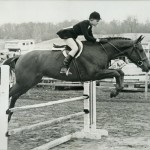
As it always seems to happen after taking lessons for a period of time and moving up through the ranks of young riders, a day comes when every experienced horseback rider needs a horse of their own. That day came for Karen when she turned 16 and became the proud owner of a 4 year old gelding named My Guy. Her new horse was not experienced in jumping so it became Karen’s job to show him the ropes. Karen soon found the horse could jump anything she tried. Even if she didn’t get him into the jump the right way, My Guy still flew over the fences. The jumps were picked up higher and higher until during a jump off at a show, the horse and rider cleared 5.6 feet.

Karen boarded My Guy at Hilltop Stables owned by Clarence Nagro and his daughter, Sandra Lobel. She continued to ride in horse shows at Hilltop, Watchung, Fox Chase and Spring Valley for trophies and ribbons. Sometimes she won and brought home the trophy and hung the ribbons in her room. The shows were governed by the rules from the American Horse Shows Association. The young riders, under the age of 18, racked up points to qualify for the ASPCA Maclay classes at the National Horse Show held at Madison Square Garden once a year.

The ASPCA Maclay was established in 1933 by Alfred B. Maclay, an ASPCA board member and president of the National Horse Show. The competition has been called the “proving ground of champions”. Many of the winners at the Maclay have gone on to compete in the Olympics with the US Equestrian Team.

Besides trail riding and horse shows, Karen rode in a couple of fox hunts in Spring Valley organized by Hilltop Stables. The sound of the hunting horn rang out on a beautiful fall day to begin the hunt. Clarence Nagro, the Master of the Hunt and an ex-steeplechaser/jockey, had the final say over all matters in the field. Of course the hounds were looked after by a kennel-man or huntsman and a whipper-in who prevented the dogs from straying. The hunt was a drag hunt, so no live fox was involved, instead a gunny sack filled with the scent of an animal was “dragged” across the field for the dogs to track. The rider needed to be prepared to jump anything in the field including fences, ditches or other obstacles.

A recession hit the country in the early 70’s creating financial problems for many people across the nation. At the time Karen had just graduated from high school and decided to take a job at a stable not far from Hilltop. My Guy was put up for sale and an older woman at Hilltop Stables purchased him to use as a jumper. Karen moved into a room at ABS Farm owned by Sandra Lobel. The days were long, about 10 hours each and never ending, that’s to say she worked 7 days a week.

Her duties were varied, from cleaning stalls, turning out the retired thoroughbred stallions, helping with lesson horses that were misbehaving, grooming, feeding and watering horses. During the NY State Fair held in Syracuse, Karen groomed and generally helped out. Sandra breed racehorses and that year didn’t get the price she wanted at auction for two of her yearlings. Karen helped teach the young horses ground manners and assisted in breaking them to ride, which included racing the thoroughbreds on a quarter mile track at the stables.

After about a year working in the stables, Karen decided it was time to move on. There was no future working there. She didn’t see herself as a riding instructor or the possibility of owning her own stables. As so many young women discover, horses don’t easily make the transition to adult life. Karen felt she would never own or be around horses again.

A few other problems haunted horse country in those days. Shortly after Karen arrived at ABS Farms a fire broke out at Hilltop Stables destroying the facility and killing My Guy. Another fire burned ABS Farms shortly after Karen left and several other stables had problems with fire. The cause for the fires was never discovered but some felt an arsonist may have been loose in the county.

Karen married, changed her last name to Sykas, began a career, had children and moved to Warren Center, PA. Suddenly, horses were in the picture again. She purchased Lexis and Leo, both Quarter Horses. Her daughter, Helena, took a few lessons at Ballentine’s Horse Heaven from Sandy Mack and when Sandy left for Minnesota, Karen was given a black pony named Misty. Sometime later, Helena lost interest in the pony, and Misty was given to another young girl in the neighborhood. A few years passed by and Karen bought a yearling name CD from her vet Robin Rogers.

Everything seemed to be running smoothly until Karen divorced and needed to sell her horses. Luckily, her sister, Dorren Deel, purchased CD and Leo and moved them to her ranch in Virginia. By that time, Lexis was lame, and the mare was given to a friend as a pasture buddy. Again, Karen thought horses would never again be a part of her life, until her friend Pam moved a horse to Ballentine’s Horse Heaven. Connie had a Quarter Horse name Jupiter to lease and Karen thought ‘why not’.

I met Karen in the spring of 2010 and have enjoyed riding with her ever since. Life holds for all of us many turns and twists. However, it seems that once you’re bitten by the horse bug, it’s sure hard to get horses out of your system. I have a feeling Karen will have many happy horse adventures for years to come.

Footnote concerning Watchung Stables: Recently, the stables has been experiencing difficulty and there is talk that the county is considering privatizing the stables. This would bring to an end the wonderful and unique opportunity youngsters in the county have had throughout the years. The idea of a stable which brings the joy of horseback riding to the public at nominal costs would end. If you are interested in finding out more about what’s going on at Watchung click here: http://www.nj.com/independentpress/index.ssf/2010/02/union_countys_plans_to_privati.html Show your support by joining the Facebook group to save the county stable at: http://www.facebook.com/group.php?gid=240884903738&ref=mf

Posted in Uncategorized | Tagged , , , , , , , , , , | 8 Comments

Log Pulling at Carriage House Saddlery

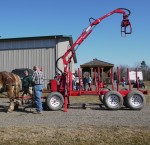
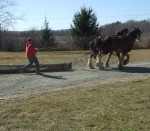
Teams of draft horses in full harness and spectators enjoyed the balmy weather as they stood in an open field just outside Trumansburg, NY. The log pulling event hosted by Carriage House Saddlery was well underway as I pulled my car off the road and parked. Log pulling began at 10 o’clock, so I missed the early action; however, there were still many teams waiting to perform the double skidding and European style log pulling. One team at a time performed. I watched a pair of Belgian’s complete the double skidding event. The horses wove through a series of poles dragging a heavy log. At the last pole, the horses turned and waited for the driver to fasten another log. Now they were ready to weave back through the poles as fast as possible without knocking any over, which completed the course.

Allie Taisey and her young horse Diesel stood near the parking lot taking a break. Diesel didn’t look like the typical draft horse, in fact, he reminded me of CJ. I walked over to Allie and her spotted horse and discovered that Diesel was a 6 year old gelding, ½ Quarter Horse – ½ Paint cross.

“How long has he been pulling?” I asked.

“About 4 or 5 times since January, this is a learning opportunity for Diesel. We have tried to start him under saddle a few times without success. He was about to be shipped off to the glue factory but he’s just too sweet a horse for that. So I’ve been working with him. I’m trying to get him to respond to commands on the ground through driving. Log pulling is a great opportunity for that,” said Allie.

“How did he do?” I asked.

“He did really well for his first time. He zigzagged between the parallel poles, knocking down a couple. On the log pulling he just pulled one log. That was about all he could pull as each log weighs about 800 pounds, but that was ok since we’re not here to really compete just get experience and support from the other people. It’s a great place to learn, everyone is knowledgeable and helpful. In the summer we’ll send Diesel to work with Greg Eliel. He uses the natural horsemanship method of training. After Diesel’s training, I’ll work with him,” said Allie.

“You’ll ride him Western?” I asked.

“I have a dressage saddle so that’s what I’ll ride him with,” replied Allie.

“Good luck with Diesel and his training. I’m going to check out some of the other teams,” I said heading for a crowd near the concession stand.

A wooden pavilion built on raised decking provided a comfortable retreat from the hot sun. At the food concession, I met Vivien Surman, a small animal vet and co-owner of Carriage House Saddlery. Vivien and her husband, Jim Wilkins, started Carriage House Saddlery in 2005 in anticipation of retirement. They felt the horses and saddlery shop would provide an enjoyable business in their golden years. Besides the shop, they own drafts horses, Warm Bloods, Quarter Horses, ponies, a Paint stallion, and a min donkey.

“I’ve seen draft horses plow. Near where I live, the Endless Mountain Draft Horse Club puts on two events every year, Corn Days and Plow Days, but I’ve never seen log pulling. Why did you decide to host log pulling events,” I asked Vivien.

“My husband Jim is a forester and uses draft horses to log. Our farrier, Ke Smith, also logs on his farm with draft horses. One day the two got talking and thought it would be a good idea to have a log pulling contest. They contacted the NY State Draft Horse Club which puts on ice harvesting and haymaking events but the club didn’t want to be involved with log pulling. They also contacted the Interlaken Historical Society with the idea that they might be interested in log pulling as part of their old-fashioned fair, but again they weren’t interested. So, we decided to host the event ourselves,” said Vivian.

“How long have you been hosting the event?”

“This is our 3rd year. The first was a beautiful day with 2 feet of snow on the ground. A hundred spectators came to watch and approximately 20 teams pulled through the snow,” said Vivian.

“Was it hard for the horses because of the snow?” I asked.

“It’s normal for logging to be done in the snow. Two seasons are good for logging; winter when the ground is frozen or summer when everything is dry. Too much mud in the spring makes pulling the logs hard for the horses and the environment,” said Vivien.

“And how did the second year go?” I asked.

“The second year was a bit muddy. We had fewer spectators because it was a very cold and dreary day. This year the spectators are back and the day is absolutely beautiful. There is a bit of mud, but it really isn’t too bad,” said Vivien.

“How do the events work?” I said.

“There are two events. Double skid which is a slalom like event where the horse pulls a log between poles and a European style log pull which involves the horses pulling up to four logs. The first event mimics the horse weaving through the woods down a logging trail through trees. The second event, European style log pull, is not solely based on strength, but how well the horses behave, how steady the horses are and how well they follow commands and wait to be hooked up to the logs. The teams that are quiet, orderly, and well mannered, will be able to work in the woods where the horses need to be calm, otherwise when the team goes through the forest the logs may be damaged and the horses injuried,” said Vivien.

The environmental advantages of logging with horses are many. Horses do not destroy young trees or create erosion problems like mechanized logging equipment. The horses are able to enter areas where mechanized vehicles are unable to penetrate. As a result, many landowners and loggers have returned to using horses to extract timber from the woods.

Any type of horse may be used for logging; however, size limits the weight the horse will be able to pull. In some areas oxen and mules are used to skid logs out of woodlots and forests. Generally, a two horse team is used, but one horse may be preferable in tight areas. Loggers using horses generally favor the skid distance to be no greater than 1,500 feet to the landing where logs are loaded onto a truck. A greater distance means that it will take more time for the horses to return to the woods for another log. Hillsides create additional risks and require well trained animals. Great care must be used when teams pull downhill to prevent logs from over running the horse and handler. The skid trail needs to be cleared of objects, such as slippery rocks which may cause the logs to slip and slide into the horse. Also, slick ice conditions may cause similar problems.

Draft horse teams patiently waited their turn on the sidelines and peopled chatted as they watched the horses compete. The next person I met was a friend of Allie’s. She walked behind a bay horse in full harness. Rigby, a Spotted Draft/Quarter Horse/Mustang cross, stood quietly near the staging area. Kristy Boys from Richford, NY brought her 4 ½ year old gelding to the logging event so Rigby could gain experience and be around the other horses.

“How long have you been driving?” I asked Kristy.

“About 5 years, I feel it’s important to explore all aspects of horsemanship including driving and pulling,” she said.

“Do you enjoy it?” I asked.

“I love it. I think it is an important way to supplement our oil habit with horse power. On our hobby farm we have done some logging. Last year, the horse pulled 30 foot long sapling poles, which we used as supports for beans. This summer we plan to try plowing to prepare the ground for our potato crop. Another possibility with driving is skijoring,” she replied.

“That’s fascinating, my son and I would like to do that. Have you tried it yet?” I asked.

“Just once with Diesel, we hooked him up and a friend that skis came down. I hopped on the back of his skis, but we didn’t have a good harness. If I can get the right harness, I’m going to try skijoring next winter. The Europeans are really into it. Skijoring is all over YouTube.” she replied.

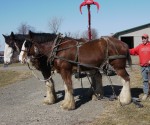
Ben Jantzen and his team of Clydesdales, Elisa and Jonah, waited to compete in the 4 log pulling event. He came down from Odessa to participate in the day’s events. During high school, Ben owned a saddle horse but now works exclusively with draft horses. When he married, a Vis-a-Vis carriage and driver were hired for the occasion. Ben wound up purchasing the carriage and now has a part-time business doing weddings.

In the 1940’s, Ben’s grandfather began a garbage hauling business with his Clydesdales as a way to earn money for college. He charged 25 cents a trash can. The cans were put on the back of a wagon, taken to the dump and then returned to their owners. Draft horses have been a part of the family farm ever since.

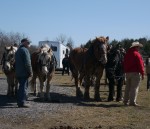
A handsome team of Belgians stood nearby waiting to compete. Dan Doyle and his team, Kate and Doc, walked towards the starting point for the event. I watched with his daughter Jen as he hitched up the chains to the first log.

“Have the horses pulled logs before,” I asked Jen.

“This is their first time. My dad has run a hobby farm for the past 20 years. He uses the horses for bobsled and hay rides. This is the first time he’s tried pulling logs with them,” she replied.

Suddenly, Dan’s team jumped a little too fast trying to pull 3 logs. The logs scattered in odd directions and jammed. Two men with long hooked poles helped move the logs as Dan steadied the horses and Jen helped. Once the jam was fixed the horses went on to finish the course.

Dan’s team was one of the last to perform. The log pulling event at Carriage House Saddlery came towards closing. The day was still radiant, not a cloud in the sky, when I packed up my belongings and headed toward Ithaca and home. It wouldn’t be long before the horses were loaded into their trailers for their trip back to the barn.

Posted in Uncategorized | Tagged , , | 4 Comments

Ponies at Bradford County Humane Society Shelter

The 10 o’clock sun shone through mist tinting the countryside with a bluish hue. The car’s engine hummed along Route 220, winding through the mountains, passed railroad tracks and farms. I drove towards the Bradford County Humane Society just north of Ulster to meet with Anne Shaffer. Recently, three ponies were rescued from a greenhouse and I was on my way to see them.

I pulled the car into the driveway and parked by the outdoor dog kennels. All the dogs started barking as soon as they heard my footsteps. A couple of elderly women also headed for the front door, and the three of us entered together. Anne stood in the office behind the front desk with a clipboard and pen completing routine paperwork.

“Hi, I just need to complete this form and I’ll show you the ponies,” she said.

“Okay,” I replied.

We walked around the outside of the building to a chain link enclosure directly behind the shelter. At the far end of the small pasture stood a covered equine run-in, which provided a safe place for the ponies during inclement weather. Anne entered the pasture and attempted to catch a pony named Spitfire.

“He’s hard to catch,” said Anne reaching for some grass to entice the little stallion.

“He’s shy,” I replied.

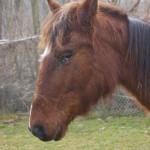
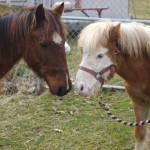
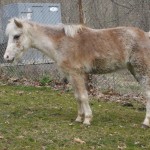
“They are all in sorry shape. Misty, a little palomino mare, is the shyest. She pretty much keeps to herself. Princess only has one eye but is friendly,” said Anne pointing to a brown mare walking toward her.

“That’s too bad she lost her eye. I wonder how that happened.” I replied.

“We’re not sure,” answered Anne.

Princess walked up to Spitfire and stood next to him as Anne snapped a lead rope to his halter. The brown pony gently nuzzled the little stallion. Her leathery socket hid the atrophied remains of the injured eye. A short time later, Misty, the little palomino came and stood next to her pasture mates. All of the pony’s hooves were long, curling slightly at the end and badly in need of a trim.

“I have to go back inside but Becky will help you,” said Anne as a young woman walked towards us.

“All right,” I turned towards Becky and asked, “How long have you been working here?”

“About 4 months,” replied Becky taking Spitfire’s lead rope from Anne.

The ponies were rescued from a residency which kept the animals in a greenhouse meant to grow flowers, not stable horses. The greenhouse had a cement floor, broken glass, and unsanitary conditions. Humane Officer, Laura Hawbaker, requested a court order to remove the animals because of the unhealthy environment and general poor health of the ponies. In the weeks to come a court hearing will convene to decide the fate of the animals. A judge will listen to both sides of the complaint and make a decision. The case may go one of two ways. The Humane Society may be given the ponies, in which case, the animals have a chance for a new home or the ponies may be returned to the owner, usually with the stipulation that the unhealthy conditions the animals were found in are corrected.

I left the pasture and found Anne busy in the front office helping a middle-aged man adopt a dog. The shelter filled with people. They stopped in front of the wire cages, peered in and looked over the stray and abandoned dogs. I said farewell to Anne, returned to my car and headed for home. It will be several weeks before the Judge reaches a decision; in the meantime, the ponies are safe at the Bradford County Humane Society Animal Shelter in Ulster, PA.

Posted in Uncategorized | Tagged , , , , , , | Leave a comment