Tinsel-n-Lights a Winter Festival in Waverly, NY – 2011

Tinsel-N-Lights from Pat Miran on Vimeo.

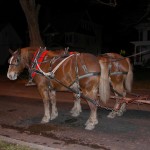
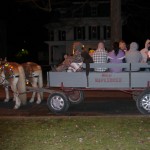
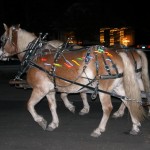
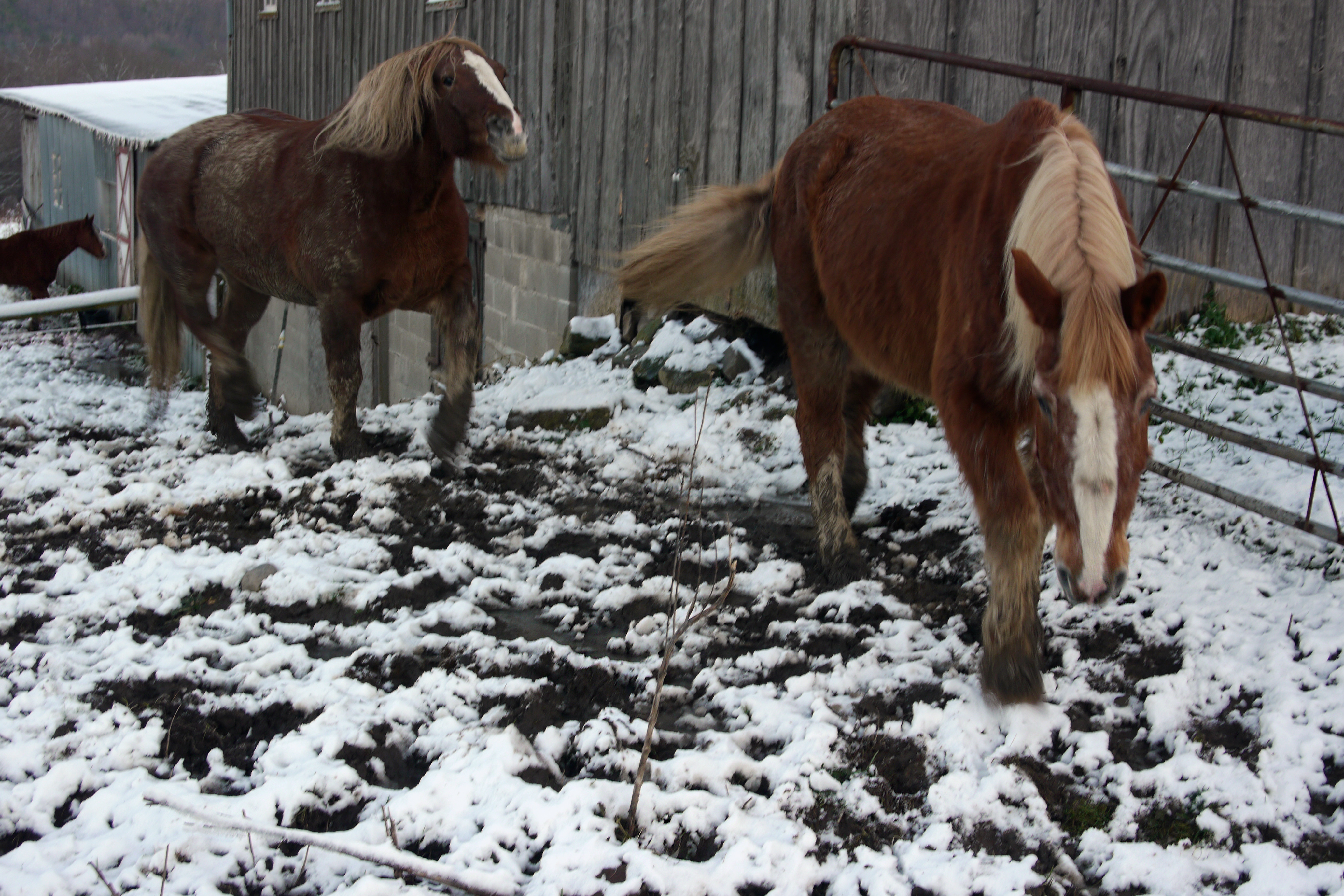
The window faced the dark street where cars drove back and forth searching for parking spaces. The entire village mobilized, heading to Muldoon Park and the Tinsel-n-Lights winter celebration. Emma and I pulled on coats, gloves, and wrapped scarves snuggly around our necks. I opened the front door. We departed leaving the warm, cozy house and stepped into the frigid December night. Our boots tapped along the sidewalk. Flashing lights reflected off the asphalt where a fire engine cordoned off Chemung Street at the end of the block forcing traffic to turn up Lincoln Street. A crossing guard banishing a huge blinking light stopped traffic for us to cross the street as a team of Belgiums, sleigh bells ringing, headed in our direction pulling an enormous hay wagon full of people.

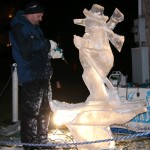
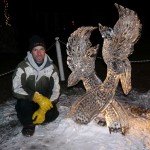
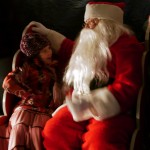
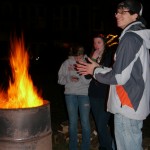
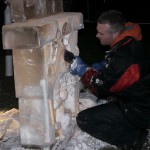
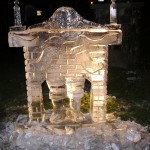
When we reached the festival the hum of conversation, Christmas music and lights filled the park; people were everywhere. Tea candles flickered inside paper lunch bags which lined the sidewalks bordering the square. Several burn barrels, red and orange flames licking at the chilly night air, served as a gathering place where people enjoyed the heat and chatted. Lengthy tables decked out with a wide array of delicious, prepared foods stood near the bandstand. Three ice carvers, spaced some distance apart, worked with chainsaws, chisels and die grinders. A spray of tiny water particles formed a frozen mist silhouetting the carvers as they turned ice blocks into sculptures. Meanwhile, families created a line stretching across the lawn as they waited their turn to ride in a horse drawn wagon. Not far away, the Lion’s Club awning sheltered Santa in his sleigh ready to hear holiday wishes from youngsters waiting in another long line.

At the corner of Park Avenue and Park Place near the Vietnam War Memorial a chain link enclosure surrounded several reindeer and their keepers. Mike Cary, a veterinarian, owns and operates Santa’s Second String Reindeer. Through his business, he conducts farm tours, sells reindeer, and brings reindeer to festivals and fairs. A young man, James Steffen, inside the chain link fence with Santa’s team answered questions from the crowd.

“I have some experience with horses, but have never been this close to a reindeer. Do they kick?” I asked.

“That’s the good thing about reindeer. They’re safer and smaller than horses. They don’t kick and for the most part are pretty docile. The only time they can be dangerous is when the bulls are in rut or when a cow has a new born calf,” said James.

“And what about their antlers?” I asked

“The antlers bow inward, so unless the reindeer loses one antler exposing the points on the remaining antler, there isn’t anything to worry about. Reindeer lose their antlers every year and grow bigger ones, even the females have antlers. In fact, Santa’s sleigh is probably pulled by female reindeer since the males lose their antlers between November and mid December,” replied James.

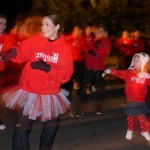
We said farewell to James. A Zumba group, Fitness Senena, danced to music in the middle of Pennsylvania Ave. A crowd gathered on the sidewalk to watch the exercise group go through their routines. The dark night was lit by holiday and outdoor work lights. The buzz of chainsaws and ice grinders mingled with the muffled murmur of people talking. We stopped to speak to a man carving a snowman.

“That’s incredible, how long have you been carving?” I asked.

“I’ve been carving 16 years. I started as a professional chef and 11 years ago started an ice carving business called Sculpted Ice Works,” said Mark Crouthamel. He pointed to the ice carver some distance across the park working on a pair of doves and continued, “The man carving the Peace Doves is our lead carver, Neil Trimper.”

“The sculptures are absolutely amazing. Do you just carve ice in the winter?” I asked.

“No, we carve all year round at parties, festivals, anywhere there is a need for an ice sculpture,” replied Mark.

We moved on passing Santa and made our way through crowds near burn barrels and long lines waiting for hay rides. On the way home, we passed three teams of draft horses hitched to wagons. I waved to Max Weed, whom I had met months ago during Draft Horse Days in Lockwood, NY. He had two teams of Haflingers hitched to hay wagons filled with children and their parents. The third team of Belgiums belonged to Al Fargnoli the owner of Sweeney’s Market in Apalachin, NY. Sleigh bells rang, the chilly air took our breath away and our fingertips nipped by frost tingled. We walked the few blocks to the warmth of home filled with happy memories of the Tinsel-n-Lights celebration.

*The Tinsel-n-Lights holiday festival is a free community event provided by local businesses and donations from the public which has been held for the past four years.

Posted in Uncategorized | Tagged , , , , , , , , , , , , | Leave a comment

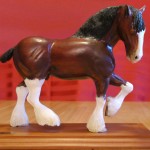
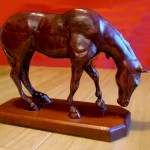
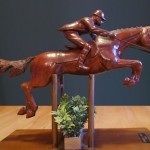
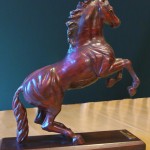
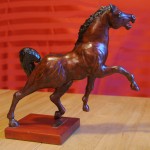
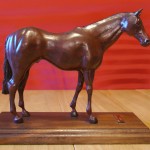
Horse Sculptures Created by Charles Nock

Charles Nock lived in Albany, NY, worked as a shoe salesman, raised a family and retired in 1965. He came from a family of artists, his brother, Paul Nock carved birds, his sister, Mildred Willig, designed embroidery kits which sold commercially, and brother, Stuart Nock, painted oils in the style of Norman Rockwell. In fact, Norman Rockwell granted Stuart permission to copy several of his paintings. Charles for many years also painted in oils; however, when he retired with encouragement from his brother, Paul, he decided to try his hand at woodcarving.

His first carvings were of birds; however, he soon found his interest lie elsewhere, and decided to carve horses. Early mornings when the track opened, Charles Nock traveled to the Saratoga Race Track just north of Albany to watch the race horses work out. He observed their movement, form, grace and beauty often exchanging a few words with the jockeys or exercise boys as they moved off on their spirited steeds. Later in the day, he returned to his basement studio to capture what he had seen. Time seemed to slip away as he immersed himself deeper and deeper into his work.

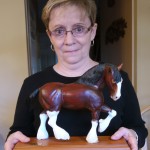
Charles carved in basswood, then stained, painted, varnished and sealed the sculpture. He often carved a specific breed, such as a Clydesdale or Thoroughbred. Several of his works are polychrome, which simply means painted in several colors, other pieces are monochromatic. During his lifetime, he completed approximately 25 sculptures. His principle subject was the horse.

On November 10th I traveled to Albany to meet Charles Nock’s daughter, Virginia Weston. She opened the door and invited me in. Over a cup of tea, she told me about her father.

“He was a very distinguished and reserved gentleman. His hair turned prematurely grey early in life which put some people off. It was hard for people to engage with him. I sometimes feel that his carving gave him the opportunity to meet and exchange ideas with a wide variety of people,” said Virginia.

Virginia stood up and walked away from the kitchen table to a breakfront in the dining room. Carefully, she removed each sculpture which stood roughly 12” X 16”. She cautiously brought each piece back to the table where we could look at them. Seven sculptures stood before us, each skillfully carved.

“His carvings progressed as he became more experienced from the simple techniques used in his early works to a complex, detailed style,” said Virginia.

“The sculptures are beautiful, “I replied.

“The Saratoga Library displayed his sculptures when the track was open. The library has a huge picture window facing the street, all of his sculptures filled the window during racing season,” said Virginia.

“Did he sell his work?” I asked.

“He sold several pieces at craft fairs which were held near Albany,” she replied paused for a moment than continued, “He died suddenly in 1992.”

“I’m sorry to hear that he passed away,” I replied.

“He suffered a heart attack and was hospitalized. My father was ready to be released from the hospital when he died,” said Virginia.

“That’s odd,” I replied.

“The doctor ran some final tests on my father which included a treadmill cardiac stress test. When my father was on the treadmill his heart collapsed and he died instantly,” said Virginia.

“That’s tragic,” I replied.

“We arrived at the hospital to take him home and were shocked to discover that he had died,” said Virginia.

“It makes you think about how short life is,” I replied.

“The sculptures were displayed at our father’s wake, which gave relatives and friends an opportunity to see them,” said Virginia.

“That was a nice tribute to your father,” I said.

“The horses brought us together during that sad time. The sculptures were divided between the children. We placed numbers in a box and stuck corresponding numbers on each horse. Then my sisters, Mary Ellen Bianchino and Marie Garling, brother, John and I took turns drawing numbers until all the horses were divided between us,” said Virginia.

“What a wonderful idea, that way each child had their own collection of their father’s work,” I replied.

I said my farewells to Virginia and climbed back in my car steering out of the driveway towards home. The winter sun began to touch the tree line casting a pink glow on the snow filled clouds. My thoughts drifted to Charles Nock, Virginia and the sculpted horses as night fell on the black asphalt of Highway 88.

Posted in Uncategorized | Tagged , , , , , , | Leave a comment

Johnn’s New Horse – Sam

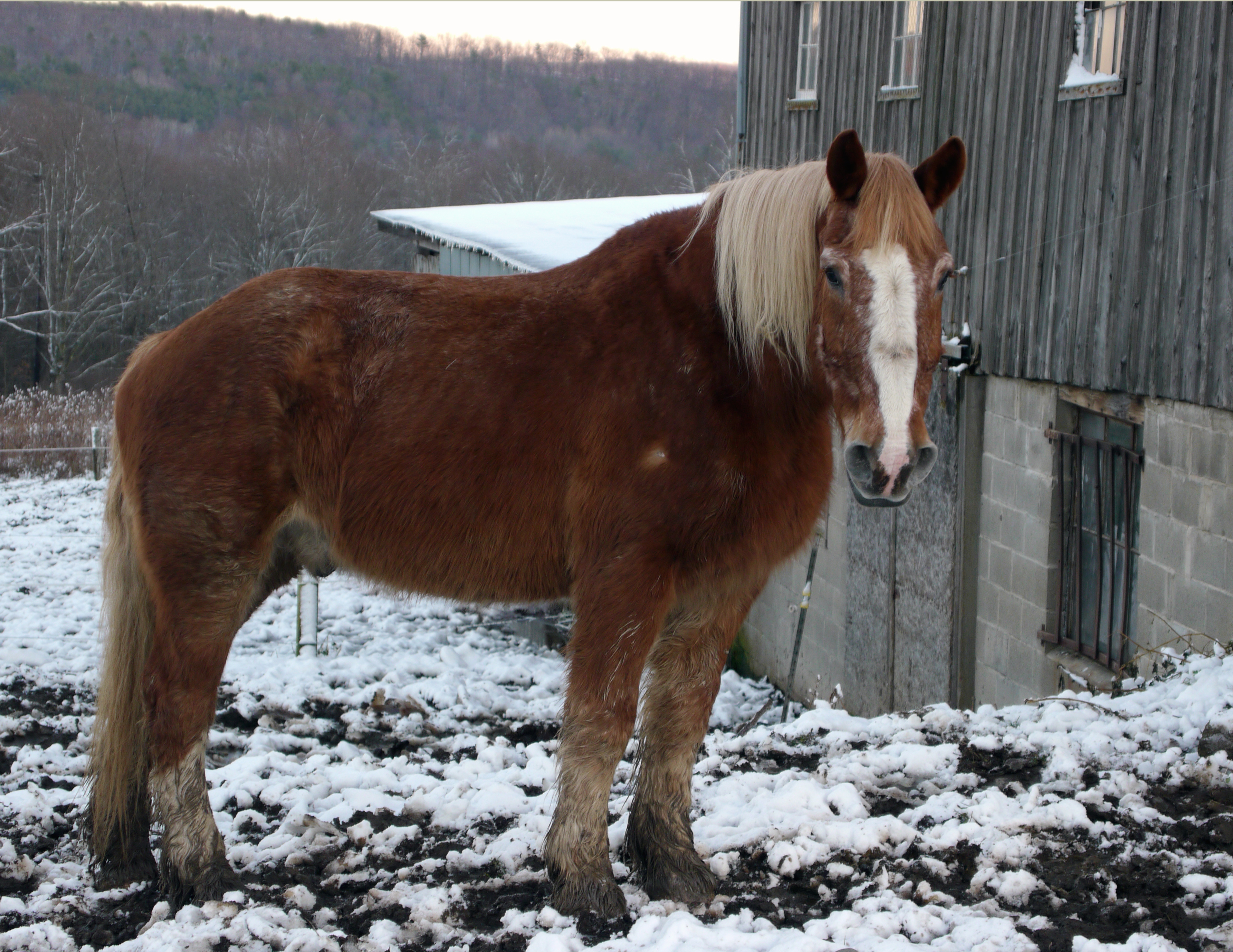
Connie sat in front of her computer screen browsing Craigslist when she hit upon an ad showing a Belgium horse for sale.’Humm’, she thought ‘Johnn loves Belgiums’. As a lark she printed out the ad. That evening, she handed the print out to Johnn. Johnn thought, ‘We really don’t need another horse but what a beauty. Just looking won’t hurt’. So the Ballentines went to look at the big, strong Belgium, fell in love and bought him from the horse dealer.

The sun gleamed on emerald fields in November across Bradford County. Usually, this time of year a frost or two caused grasses to become yellow and dormant; however, the high rainfall and warm weather continuing into late fall resulted in lush green pastures. Emma and I arrived at Horse Heaven ready to enjoy the crisp fall day, when Johnn told us that there would be a new arrival at the stables.

“A new horse is coming,” said Johnn smiling, “A Belgium named Sam.”

“You’re kidding,” I said noting the excitement in Johnn’s voice.

“It’s true. He’s gentle, bigger than Myrtle, trained to saddle and harness. I picked up his feet with no problem.” said Johnn still smiling.

“He sounds great. When will he arrive?” I asked feeling a sense of delight with the idea of another horse at the stables.

“As soon as I can get someone with a trailer to deliver him, probably Thursday,” he replied.

Emma and I saddled up and headed for the park. The sky, a brisk electric blue emitted a cool glow which fell over the autumn landscape. We passed people working, playing and simply enjoying one of the last days before winter turns everything frosty. After the ride, we put up our saddles and drove home wondering about Sam.

Thursday came and Sam easily walked onto the trailer in Monroeton. He rode in the bumping trailer along the winding country road until reaching Ballentine’s Horse Heaven. Johnn’s new horse calmly walked off the trailer and into his stall. The next day he went out to pasture with the herd, walked down to visit with Jupiter until Jupiter turned away leaving Sam alone.

A few days later, on November 18th, Karen emailed me pictures and a video from her iphone. Shadow and CJ chased Sam. They seemed to be playing until the little brat, bad boy CJ cornered Sam near a ravine in the pasture. CJ bit and kicked Sam until he moved off. A few days later, I saw Johnn in the stables and mentioned it.

“I didn’t see the video but I saw him picking on Sam in the lower pasture. CJ cornered him and kicked Sam until he moved away,” said Johnn.

“I saw Myrtle look like she was going to bite him a few times, “I said.

“Horses are like that … they have a pecking order,” said Johnn, “He’ll settle in.”

Horses are highly social animals which have a dominance hierarchy with new comers starting at the bottom often driven to live at the edge of the herd for a period of time. Wild horses are organized in a “harem type group” with one stallion and a group of mares. Even though a stallion is in the group, the herd is led by a dominant mare called the “boss or lead mare.” The dominant mare determines such things as when the herd travels, the safest route and where to graze.

Domestic herds are a bit different since most don’t include a stallion and are made up of mares and/or geldings. In a domestic herd, either a mare or gelding becomes the dominant member of the group. The dominant horse directs the behavior of the other horses within the herd. The higher-ranked animals in the herd if given the opportunity will eat and drink first. Fights for dominance usually are brief and many times involve gestures without physical contact such as barred teeth or pinned back ears.

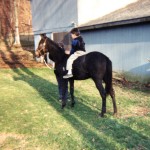
I’d take a guess that Myrtle is the lead mare at Horse Heaven, with Pepper ranking second. CJ as Pepper’s offspring is closely aligned with her. I’m guessing again, but would say CJ is defending her rank or simply ranks higher than Sam. However, it’s not that clear-cut. The horses usually hang out with another horse within the group; Myrtle with Shadow and Pepper with CJ. The lone horse at the edge of the herd is Jupiter. Now that Sam has come to even out the numbers, it seems logical that Sam and Jupiter should pair up; however, that doesn’t seem to be the case. Instead, Shadow befriended Sam. These inner herd relationships seem to change overtime. Last year, I observed Shadow, Pepper and CJ forming a small inner group, now I usually see Shadow and Myrtle together.

The earth tilted away from the sun in its yearlong orbit; each new night came earlier than the last as we neared the winter solstice making 5:30 PM very dark. I drove up to the barn to brush CJ and Pepper, pulled into the drive and saw lights on in the barn. I put on my hat, stepped out of the car into the cold night air, and entered the stable where everything had the glow of halogen lights. Connie topped off the horse’s water pails completing her final ‘everything is ok’ check for the night. Sam stood peaceful and comfy in Pepper’s old home across from Myrtle. All the horses munched hay and looked content nestled in their stalls.

“Hi Connie… how’s Sam doing?” I asked.

“Good,” Connie replied pouring water into Jupiter’s pail.

“Where did you get him?” I said watching Jupiter munch hay.

“The horse dealer we bought him from was the same one that sold me that crazy, palomino Tennessee Walker years ago. The woman gave me the phone number of the girl she purchased Sam from. Her name is Jessica and I called her. She sold me his saddle and threw in the stand, saddle blanket, bridle and a whole box of horse care produces,” said Connie.

“Did she tell you much about Sam,” I asked.

“Jessica said he was in the Troy Fair this summer and her 9 year old brother entered him in the Barrel Racing event. Sam is very gentle, calm and well trained. The only thing we’re not clear on is his age. The horse dealer’s vet said he was 20 years old, but Jessica’s vet said he’s 12 or 13. I’m going to have Gene and Brianne look at him, maybe they can tell how old he is,” said Connie.

“He’s pretty skinny,” I said.

“Jessica said Sam wasn’t like that when she sold him to the horse dealer. It seems that the horse dealer didn’t feed him. The dealer had Sam for about a month and half, just kept him in the pasture without grain or hay,” replied Connie opening Jupiter’s stall, walking out and clipping the safety snap shut. “I told Jessica that she was welcome to come up and see him any time.”

A few days later, I met Anne Shaffer in the barn and we rode to the park. CJ and Shadow stretched their legs as we raced up the hills through Round Top on the late autumn morning. Turning for home Anne mentioned her ride on Sam.

“He has an incredible, smooth trot,” Anne said. “A trot you’d die for.”

“I’ve hear draft horses have very even gaits,” I replied.

“He does, but I had a heck of a time getting him out of the pasture. Myrtle kept chasing him. It was hard to get him pass the other horses,” said Ann turning Shadow onto Weaver Road.

“That must have been more than a bit scary,” I said.

“It was unnerving,” Anne replied.

Thanksgiving slipped by with Christmas on the way. Sam learned the routine; stand in front of the barn with the other horses, wait for Johnn to open the doors at feeding time and go out to pasture in the morning.

Yesterday, I snapped some photos of Sam. Not wanting to be in the middle of a dominance battle, I opened the barn door leading to the pasture just enough to fit the camera through. To my surprise, Sam stood right up against the door. A few seconds later, Myrtle chased Sam off and stood eyeing me wanting to come in for her grain. I slipped the door shut, walked around the barn and stood next to the fence. Sam in his slow amenable manner came towards me; as soon as he did Shadow quietly came over and stood next to Sam. That was too much for Myrtle, she pinned her ears and made a dive at Sam driving him off. Sam calmly took his place at the back of the line. A few minutes later Johnn opened the barn door letting the horses in for the night. Sam walked in last. By far, he is the biggest horse in the pasture, even if right now he holds the lowest rank as the months go by perhaps that will change, perhaps not, only time will tell.

Posted in Uncategorized | Tagged , , , , , | Leave a comment

Bradford County Humane Society Shelter

Fifty-one years ago a group of people came together determined to help animals in Bradford County, PA. They formed a non-profit organization and opened the Bradford County Humane Society. The shelter is dedicated to providing a place for neglected, abused and lost animals, as well as, investigating cases of animal cruelty and neglect with an emphasis on educating the public about animal care. The Bradford County Humane Society is still run by concerned people helping animals; anyone can join to stop the plight of hurt and abandoned animals by volunteering, becoming a member or making a donation.

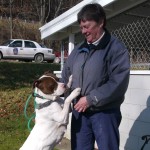
Route 220 winds its way through the Endless Mountains weaving in and out of farmlands, skirting the Susquehanna River and darting in and out of the woods. The car’s engine hummed as I drove towards the Bradford County Humane Society. Just before reaching the village of Ulster, I turned into the shelter’s gravel driveway. The November sky set a grey backdrop for the shelter, and the sun glistened on the steel, chain linked enclosures forming the outside dog runs. I stepped out of the car, walked down a slight incline passing a woman walking a dog, entered the Humane Society’s office, and found Anne Shaffer ready to give me a tour of the shelter.

“Let me start by introducing you to Jennifer Spencer our Coordinator,” said Anne indicating a tall, young woman with dark, brown hair.

“Nice to meet you,” I said extending my hand. “What do you do here?”

“I’m the Coordinator for the animal shelter. I do promotion through outreach programs in schools, fundraisers and publicity,” replied Jennifer.

“How do you do that?” I asked.

“I visit the local schools with the Humane Officer. We teach children how to help animals, care for their pets and be responsible pet owners. This year I assisted high school seniors with their senior project which was collecting food and pet items for the shelter. I also work with the Chamber of Commerce, local Rotary Clubs and libraries to let people know what the animal shelter does. I provide news releases for local papers and keep our website and Facebook pages up to date by writing weekly articles. Also, I plan and coordinate fundraisers for the shelter,” replied Jennifer.

“It sounds like you are very busy. Have you been here long?” I asked.

“About year, I grew up in the area but moved away for work. I worked for several years in California as a marketer,” replied Jennifer.

Anne and I left the office and entered the area that housed the indoor dogs. The enclosure contained three rows of cages filled with dogs. As soon as we walked into the enclosure, all the animals started barking for attention. Each dog had a plastic covered information tag clipped to the wire gate of their pen. Anne stopped in front of a cage housing a small beagle.

“This dog is Lindy. She came in about a week ago with a long gash across her thigh. We took her to the vet for stitches. She’s a sweet dog,” said Anne.

“She’s very calm,” I said watching the dog wag her tail.

“She came in as a stray, but so far nobody has called about a lost dog. The shelter has been swamped with strays and lost dogs since the flood.” said Anne.

“That’s sad,” I replied.

“It’s hard. Many animals were lost during the flood and became strays. Others came to us because the owners had to find other housing or couldn’t afford to care for their pets,” said Anne.

We moved on to the next aisle passing dogs jumping up against the wire enclosures, barking and wanting to get out. Most of the dogs were large to medium size; many looked like Rottweilers or bulldogs.

“This dog came here because he’s not good with kids and this one because he kills poultry.” said Anne slowly walking down the aisle. She stopped at the cage of a large brown dog. “This dog has a chip implant but the owner moved to another state and even though we’ve sent letters there hasn’t been a response.”

We continued on down the line of cages. Anne stopped in front of a cage holding a white dog with brown ears. The dog’s teats formed a double line down her pink belly making her look like she was nursing five or six puppies.

“This is Price. She’s the sweetest pit-bull you’ll ever meet. Price came in as a stray and was used in a puppy mill. The owners keep her pregnant breeding pups,” said Anne opening the gate and reaching in to pet the dog.

“She’s very friendly. Does she have papers?” I asked.

“No, most of the dogs here don’t have papers because they came in as strays. Sometimes, if an owner brings in a dog they will have registration papers, but usually not,” replied Anne.

“Do many owners bring in their dogs for adoption?” I asked.

“We only take owner surrendered dogs if we have room. We are mandated by law to take in stray dogs. If there is an empty cage we will take in other dogs but the strays come first,” replied Anne.

“That must make it difficult for people who can’t keep their dog,” I said.

“We refer them to other shelters in the area or suggest they take out an ad in the paper. Right now we’re full. The shelter doesn’t euthanize dogs so a space will only open up if someone adopts a dog,” she said.

Anne locked Price’s cage. She opened a metal door and we stepped onto a cement walkway leading to the kennels housing the outside dogs.

“Some dogs do better outside,” she said stopping at the cage for a black collie mix. “Like this dog. He’s a jumper. He can jump right out his cage if it doesn’t have a roof. Would you like to see the cats?” Anne asked.

“Sure,” I replied following Anne.

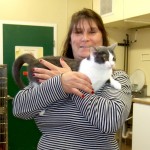
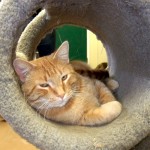
We stepped back into the building, walked past the dogs and she opened a door to the cat rooms. Inside were a few cages with cats sitting behind steel bars. Outside the cages, several cats lounged on a carpet covered cat tree; curled up or stretched out for a snooze. A glass door opened to the free roaming cat room; full of cats and no cages. The exterior walls, made entirely of glass windows, allowed soft natural daylight into the room. The ceramic tile flooring provided a clean fresh place for cats to walk, play or relax.

“That is a beautiful room for the cats,” I said.

“It’s new and wonderful. The cats don’t have to be in cages and have the freedom to roam anywhere within the room,” said Anne.

After our visit with the cats, we again walked by the jumping and yelping dogs toward the office. Just outside the office door stood the woman I had pasted earlier in the day walking a dog.

“Do you work here?” I asked glancing down at the young dog she had on a leash.

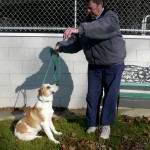
“I do. My job is training the dogs,” replied Susan Meas.

“What do you teach them?” I asked.

“My main objective is for the dog to listen to me and walk on a leash without pulling. I work on simple commands like come and sit. Most of the dogs are strays so none of us know what the animals have been through. I try to connect with the dog and find out what the dog knows,” replied Susan.

“Have you been training dogs for long?” I asked.

“I’ve been training dogs for 26 years, mostly obedience and agility training,” replied Susan.

Anne and I stepped back into the office where Jennifer spoke on the telephone. She hung up and I asked, “Its important helping dogs and cats, but what about other animals? Do you rescue horses?”

“Horses and other livestock are rescued by the shelter in situations of abuse. However there isn’t space for large animals here; although, currently the shelter is looking to rent a barn. Horses are placed in foster homes at a local farm until the animal can be adopted out. The Humane Officer at Bradford County Animal Shelter is Lara Hawbaker. When the shelter gets a call concerning livestock, Lara goes out and evaluates the situation,” replied Jennifer.

Lara Hawbaker wasn’t at the shelter, so I arranged to come again in a couple of days to speak with her. When I came back, I passed Susan Meas again working with another dog. I stepped into the office and met a tall, woman dressed in a law enforcement uniform with a badge.

“So, how do you help horses?” I asked.

“I respond to complaints of abuse. The first thing, I do is speak to the horse’s owner. I give them pointers on horse care and how to get the animal back in shape. My primary focus is on education and making sure the horse gets what it needs. Many people simply don’t understand how to care for a horse,” replied Lara.

“I’m sure the financial crisis has placed an increased burden on horse owners,” I said.

“That’s true; the last two years we have seen an increase in horses not being feed. The flood has also drained people’s finances, not to mention the price of hay increasing. This year has been a poor hay season with all the rain. Also, the gas companies in the area have been buying hay for reseeding which has driven up the cost of hay. All of these things have an impact on horses,” said Lara.

“If the owner doesn’t or can’t care for the horse what is the next step?” I asked.

“Then the animal is confiscated by court order and placed in a foster home. The case goes before the Judge. If he rules the animal should be taken away from the owner, then the horse is awarded to the Humane Society and becomes available for adoption to a safe home,” said Lara.

“Have you had any cases recently?” I asked.

“We had an owner in Granville unable to care for her horse, a 20 year old Arab stallion named Sham. He had his halter embedded in his head, was tied to a tree and starved,” said Lara.

“That sounds horrible,” I said.

“It turned out ok. The case didn’t go to court. I spoke with the owner and she agreed to turn the horse over to the Humane Society. The shelter had the horse gelded, rehabilitated and a caring family adopted him,” said Lara.

“Do you find that people call in with false complaints?” I asked.

“Most of the complaints we receive are taken by phone. The first thing I do is call the person involved and determine what’s going on, and then I go out to investigate. As part of the investigation I take pictures and notes which are placed in my record books. One book is for ‘Real Problems’ and the other I call my ‘Wasted Time’ book for unfounded complaints. Sometimes a person has a dispute with their family or neighbors and will call the shelter with invalid complaints. They don’t realize that every time I go out to investigate a complaint it cost the shelter time and money,” replied Lara.

“What are the laws protecting animals in PA?” I asked.

“All animals need fresh food, water and veterinary care. They must have access to clean shelter which is sufficient to keep them dry, protected from inclement weather and enable the animal to preserve its own body heat. In winter a horse without shelter looses a lot of body fat due to shivering attempting to keep itself warm,” said Lara.

“Are there requirements in PA for the size of pasture for horses,” I asked.

“Unfortunately in PA there are no laws concerning pasture size. I’ve seen horses kept in too small an enclosure without any pasture, which is hard on a horse’s health,” replied Lara.

“Are there any other problems which you have come across? I asked.

“One of the main problems the shelter deals with is the over breeding of animals. In today’s economy there is a surplus of horses on the market. Many breeders find they can’t sell their animals and end up with a lot of horses or dogs that they can’t afford to care for and feed. Dogs end up in the shelter and horses end up at auction headed for slaughter houses,” replied Lara.

“My daughter and I visited an auction house in Unadilla,” I said.

“That’s a big livestock auction. It’s against the law to sell emaciated, sick or lame horses but many auction houses do. Local horse dealers go across state lines and bring back skinny, sick horses to sell. I worked at Pimlico racetrack in Maryland and saw how horses were used in the racing industry. The racing industry uses auction houses as a way of unloading unwanted, sick and injuried horses which end up at slaughter houses in Canada or Mexico,” said Lara.

“Are you from Maryland?” I asked.

“I worked in Maryland with horses at Camp Greentop located in the Catoctin Mountain National Park. The camp is run by the Department of Camping and Therapeutic Recreation at the League for People with Disabilities. I trained volunteer college students how to help handicapped and mentally challenged kids work with horses. I also exercised President Reagan’s horses when he was at Camp David,” replied Lara.

“That must have been a wonderful experience,” I said.

“It was,” Lara said pausing for a moment. “If there is one message I could tell people it would be: Think about what you’re doing before you do it and think about the animal’s needs.”

I said farewell to all of the wonderful people at the Bradford County Humane Society where I met truly dedicated people helping animals. Even though the day was grey and overcast, I drove home with the warm feeling that there are good people working to make the world a better place.

Posted in Uncategorized | Tagged , , , , , , , , , , | Leave a comment

Rolling Horses and Tall Grass

A few autumn leaves still cling to tree branches; although most have fallen blanketing the trails with a carpet of color. Thanksgiving approaches and looking back on the year, a few events stand out as unforgettable.

The summer proved to be wet and rainy except for a stretch of super-hot, arid days from June into July. One balmy afternoon, Karen and I rode down a grassy expanse near a string of telephone poles which led to a bog, deep mud and a few strange swamp plants. Turning into a lush field, Pepper quickly outpaced CJ stepping through a sea of waving grass. The afternoon sun beat down on us and CJ dripped sweat. We approached the entrance to the woods and the cool shade. Suddenly, CJ stopped in the tall grass, tucked his legs under his belly and instantly I felt my feet touching the ground. The horse sat quietly in the high grass as I stepped off his back thinking he was injured. Pulling on the reins, I tried to make CJ stand up.

Karen turned around and said, “What are you doing?”

CJ raised his head, stretched his front legs, and suddenly stood up. I put the reins over his neck, my foot in the stirrup, climbed back into the saddle and said, “I’m not sure. One minute he was up and the next he was down.”

“That can become a bad habit. I’m reading a book on horse vices and lying down is one of them,” she said.

“I never heard of that,” I replied adjusting my position in the saddle.

“It’s a bad one. I used to have a horse that laid down all the time. It was a pain,” she said turning Pepper towards the woods.

“I’ll watch out for that,” I said. “I thought he had eaten something poisonous and was dying.”

“No,” said Karen “It takes a lot to kill a horse.”

“That’s good to know,” I said.

“What did you do when your horse went down?” I asked.

“I hit him and he stood up. We would be riding along and all of a sudden he’d just decide to lie down,” said Karen. “It was really frustrating.”

A few weeks later, Emma and I rode to the same isolated section of the park near the grassy field and abandoned farmhouse. The freshly mowed grass smelled sweet on the hot afternoon air. We stopped the horses. CJ, covered with sweat, bent his neck down and ate grass as I took a series of pictures. Pepper nibbled the grass a few yards away.
Suddenly, CJ again tucked his legs under and I felt him collapse beneath me. This time I jumped off, yelled, pulled his head up and smacked the whip against his neck. CJ attempted to roll but didn’t make it over. The saddle and my pulling, screaming and whipping impeded him. Emma and Pepper looked on in amazement. CJ gave up and clamored to his feet. He calmly waited for me to remount as I swung my foot into the stirrup and sat back in the saddle.

“That’s the second time he’s tried that,” I said.

“What was he doing?” asked Emma.

“Trying to roll, Karen said it can become a bad habit, and I think she was right,” I replied.

“It looked like he was dying,” replied Emma.

“I know. That’s what I thought the first time he tried to roll,” I replied.

“I think Pepper was surprised. She just stared at CJ and stood very still,” said Emma.

“It’s too bad she can’t talk,” I said.

“She seemed very intent on what CJ was doing,” she replied.

A couple of hot summer days passed by, Emma and I rode through the cool trails in Round Top Park and headed home down Weaver Road. The late afternoon heat drifted on the air. When we reached the Slocum pastures, Pepper and CJ stepped onto a wide grassy expanse alongside the road. We heard a big truck rumbling down the gravel road behind us. The engine slowed as the pick-up approached. Pepper, in the lead, briefly rubbed her nose on the soft grass. Suddenly, the horse buckled her front legs and she was on her knees.

“Emma jump! Jump off!” I shouted as I watched Pepper go down with Emma’s foot under her.

Emma stepped off, pulled on the reins and the horse stood up. The truck stopped near us and the man driving said, “Everything alright?”

“Yes, we’re fine thanks,” said Emma turning to face the driver.

The driver waved and the truck continued down the road. Emma said, “I think I could have stayed on and got her to stand up.”

“Some people do that but I think the safest thing to do is jump off. She could roll over with you on her. People have died that way,” I replied watching Pepper nuzzle her arm, as Emma gathered the reins and remounted.

“I can’t believe she did that,” said Emma.

“Maybe she learned it from CJ,” I said.

“Maybe,” she replied.

“After CJ tried rolling with me a few days ago, I looked up rolling horses on the internet and discovered three ways to deal with the problem. I think the safest method is to jump off,” I said.

“What are the other methods?” asked Emma.

“One is stay in the saddle and get the horse to stand up,” I said.

“That doesn’t sound like a bad idea,” she replied.

“It’s ok, if you’re fast enough and manage to get the horse to stand up before he starts rolling. But once he goes into the roll, you could find yourself pinned under the horse. People have died when the horse rolled over on them, especially in a western saddle. The saddle horn impales the rider, not to mention being crushed by the weight of the horse,” I said.

“What’s the other method,” she said.

“A couple of cowboys said once the horse lays his head down on the ground they place their knee and all their weight on the horses neck near his head. This pins the horse to the ground so he can’t move. The horse soon learns that rolling places him in a vulnerable position and doesn’t try it again,” I said.

“That sounds a bit extreme,” replied Emma.

“I agree. I think jumping off is the safest,” I replied.

We rode on down to the barn, bathed the horses and put them out to pasture. A few weeks later, the heat broke and the summer turned rainy. Emma and I adopted a new policy; don’t let the horse eat grass while mounted and keep them moving. Since a horse needs to get his head down to the ground to roll; not letting him have his head stops the problem from occurring. Neither CJ nor Pepper tried rolling again.

Understanding the signs of rolling is equally helpful. A horse begins the roll by lowering his head, sniffing or pawing the ground or water, and then his front knees buckle. The horse is on his knees, quickly his hindquarters descend and he rolls onto his side. A sweaty horse’s natural instinct is to roll, cool off, and get rid of flies and itches. Of course, horses also roll for the pure joy of it. There are a few places for riders to be careful; tall or soft grass, sand and water, especially when the horse is hot and sticky. Now that winter approaches, we shouldn’t be plagued with this problem; although, another enjoyable place for horses to roll is in the snow!

Posted in Uncategorized | Tagged , | Leave a comment

Anne Shaffer and Her Horses

Too much sun made Anne feel dizzy and eating oranges made her sick. So, she wasn’t disappointed when her parents decided to move from Florida to NJ and on to Ulster, PA in 1975. Her parents bought a pony from Bob Cole; a one year old Arab/Shetland filly. She and her sister, Mary, trained Sassy to ride and pull a cart. When the snowflakes began falling, they dragged a downhill sled from the shed, tied a long rope to it, saddled up the pony and took turns giving each other rides through the snow.

Not much time passed before Mary bought Goldie an eight year old, Tennessee Walker/Quarter Horse mix, and the sisters joined a 4-H club run by Sweets Paso Fino Farms in Milltown, PA. One summer day, Mary rode Goldie across a creek headed for the Sweet’s farm. Crossing the creek, Goldie stepped on a dead tree limb and a branch stabbed the horse on the inside, upper leg. The wound never completely healed and oozed puss. The local vet could never find anything wrong with the leg, so Goldie made a trip to Cornell for x-rays. The x-rays showed a 6 inch splinter imbedded in the horse’s leg, which the Cornell vet extracted, put in a formaldehyde filled jar and handed to Mary as a souvenir.

The sisters brought Sassy and Goldie to local parades, mock horse shows, barrel races and other events put on by the Sweets until the 4-H club disbanded in 1981. Anne still rode everywhere; into town, through the woods, along roads. She rode Sassy alone or with other riders. Newspaper photographers saw her and took her picture. Everyone in town knew Anne and her horse.

A couple of years later, Mary packed her bags and left for college. Anne outgrew Sassy and sold the pony. She bought a 6 month old foal; a Mustang/Quarter Horse cross named Brandy. The young colt didn’t stop Anne from riding; other people let her ride their horses. Brandy grew to 14 hands, and Anne trained him to carry a saddle. By then, Anne graduated from high school and it was her turn to head out of town to college.

Mary sold Goldie; however, Anne retained ownership of Brandy. She needed a place to pasture the horse, so Brandy traveled to Bob Cole’s cow pasture in Canton, PA from Joe Conrad’s farm in Litchfield. The day of Brandy’s move, Anne waited for Bob to pick up the horse. She expected to see a horse trailer; instead he arrived in a Ford pick-up used to haul livestock. The truck supported a wire cage strapped over the truck bed.

“Where’s the trailer?” asked Anne.

“This is it,” said Bob.

“You’ve got to be kidding!” said Anne looking at the homemade wire contraption suspended above the truck bed.

“Don’t worry, just climb in,” replied Bob pulling down the tailgate.

Anne crawled onto the truck bed, squatted next to the horse, braced her back against the cab and tightly held Brandy’s lead rope. The horse stood quietly as the truck engine roared. Slowly, the vehicle bumped along the gravel road headed for Cotton Hollow Road. Anne looked through the wire mesh as the open countryside flew by during the scary 2 hour trip from Litchfield to Canton, PA. Upon arrival, Brandy calmly stepped from the truck and joined the cows in a large pasture.

Anne attended Harcum College in Bryn Mawr, PA located 20 miles outside of Philly, and majored in Equine Breeding and Management. In her first year, she learned about English equitation and showmanship at the Phelps Riding Academies in West Chester County, PA. The academy taught riding to troubled boys and hosted lessons for Harcum students in basic English riding and jumping. Anne rode two horses owned by Phelps, Joy and Daddies’ Best, at Hunter Jump Shows. The course included a fieldtrip to the National Horse Show held in Madison Square Garden, NYC where the students saw top show horses perform including William Shatner’s 5 gaited American Saddlebred.

Summer came and Anne landed a job as an assistant horse counselor at Hidden Valley 4-H Camp in Watkins Glen. Her horse, Brandy, became part of the 4-H Horse Program too. On beautiful summer days, the young campers walked from the bunk houses to the Hidden Valley barns, and Anne taught the kids basic horsemanship. The Onondaga County Sheriffs stabled their horses in the 4-H barns too. The sheriffs patroled the crowds during the sports car races in Watkins Glen. At the end of camp, Anne again needed a place to stable Brandy. Kenny, one of the sheriffs volunteered to keep the horse at his place near Darien Lake until Anne finished school.

In her second year at Harcum, Anne attended a practicum at Wonderland Farms in West Chester PA; a breeding farm for Trakehner horses. She enrolled in the winter session with 7 other students and lived at the farm. The student’s responsibilities included feeding, turn out, cleaning stalls, attending classes, riding lessons, and late night check on the horses. During the course, Anne came down with pneumonia and returned home. A few weeks later, Anne returned to Wonderland Farms and continued the course until June. Most of the mares had already dropped their foals, but she witnessed a couple births. Show season began in May, and the students groomed the show horses, learned showmanship, and watched the Wonderland Farm’s stallion compete.

Anne’s college experience came to an end and she returned to the Valley. Brandy arrived back from Kenny’s place and found a home at Rosh’s Stables. Donna Horton stabled her two horses, Ember and Lady, there too; however, the two women did not know each other well and never rode together. In 1996, the hard cold facts of finance raised its ugly head, and Anne sold Brandy to buy a car.

Years passed, Anne married and had children, but always wanted to return to horseback riding. In 2002, she opened the morning paper to the classified section and under the livestock heading read an ad describing an Arabian stallion in Gillette, PA for $800. Anne dialed the number, the phone rang a few times and a man answered.

“I read your ad for the Arab stallion. Is he still for sale?” asked Anne.

“No, he’s sold but I have a lot of other horses if you’d want to come down and have a look,” replied James Cain.

Anne and her young son John traveled the long winding road to Gillette where she met Mr. Cain and his horses. They walked into the pasture and looked over several horses and ponies. One young black horse caught her eye.

“What can you tell me about that horse,” asked Anne pointing to a thin, black horse standing at a distance from the herd.

“He’s a 2 year old Thoroughbred gelding without papers, but I have his Coggins test from the vet. He stands about 14.3 hands high,” replied Mr. Cain hesitating for a moment, giving Anne a chance to think about the horse. “If you don’t see a horse you like, don’t worry. I go to the Unadilla Livestock auction once a month. I’ll take this batch back in a few days and get new ones.”

Anne bought the young Thoroughbred, built a stall and put the horse in the pasture behind their house on Talmadge Hill Road a few miles north of Waverly. The calm young horse allowed her children to sit on him. She named him Shadow, after all, he was black except for a small white mark just above his left front leg. Anne called the auction house where Mr. Cain purchased Shadow trying to find out his parentage but came to dead-end. The Unadilla auction house’s strict policy of not divulging names of sellers prevented her from finding the horse’s former owner.

Anne’s vet, Robin, came over to look at the animal a few months later. By then, one of his testicles had dropped and he didn’t look like any gelding Anne had ever seen.

“Well, I can tell you he’s younger than 2, probably more like a yearling and he is definitely not a gelding,” said the vet running her hand over Shadow’s shoulder and down his leg. “The white mark on his shoulder and the scar between his knee and fetlock look like he was injured from sliding on his side.”

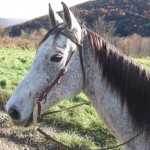
The vet gelded Shadow in May 2003, but the horse continued to grow and grow until he finally reached 16 hands. His color changed too; from black to brown, and then his face and tail turned grey until he became a beautiful grey with a heart shaped dapple on his rump.

One morning the sun flooded the hills with sunbeams as Anne’s three children ate breakfast, gathered their books and left for school. Anne stood at the kitchen window overlooking the pasture watching Shadow. She spotted a coyote running nervously back and forth the length of the fence not far from her horse.

Anne ran outside and shouted, “Get out of here!” She picked up a rock and threw it the coyote, but the coyote didn’t move, it just looked at her without fear. She ran into the pasture, towards the wild animal. The coyote ran a few paces away, stopped, looked back at her and calmly walked away. Anne saw the coyote three or four mornings after that.

“It’s not afraid of humans,” Anne told her husband John.

“Come on Anne. It’s not a coyote – just a stray dog,” replied John.

“I’m sure its stalking Shadow,” said Anne.

“You’re imagining things,” replied John.

A few days later, John came home from work to retrieve a tool he had forgotten and there sat the coyote in the pasture. Again the coyote didn’t run away. The wild animal simply stared at Anne and John as they watched the sly creature.

“I know someone at work with a shot gun. I’ll ask him to stop by tomorrow,” said John climbing into his pick-up truck and returning to work.

John’s friend came with the gun. The two men walked out to the field looking for the coyote but couldn’t find the animal. They circled through the woods and walked back along the fence line, but the coyote was gone and never returned.

A couple of years later, in 2007, the farmer next to Anne’s place mowed paths through his field, leaving the grass high. One morning, after feeding Shadow, Anne stood in the pasture and looked across to her neighbor’s grassy fields. A reddish colored coyote, his nose sniffing the ground as he ran, hunted field mice on the mowed paths. She picked up a rock and threw it at the animal trying to scare it off. The coyote walked to a small hill, sat down and looked at her until finally walking away. Neighbors saw the coyote a few times. The animal hung around an empty trailer for a couple of hours, and then the creature disappeared into the back fields.

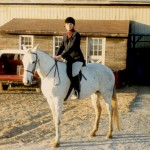
A few more years passed, Anne raised her children, worked for local stables, trained unruly horses, and helped people buy horses. At the same time she trained and rode Shadow. Everyone knew Anne; the horsewoman. In 2009, Anne and her husband bought a house in town. Shadow needed a place to stay, and moved to Ballentine’s Horse Heaven.

Connie knew Anne well. She had trained CJ to saddle in 2007 and helped her purchase several horses. When I showed up in the fall of 2009, Connie asked Anne to help me get acquainted with Pepper. Anne and I rode together that fall, up to the park or down dusty gravel roads near the stable until winter came, and then she quit riding for the season.

Finally, the spring sun shone over the park, warming the dormant roots resting deep in the soil. The tree buds burst open filling branches with leaves which waved in a breeze above the trail. Spring turned into summer. Anne and I decided to take a long ride to the State Game Lands – Number 239.

We crisscrossed roads turning onto Reagan Road near Round Top Stables (formally Rosh’s Stables), crossed Wolcott Hollow Road and picked up Chamberlain Road, a gravel lane near the game lands. The horses walked past a lone house where 2 brothers jumped on a big trampoline. A black lab bounded towards the horses and one of the boys stopped playing to grab the dog by the collar. On the hill behind where the children played stood the back of a large barn with cows grazing nearby.

The horses walked down the lane. Chamberlain Road turned at a gully near the cow pasture and led up a steep hill. Anne started up the hill at a fast gallop and I tried to keep up. Shadow, tall and sleek with his long stride pulled several horse lengths ahead. As Anne raced up the hill she saw an animal which she thought was a deer bounding up the wooded rise alongside the road. Anne thought, ‘A deer is going to cross the road just ahead of us.’ The wild animal nimbly scaled the steep slope, and Anne watched it come closer and closer. Suddenly she realized the creature wasn’t a deer but a full grown mountain lion. The mountain lion leapt onto the roadbed a few yards ahead of Anne, sauntered halfway across the dirt road and froze. Anne stopped Shadow, slowly turned around and headed back down the road.

“Can you tell me what that looks like to you?” said Anne stopping in front of Pepper.

“What? Where?” I said riding closer.

“Right there, next to the ditch, near the bush at the bottom of that small ridge,” Anne said pointing at the edge of the road several yards ahead.

I looked where Anne pointed and saw a large animal with a long catlike tail, slightly curled at the tip.

“It looks like a mountain lion,” I said staring at the animal in the road.

“That’s what I thought. What do you want to do? I don’t feel comfortable riding past it,” she said.

“Why don’t we just turn around and go back the way we came,” I replied still watching the motionless animal at the edge of the road.

“I think we better. The last thing I want is for Shadow to get hurt,” replied Anne watching the mountain lion.

Still, we sat on our horses in the road watching the big cat. The horses stood quietly and the mountain lion didn’t move an inch. The roadway had been cut into the hillside leaving a small ridge just over our heads, perfect for the mountain lion to jump down on us. Finally, the mountain lion slinked into the bushes near the road and disappeared. We turned our horses and walked down the road, glancing back to see if the lion followed us.

“I would never have believed it if I hadn’t seen it with my own eyes,” said Anne.

“I know. Mountain lions aren’t supposed to be in this area,” I replied.

“You know Connie said she saw one not far from here up on the road,” said Anne.

“That’s right. She said it ran right in front of her car when she was on her way to church. She almost hit it,” I said.

“They say mountain lions can stalk you for miles without you knowing it,” said Anne.

“That’s a little unnerving,” I replied.

“Marilyn said she saw one a couple of years ago, crossing the road up at Round Top Park,” said Anne.

I watched the woods looking for any sign of movement; nothing moved. The horses walked, the sun shone and the birds sang. We reached the stables, unsaddled and turned the horses out to pasture without seeing anymore wildlife other than a few turkeys in a field.

Another year passed filled with riding, life, work and family. Neither one of us ever saw the mountain lion again. A few weeks ago, I visited with Anne. We talked horses, looked through her photo album, and I gathered information for this blog. Shadow and Anne are still at Ballentine’s Horse Heaven and ride the trails in Round Top Park.
Posted in Uncategorized | Tagged , , , , , , , | Leave a comment

Brianne Good – Equine Dentist at Ballentine’s Horse Heaven

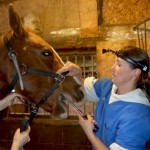
Monday, October 24th 2011, I drove to the barn to help Johnn with the horses; the equine dentist was coming. Not long after I arrived, Donna stepped into the barn, retrieved her brushes and started cleaning mud off Socks. We chatted for awhile then I went into the tack room, got my gear and brushed down Pepper and CJ. It wasn’t long before a tall, young woman pulled her car into the driveway in front of the barn and stepped out. She carried a large pail filled with tools and a solution of water and disinfectant.

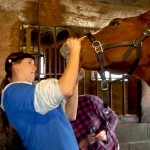
The equine dentist, Brianne Good, grew up owning horses, showing at local 4-H shows as well as riding English and Western at open shows and the Quarter Horse circuit. She attended Morrisville State College in Morrisville NY majoring in Equine Science and Management. In 2005, Brianne apprenticed with Dave Brown an equine dentist, and attended the American School of Equine Dentistry in Ocala, FL. She travels throughout Northeastern US and occasionally as far as California to perform her work. Fortunately for horse owners in Northeastern PA, she lives in Towanda; a short drive from Ballentine’s Horse Heaven.

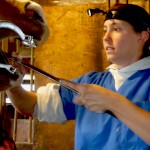
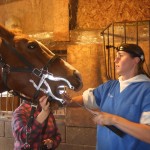
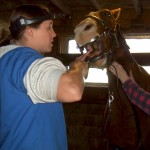
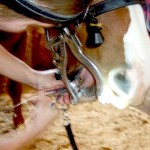
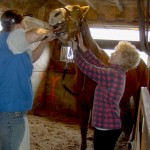
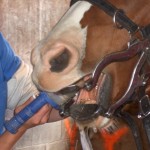
In their stalls, the horses waited to have their teeth floated. Brianne greeted us and started to work. Skillfully, she fitted a strange, heavy metal instrument, much like a bit, into Socks’ mouth. Socks’ incisors rested upon the speculum’s metal plates and a leather strap went around his nose. The speculum prevents the horse from closing his mouth, so the equine dentist can work on the teeth. As she worked, Brianne spoke about horses, bad hay, travels, experiences as an equine dentist, and her profession and training; all of which helped relax the horse.

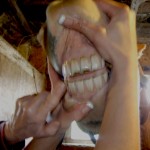
In Brianne’s pail were several files with long handles. These files, called floats are used to file down the rough edges of the horse’s teeth. A horse’s upper jaw is wider than the lower jaw. Their teeth never stop growing, and when a horse eats he grinds his teeth from side to side. This grinding wears down the molars resulting in sharp edges forming on the outside of the upper molars and the inside of the lower molars. To prevent these sharp teeth from cutting into the tongue or cheek they need to be filed annually by the equine dentist or vet.

Brianne rounded the edges off Socks’ molars; then she stopped, stuck her hand deep into his mouth feeling for sharp, rough edges, and started filing again. Socks calmly stood for the procedure much like you would sit in the dentist’s chair sometimes tense but then relaxing and letting the dentist do the work. She took out a tool, a compound rongeur, with a long handle specially shaped to fit over a horse’s canine teeth. After Brianne fitted the tool, she pulled off large chunks of green plaque from Socks’ teeth. Once she finished, off came the speculum and Brianne began filing the outside edges of the incisor teeth. Finally, Socks was ready for the rinse off. Brianne used a water bottle with a long metal tube to flush out tooth matter and plaque loosened during the filing. And that was it, Socks received a clean bill of health from the dentist and Brianne moved on to the next horse.

Last year the vet floated the horse’s teeth and CJ was sedated. No one was sure how CJ would behave. He stood and Brianne floated his teeth, only once moving away from the dentist. I circled him around his stall bringing him back for her to finish filing his teeth, then Brianne moved on to Pepper, Jupiter and Myrtle.

Myrtle, a Belgium, really didn’t want to have her teeth floated, and reared several times protesting the procedure. Brianne stood her ground and continued to work on the huge horse. Johnn held tight to the lead rope, while Donna and I stood out of the way behind the stall gate. Finally, Myrtle’s teeth were rounded, smoothed and rinsed. Brianne packed up her tools and we said good-bye. It will be a whole year before she comes this way again.

For more inromation about Brianne Good her website is BGoodEQDT@yahoo.com.

Posted in Uncategorized | Tagged , | Leave a comment

Connie and Johnn’s Surprise

Connie purchased Pepper on October 9, 2001 from a horse rescue in Litchfield, PA, operated by Marlene Lantz. Marlene’s rescue was associated with The Harness Horse Retirement & Youth Association located in Loganton, PA. Pepper came to Connie thin and covered with sores, but by April she had gained way too much weight and it looked like she was developing a hay belly. Donna Horton offered to hitch Pepper to her cart and work off the excess fat. The two women drove the horse back and forth in front of the stables in an attempt to burn off the extra calories.

On July 11th 2002 at 5 AM Connie stepped outside to retrieve the morning newspaper. A quick glance across the road told her there was something in the pasture. It almost looked like a spotted calf but on closer inspection she realized that Pepper had given birth to a foal. She dashed into the house.

“Johnn, Johnn! Wake up! Pepper just had a baby!” Connie shouted running up-stairs.

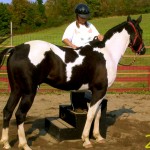
Johnn and Connie rushed to the pasture to see Pepper’s baby. The cute little colt was only a few hours old and tottered on his long legs. The foal followed Pepper into her stall and Johnn made them comfortable. Surprised, they admired the new addition to the farm. In fact, their surprise led to the little black and white painted foal’s name; Connie and Johnn’s Surprise abbreviated to CJ’s Surprise and just CJ for everyday. A few hours later Connie called Donna and told her the news.

For many years questions whirled around Horse Heaven concerning CJ’s sire. Some of the questions were answered a few months ago, but the exact stallion that sired CJ will probably never be known. Pepper had been rescued from an estate in the remote hills of PA near the Ohio border not far from Youngstown. The owner of the estate had many horses, all different breeds even ponies. He had become ill and died leaving the horses abandoned in the pasture. Marlene felt they had been neglected a very long time. She took her trailer, brought back several Standardbreds to her rescue facility, and within 2 or 3 weeks all the horses found new homes. Marlene didn’t own a stallion; so most likely, Pepper was breed at the estate she was rescued from. According to the horse gestation table at cowboyway.com using CJ’s birth date of 7/11/02, Pepper was exposed to a stallion September 2, 2001; about one month before Connie adopted Pepper. Marlene mentioned to Connie that several horses were euthanized at the estate, including a Walking Horse stallion with a bit of color. Perhaps, the dead stallion had been CJ’s sire.

The little colt grew very fast and before long the time came for CJ to be weaned from Pepper. There was only one pasture where the two horses were kept, so separating them proved problematic. Connie loved the little colt too much to ever sell him; however, he had to be weaned. One day Johnn came up with an instant solution. He put Vaseline on Pepper’s utter and CJ immediately stopped nursing. Pepper and CJ stayed in the pasture together; the mother and son bonds never really broken.

CJ’s high energy level prompted Connie to geld him at 6 months. Donna and Tom came over to help Connie and Johnn hold the strong, young colt. The vet administered several sedatives to calm the horse. CJ was gelded standing up with the four people holding tight to the wobbly, half-conscious, struggling colt during the operation.

Warm weather came with May and school started for CJ. Donna Horton began lunging him and worked on leading lessons using a rope halter. The halter work proceeded smoothly, but lunging was a different story. CJ learned quickly that if he crossed the circle and turned towards Donna the lunging stopped. She found it hard to make him behave and stopped for the season when the cooler weather came in late fall.

The trees lost their leaves with the approach of winter as CJ rapidly grew into an exuberant youngster. Then on a dark Christmas Eve in 2003 while Connie dressed for church, Johnn walked in from the barn and told her that CJ had been injured. She ran to the barn and found CJ was oozing blood and an eggy white fluid from a puncture wound near his fetlock.

Frantic, Connie called her vet’s cell phone number. “Robin, you have to come over here right away! CJ injured his leg. He’s oozing blood and looks really bad.”

“Calm down Connie. You’re always calling about every little scrap and cut. I’m sure he’s fine,” replied Robin.

“No this is different. You have to come over right away,” replied Connie.

“I’m at the Mall doing my last minute Christmas shopping but I’ll drop over on my way home,” she replied.

The vet pulled up to Horse Heaven on the frigid December night. Lights shone in the barn and Connie waited for her. When Robin saw CJ’s leg she became as concerned as Connie.

“Here’s your choices – Either you can send him to Cornell and for about $10,000 they can put him back together or let me take him to my barn and I’ll try to save him. He’s leaking synovial joint fluid and it’s serious,” she said.

“Ok, take him to your barn,” said Connie not really wanting to part with the little colt.

Robin pulled her livestock trailer in front of the barn, loaded CJ and drove away headed for her barn. Connie visited CJ often. Her heart broke to see the little colt hooked up to an IV, standing in his stall without windows with the wind and snow blowing in on him. Robin pumped CJ full of antibiotics, cleaned and drained the puncture wound. The colt stayed in his stall, resting, without walking around from December to March. Finally, the vet sent CJ home with a clean bill of health and instructed Connie to keep the horse on glucosamine.

A few months after CJ’s arrival back to fitness and Horse Heaven, Donna began working with him again. She worked with CJ for a couple of years and then stopped. No one at the stables would attempt riding him. The young gelding had too much mischief in him. Connie nicknamed him the “Brat”, Johnn called him a “Pain” and everyone found him annoying. CJ had grown into a restless juvenile trying to bite everything and everyone that walked by his stall. He pawed with his front feet against the stall gate, chewed the stall boards, and head butted his feed pail attached to the wall with a snap, tearing off the pail, sending it flying and crashing into the side of the stall. Finally, Johnn put a wire mesh above his stall gate so the young horse couldn’t bite anyone passing by and bolted the bucket to the wall. Out in the pasture, CJ jumped the fence into Lady’s pasture, and then jumped back again. Donna felt he was calling out for attention, everyone felt he was too rowdy to ride, so he stood in the pasture day in and day out getting into trouble.

Connie really wanted CJ to get a job and go to work. The idea of his becoming a pasture ornament for the rest of his life disturbed her, but she definitely wasn’t ever planning on selling him. Connie wasn’t able to ride him, but maybe a 4-H’er or someone would take him for a few months to their stable; work and show him. She asked her friend Rose Marie if her daughter would be interested in showing CJ. The answers came back no, nobody was interested, no one at Horse Heaven would try getting on him – everyone thought he was too wild and unpredictable. Finally, a young girl from the Binghamton area came down to look him over with the idea of showing him but Connie felt CJ would be too far away. So CJ acted up and ran around the pasture and time passed.

In the spring of 2007, CJ came in from the pasture with a massive hole in his neck. Connie felt the young horse had rolled on a rock in the pasture. Again Connie called her vet to come down to Horse Heaven and take a look at CJ.

“If the puncture wound had been 1/4th to 1/8th of an inch closer it would have ripped open his carotid artery. He would have bleed to death in the pasture. There isn’t anything for me to stitch. I’ll put CJ on antibiotics. You’ll hose down the wound daily and apply Wonder Dust,” said Robin.

In the meantime, Connie hired Anne Shafer to break CJ and Johnn built a round pen. Anne came once or twice a week to work with CJ. The horse became distracted when Connie stood outside the round pen watching so she hid herself behind bushes, snapped pictures and enjoyed watching Anne teach CJ. Anne put a halter on the gelding and rode him bareback. Then she moved to the English saddle letting the horse learn simple commands and feel the weight of a rider. Things went well, and CJ, a quick learner progressed through his lessons. Finally, the time came to put on the Western saddle. Anne stood next to the little painted horse, when suddenly he spooked catching the saddle horn in the wire mesh of the round pen. CJ panicked, ripped off the horn, freeing himself from the fence as the saddle slumped to his side. He calmed down and stood quietly for Anne to fix the saddle and resume the lesson.

Anne enjoyed working with CJ. She realized he was young and needed direction, but CJ was smart and a fast learner. The lessons went well, the only problem Anne had was getting the little gelding to stand at the mounting block. He fidgeted and scooted away as soon as she stepped into the stirrup and sat down. Now that CJ was under saddle, Connie made a final attempt to find someone to ride and show him. The answer still came back “no”. So, Connie gave up, stopped paying Anne to come over and CJ went back out to the pasture as an ornament.

The seasons changed as the earth turned, a couple of years passed before I arrived at Horse Heaven in September of 2009. I signed a lease with Connie and began riding Pepper. The mare hadn’t been ridden for several years, so Anne met me in the barn to help saddle Pepper and show me around, then we rode up to the park. Several times, Anne and I met to ride on crisp autumn days. When we turned the horses out to pasture, CJ walked over to Anne for a neck rub, and then we closed the barn door and went home. Before long most of the leaves fell from the trees to carpet the roadway, the temperature dropped into the 40’s, and Anne pulled Shadow’s shoes for the winter and called it a year.

The winter plunged the thermometer into readings between 25 and 15 degrees. I rode alone through bone chilling cold filled with grey skies, snowy days and days when the clear frigid sky turned the color of Navaho jewelry letting the warm sun beat down on us. The mud in the pasture turned brittle and hard, ice covered places that were once puddles. When I turned Pepper out to pasture, CJ was always waiting for her. He waited by the barn door for Pepper like a little boy needing his mother after a scary nightmare. The gelding walked up to me lowering his head and gave me a big brown eyed look which said, “What about me?”

In February of 2010, I knocked on Connie’s door and asked her, “Would you mind if I work with CJ?”

“I don’t mind. It would be nice to see him used,” she replied.

After I rode Pepper, I spent time with CJ and we became acquainted. Once or twice a week I played with him, took the horse for a walk, let him eat grass, saddled him up, lunged him, brought him to the round pen and rode him. Finally, one spring day I rode CJ out of the round pen and into the larger arena which had turned to grass from disuse. Machines dotted the corners of the outdoor arena, a tarp held down by tires covered hay. CJ walked carefully around the obstacles, raised his head high, tensed his muscles and stopped several times before moving on. After I unsaddled CJ, I brushed him in the arena and let him eat the new green grass.

The weather warmed and the stables came alive with people. Suddenly, I met all the other riders at Horse Heaven; Karen, Marilyn and Donna. One day I bumped into Donna at the barn.

“I can’t believe you’re riding CJ. I’m calling you Wonder Woman,” said Donna.

“I don’t know about that,” I said, appreciating the nickname. “CJ can be a handful, but he’s getting better.”

Marilyn and I rode mornings when the air sparkled, fresh with dew and the sun just began to warm the air. CJ’s turn came to ride out on the trail. He and Sam got along pretty good, so I rode CJ up to the park once a week with Marilyn, sometimes Karen joined us, and other times I rode with Annie or Donna. As long as another horse went with CJ, he was happy to follow along. Sometimes, he became brave and took the lead only to duck behind the other horses when something scared him. Then one day Karen and I hit on the idea of taking CJ and Pepper out together; both horses enjoyed the ride and were much calmer on the wooded trails knowing the other horse was there.

CJ had a few bad habits which were perplexing, even though I knew he was making improvement. He was good once I was in the saddle but his ground manners needed improving. I spoke with Gene Fletcher one day when he came to trim Pepper’s hooves. Gene gave me valuable advice on how to get CJ to stop head butting my arm, violently pulling his front foot away from me while cleaning his hooves, and how to stop him moving away from the mounting block when I swung into the saddle. Everything Gene told me worked and CJ stepped up a grade from being a totally green broke horse.

Little by little CJ improved. Emma and I rode through the fall until she left for language school. 2010 proved to be a very snowy winter, but it didn’t stop Karen, Marilyn and I from riding. CJ went out often. The New Year came and winter gave way to spring and summer. There were changes at the stables; Marilyn sold Sam and stopped riding, and Emma came back from school.

The summer brought heat and sweaty horses. CJ decided one day that he was sweaty, hot and itchy, so he decided to lie down and roll in the tall grass; regardless of the fact that a rider and saddle were on his back. The first time it happened, the horse went down, I stepped off and he stood up. The second time CJ tried rolling, I jumped off, let him know that what he was doing wasn’t allowed and climbed back into the saddle. Since then, I haven’t had a problem with his trying to roll. I have a new policy; no eating grass while I’m in the saddle.

I’ve ridden CJ a few times alone, without the company of his pasture mates. At those times, as would be expected, he felt threatened without the other horses for protection. He stopped and stood perfectly still, head up, ears pointed forward looking down the road. I gently urged him forward but he seemed to need time to familiarize himself with his surroundings, then he would move on until again he stopped and stared down the road. It was slow going. He didn’t spook or bolt or runaway or buck or rear; he just froze. The next step in his training will be riding down the trail alone, but for now CJ generally treks with his buddies.

CJ has traveled a long way from the young, wild horse running and jumping in the pasture all day munching grass. The little rascal has found a job and although still considered a green broke horse, he has a promising future on the trails at Round Top.

Posted in Uncategorized | Tagged , , , | 1 Comment

Flood Along the Susquahanna – 2011

“We’re supposed to get a lot of rain,” said Emma turning off her computer.

“Well, what’s a little rain?” We’ll be driving anyway,” I said.

It was Wednesday in the early evening of September 7, 2011. I stepped into the car, turned on the engine and began driving through Albany traffic headed for Highway 88 and Waverly. It had rained hard the day before and periodically rain hit the windshield as I drove.

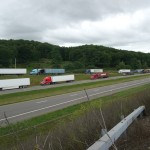
Darkness fell and we still had a long way to go. After hours on the road, we approached Otego. We were getting close to Binghamton; it wouldn’t be much further. Then a few miles down the highway, we came to a road block and a large detour sign. I swung the car around following enormous semi-trailer trucks and other vehicles proceeding in a narrow line exiting the highway. The rain drummed hard on the asphalt and gloom filled the night.

“I’m just going to stop here for gas,” I said pulling the car into a service station.

I filled the tank and walked inside to pay the lady behind the counter. “Where does the detour lead to in Binghamton?” I asked.

“The detour doesn’t go to Binghamton. It’s just directing you back to Albany. 88’s washed out. You can’t get through. Where in Binghamton are you trying to go?” she asked.

“Actually, I’m trying to get to Waverly,” I replied.

“Well, go up that hill, when you get to the top of the hill keep right until you come to Colesville Road that will take you to Binghamton,” she said.

“Thanks,” I said.

I walked out of the warm filling station and looked up the road. Cars and trucks were everywhere. Sheets of rain kept falling; I sat down behind the wheel and turned toward the dark country road, following several other vehicles up the hill and into the murky night. It was too dim to read the street signs but I followed the other cars until I saw another gas station. I pulled into the station to find out where I was. Lots of other drivers were there for the same reason; many large trucks were parked alongside the road. I climbed out of the car and waited as the station manager gave directions to a man holding a map.

“Can you tell me how to get to Binghamton?” I asked the man.

“Where are you trying to go?” he asked.

“Actually, I’m trying to get past Binghamton to Waverly,” I replied.

“You won’t make it. The highway at Owego is underwater,” he said.

“Well, how can I get to Binghamton?” I asked again.

He pointed into the night and said, “Follow that road to the four-way intersection, turn right and keep going. You’ll end up at Highway 86, take that until you get to Binghamton, but you can’t get through to Waverly. The highway’s flooded in Owego.”

“Ok, thanks,” I replied.

We changed drivers and Emma took the wheel. She slowly pulled the automobile out of the station and turned towards the narrow winding road leading up a steep hill sticking close to a tractor trailer headed in the same direction. Our car became part of a long procession of trucks and a few cars. The cars and trucks creep over the rise finally coming to an entrance on Highway 86, the Southern Tier Expressway. Emma steered onto the highway and we made our way through Binghamton. The windshield wipers had a hard time keeping up with the falling rain. Emma strained to see the road. Rainwater made the road slick but it wasn’t flooded.

“The man said we won’t get through Owego. It’s flooded,” I said.

“What should we do?” she asked.

“Just keep going, hopefully there is a detour around Owego,” I replied.

As we left Binghamton near Vestal we noticed an exit ramp closed and deep water on the street below. We drove past Owego. I looked out the window. Water lapped at the riverbank but not close enough to cross the highway. Owego wasn’t flooded. On and on we drove, passed Lounsberry and Nichols. The bright lights still shone at Tioga Downs Casino and Raceway. A little bit up the road from the Racetrack, the road passed around and up a steep grade, an embankment stood on the opposite side of the highway.

I noticed that a car up ahead had its hazard lights on and said, “I think there might be something up ahead.”

Emma flipped on her hazards and slowed down. Rain gushed from the sky with a wild fury as the windshield fogged. Several trucks surrounded us. All of a sudden our car hit a stream of water which crossed both sides of the highway. On the upper portion of the expressway, in the opposite direction, trucks pulled onto the roadside. An emergency vehicle flashed red and orange lights. Meanwhile, a tractor-trailer truck zipped past us almost hitting our vehicle. The truck hit the stream with great force, creating a massive wave of dirty water which engulfed our car, blackening out everything. Emma couldn’t see and came to a complete stop as a big truck behind us blasted his horn.

“Can you keep going?” I asked thinking that the car’s engine was flooded and we were stalled.

“Yes,” she replied and pulled the car out of the water. We continued down the highway. “I thought we were sinking into the water and would float down to the river.”

“I’m glad we didn’t,” I replied. “I thought the water entered the engine block.”

On we drove exiting the freeway at Waverly, turning on to Broad Street and finally into our driveway. The hour was late and we were tired. After getting a bite to eat we turned in for the night, glad that we hadn’t become a statistic on the highway’s death toll list.

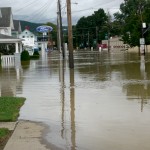
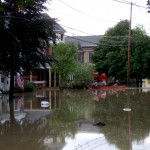
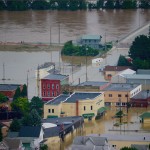
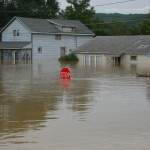
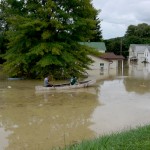
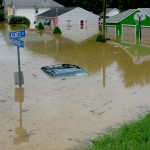
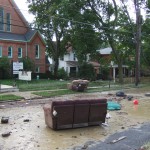
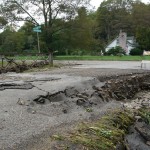
As we slept, Tropical Storm Lee created havoc on the banks of the Susquehanna resulting in hundreds of people fleeing to emergency shelters to wait out the flood. The next morning, the news spread and we drove down to Athens and Sayre to see for ourselves. We looked down from the overpass above Highway 86. The Binghamton exit and entrance were closed. The highway from Waverly to Binghamton was flooded. A long line of trucks were parked along the highway unable to go any further. When we arrived in Athens; people milled around, rescue boats floated on the flood waters looking for stranded people, and canoeist paddled up the watery streets to look at their flooded homes. The Sayre and Athens bridges were closed, water lapping at their entrances. A search and rescue helicopter circled over head. Garbage bags, furniture and submerged cars filled the brown putrid waters. The air smelled of petroleum and raw sewage.

Friday, Emma and I drove up to see how Horse Heaven had made out during the flood. The barn is on high ground quite a ways from the river; however, many small creeks wind down from the mountain seeking the Susquehanna. Murray Creek had flooded across the road below the stables taking some of the road with it and leaving rubble behind. A road grader pushed rocks and mud off the street as we drove by on our way to the barn.

When we arrived at the stables I found Johnn in his office and asked, “How did you make out in the flood?”

“We didn’t get any water. We’re too high,” he said.

“The creek below here must have flooded at one point,” I said.

“I heard it did,” he said. “When we get a lot of runoff debris piles up in the culvert under the road and creates a dam then water comes up over the road and washes it away.”

Emma and I brought CJ and Pepper in from the pasture, brushed them down and saddled up for our ride. We rode on Pump Station Hill Road and turned into the woods on the southside of the park, traveling up a steep trail hugging the ridge. There wasn’t much sign of flooding other than a lot of rocks and some deep ruts cut by fast moving water down the middle of the trail. The path was a little muddy but not bad considering how much water must have run over the ground a few days before.

Noise filled the woods.“It sounds like there’s a lot of movement in the woods today,” I said.

“I bet animals like groundhogs and rabbits had their burrows flooded,” replied Emma.

The trail crossed the telephone/power line access road and the horses continued to wind their way through the woods. We came around to a path that skirts the eastside of the park, when our way was impeded by a massive tree. The tall maple had landed in the crown of another big tree and hung suspended about 3 or 4 feet off the ground completely blocking the trail.

“Let’s try going around through the woods,” I said.

“Ok,” said Emma reining Pepper into the forest looking for a way through the trees.

The bushes obstructed our way and CJ became nervous. Emma turned around, “I don’t see a way through…maybe the other side,” she said.

I looked at the other side and said, “I don’t think CJ is going to make it through there either. Why don’t we turn around?”

“Ok,” said Emma turning Pepper and heading back down the trail.

We came again to the telephone poles and the grassy access road, “Let’s take a short cut and double back passed the abandoned house,” I said.

We turned the horses around and headed down the hill. Suddenly, a deer bolted out of the forest, bounded through the grass a few feet ahead of us and disappeared behind some bushes as the rest of the herd ran through the woods. CJ shied wanting to head back up the hill, then the horses stood motionless, picking up their heads listening to sounds we couldn’t hear. We waited a few minutes before riding on.

At the bottom of the hill, an enormous bull Hereford with a massive neck stood perfectly still under a tree observing our approach. The horses returned the bull’s stare as we walked onto the road that passed the old homestead. CJ and Pepper walked gingerly crossing in front of the bull which stood motionless several yards away. We kept our eyes on the animal when another big Hereford came into view several feet behind the bull.

An uneasy feeling gripped me and I said, “I think we should get out of here fast. Are you ok cantering up the hill?”

“Sure,” said Emma as the two horses took off up the road.

A canter turned into a dead run. I glanced back over my shoulder and saw the bull running across the field, parallel to the road. The animal didn’t appear to be headed towards us but we didn’t take any chances. The horses ran to the hilltop where the gravel road crossed a trail through the woods and we slowed to a walk.

“I don’t think he’ll come into the woods,” I said looking back down the road for the bull.

“Where do you think he came from?” asked Emma.

“I don’t know. Maybe his corral flooded and he broke loose,” I said.

We rode about a mile and stopped the horses at an overlook. Sayre and Athens looked strange with so many houses and streets filled with water. We turned for home and put the horses out to pasture. A few days later a picture of the bull appeared in the local paper. The bull made it to the top of Round Top Park ate grass amongst the slides and swings until his owner came to claim him.

A day or so later, Donna and I rode up Weaver Road headed for the park. I told her our experience the night of the flood, the truck and the deep water on the road.

“That was a close call. Once I was driving in PA on a road which had reservoirs on both sides. It rained heavily and the reservoirs flooded across the road. A tractor-trailer truck drove through the water. The driver thought that it wasn’t very deep. The truck completely disappeared and the driver was never found,” she said.

“What!” I said.

“A sinkhole had opened up under the road connecting the two reservoirs. The truck driver couldn’t see it from the road. The water didn’t look that deep, but when he drove his truck into the water; he hit the sinkhole and disappeared. They never found the driver or the truck,” she said.

We rode to the overlook expecting to view the flood waters in Athens, but to our surprise all of the water had disappeared. The river which had risen to more than 25 feet had receded but the damage was far from gone. Not only were Athens and Sayre flooded, every town between Waverly and Binghamton flooded as well. President Obama declared the area a national disaster area, FEMA came to help, the clean up would cost millions and the damage could last for years.

Posted in Uncategorized | Tagged , , , , , , | 4 Comments

Salty Gray Lady – Memories of a Fine Horse

Salty Gray Lady was born May 28, 1980, a registered Quarter Horse, in Davidson, Oklahoma to an owner named Randal Speck. When she was two years old on June 19, 1982 Mr. Sears from Texas bought her, trained her and sold her two years later to Ralph Oldham from Sulphur Springs, Texas. It is unclear how Lady got to the Syracuse Equine Sales, where Rodney Jaynes, a horse dealer from Beaver Dam, NY, bought her. She was seven years old. On a warm day in May of 1987, a sale was completed and Donna Horton came into Salty Gray Lady’s life. From that point on, the horse never knew another owner; Lady stayed with Donna until the day she died.

A truck turned into the farm’s driveway in North Ghent, PA. Donna backed Lady out of the trailer and turned her loose in the pasture. The horse stayed at her parent’s farm for several years until Donna joined Roshs’ Stables on Wolcott Hollow Road. Donna had another horse she stabled there as well, Ember, a registered half Arab. The State Game Lands #239 located just across the road from the stables provided a great place to ride. The game lands rested on top of a large hill nestled between open pastures dotted with hedgerows and farm houses on the periphery. The wild remote countryside teeming with wildlife offered Donna and her good friend, Tom, a beautiful place to ride on pleasant sunny days. Donna rode Ember and Tom, nicknamed Sugarfoot, rode Lady.

Tom and Donna enjoyed the thrill of dashing across the countryside, racing each other on horseback at full speed. Ember always won. One day they raced along the edge of a huge open field. Ember pulled ahead by five lengths when a long branch appeared ahead of Donna. She ducked under holding close to the saddle and shouted back to Tom “duck”. He bent but not far enough. When they stopped and looked back at the branch it was violently swaying in the air. They laughed as the summer sun traveled lower in the sky. Tom wasn’t hurt so on they rode enjoying the rest of the day.

Another time, they rode to the game lands, stopped at a grassy expanse and sat in their saddles while the horses nibbled on long lush, grass. Tom rested his arms across the saddle’s horn admiring the scenery. Unbeknownst to Tom, Lady stepped through the reins; finding herself trapped she flung her head upward pulling off her bridle. Donna informed Tom that he was sitting on a bridleless horse. He sprung off Lady, threw his arms around her neck and retrieved the bridle. Luckily, the horse stood quietly for Tom to bridle her without running back to the barn.

Fall brought displays of brilliant color and cooler weather. The woods were alive with animals and near twin ponds in the game lands Tom and Donna rested for a moment. Lady was nervous. In the pond an enormous bass jumped into the air, grabbed a bug and fell back into the water with a huge crack and a splash landing on its side. Startled, Lady jumped forward over a 4 foot evergreen tree, pulled up short and spun around headed towards the barn. Tom reined her in, she relaxed and they rode on.

When the Roshs sold the stables, new management came in 1995 and the place was renamed Round Top Stables. Donna felt it was time to move on and took her horses to Ballentine’s Horse Heaven a few miles down the road. Tom and Donna continued riding together on the gravel roads and trails at Round Top Park.

Within a few days of each other, in May of 2003, the farrier shod Lady and the vet administered shots and floated her teeth. Days later, the horse developed a mysterious illness. Lady couldn’t move. She stood in one position for about 3 or 4 days and ate very little. Her feet appeared cemented to the floor. Donna called the vet, Elaine Johnson, who examined the horse but had no idea what was wrong with her. Elaine prescribed Banamine twice a day. Banamine contains a potent anti-inflammatory drug, Flunixin meglumine, which reduces lameness and swelling in horses. Donna injected Lady early in the morning and in the evenings. After a week she began to see results. A small movement, Lady shuffled her feet sideways. Donna looked down at the deep indentations left by the hooves in the sawdust. Gradually, the horse’s muscles loosened up and she began to walk but refused to go outside. Donna led the horse up and down the road, encouraging her to walk and return to the pasture.

A year later, Donna received a telephone call from Johnn at Horse Heaven. Ember had colic. He rolled in the pasture during the night twisting his intestines. The horse stood in his stall in great pain. Donna called the vet but by the time he came it was too late, there was nothing the vet could do for the old horse. The vet euthanized Ember. He was 26. Lady’s good friend and pasture buddy was gone. The days passed and Donna bought a new horse, Socks, from a friend at the stables.

Lady was ridden for a year or two after Ember’s death until 2005. Her body began to show signs of age. Too frail to carry any weight, swayback and thin, she spent her days in the pasture, until one day she developed severe arthritis. Lady’s stiff joints made it hard for her to move. She had trouble lying with her legs tucked under her. Lady lay down stretched out on her side, and when she tried to regain her feet to stand up she had great difficulty. Often she would bang her head against the stall. Her knees and hocks suffered abrasions from struggling to get up. Donna duck taped bandages on the scrapes and cuts. Lady’s pain and suffering made her feel she should euthanize the horse. Donna called the vet, Andy Wilcox, from Laurel Hill Veterinary Service in East Smithfield. Andy suggested that she use a compound called Cosequin with glucosamine, chondroitin and MSM to repair cartilage damage and fight osteoarthritis. Donna mixed the compound into Lady’s grain and within 7 days noticed a significant improvement. The horse moved with less effort and before long Lady regained her feet from a laying position without staggering and hurting herself. She tucked her legs under when resting without pain.

The next year, Lady developed Choke. Choke occurs when a horse gulps down food or eats very fine or dry food that becomes lodged in the esophagus. The muscles in a horses’ gullet which move food from the mouth to the stomach can’t move the jammed mass. The food soaks up lubricating secretions from the lining of the esophagus causing the gullet to dry out. Again, Donna called the vet from Laurel Hill. He sedated Lady, passed a tube down her esophagus eliminating the blockage and the horse recovered.

The years passed one after another. Lady spent her days with the new horse, Socks, grazing in the pasture or resting in her stall. The excitement of dashing through open fields or traversing wooded terrain were gone, however, Horse Heaven provided a quiet retirement home for the old horse.

On August 19, 2011, Donna whistled to Socks and of course Lady came in too. She put the horses in their stalls, tossed a cookie treat in Lady’s pail and began grooming Socks. Donna saddled Socks for an evening ride when she noticed that Lady was having trouble swallowing. Lady put her head down to the ground between her hooves. She pawed hard in the sawdust, coughed and a green discharge oozed from her lips. Lady’s coat was covered in sweat. Donna knew the signs of Choke and began to worry.

Karen and I turned at Murray Creek Road and headed for the barn to unsaddle our horses after our ride through the park. We put our equipment into the tack room next to Socks’s stall. Donna’s horse was saddled. She had her helmet on ready to leave for her ride, but lingered next to Lady’s stall.
“I’m concerned about Lady. I think she has Choke, “said Donna.

Karen and I walked over to the horse’s stall. Lady’s breathing was labored. She stretched out her neck, a green thick liquid ran out of her nostrils, occasionally she coughed and restlessly moved around her stall.

Karen turned to me and said, “I’m going to stay with Donna. Maybe I can help.”

“Ok, I’ll stay too,” I replied. I thought to myself, ‘I hope I’m not going to be underfoot.’

“I think I better call the vet,” said Donna. “Lady doesn’t look like she is getting any better.”

It was Friday night and the vet was paged. The sky we saw through the big barn doors gradually turned from dark blue to black. Lady still couldn’t swallow and stood with her head hung, downcast and solemn. We waited as the vet traveled through the lonely countryside on narrow back roads to reach the stables. Finally, we heard a truck pull into the driveway and a tall man in blue coveralls came into the barn. He carried a black bag, pails and other equipment.
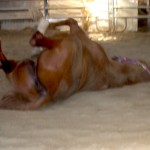
The vet took out his stethoscope and listened to Lady’s heart. “She has a heart murmur,” he said turning towards Donna. “It’s possible she might have colic.”

“I’m sure its Choke. She had the same thing about 5 years ago,” replied Donna.

The vet ran his hand down Lady’s neck and said, “She has a weak heart. A sedative could kill her, to be on the safe side I would run the tube without a sedative.”

Lady coughed trying to rid the blockage and Donna replied, “Do whatever you think is best.”

“I’ll need someone to hold the pail and the pump,” he said taking out a long clear plastic tube about 3/4th of an inch thick.

“I’ll help you with that,” said Karen. “I’m a nurse at the hospital and have helped with esophageal dilatation on patients.”

“We’ll need two people, one to pump and the other to hold the pail. Is there somewhere to get water? We’ll need to fill the pail about half full,” he replied handing Karen the pail.

“Sure,” she said taking the pail and walking to the bathroom near the tack room.

Donna stood in Lady’s stall holding the lead rope. Karen hurried back with the pail of water and the vet placed a hand pump in the pail. I held the pail and Karen held the pump. The vet gripped the tip of Lady’s nose and slowly feed the long tube down her nostril and into her esophagus feeling with his hand along her neck for the tube’s passage. Finally, the tube came to a stop at the blockage.

“Get ready to pump when I tell you,” he said blowing air into the tube. He paused and felt the horse’s neck. Again he blew air into the tube hoping to dislodge the obstruction. “Ok, pump the water.”

Karen used the hand pump while I held the pail. The pump was hard to push so we took turns pumping. Periodically, we stopped and waited as the vet blew more air into the tube or adjusted the tube’s connection on the pump. Donna held tight to Lady’s halter so the horse wouldn’t move. The process was slow and calculated but finally the food stuck in Lady’s esophagus was freed and passed into her stomach.

Suddenly, Lady had had enough and tried to bolt out of her stall. With the tube hanging from her nostril, the horse tried to push by the vet and escape into the safety of her pasture. Karen, Donna and I held tight to Lady’s halter in an attempt to stop and return the horse back to her stall. In a panic, Lady hit her head hard against a support beam and blood smeared against the wall.

Finally, she calmed down and the vet removed the tube. Blood oozed from her nostril and her breathing was raspy. Donna put Lady back in her stall, but the horse hung her head. Lady stood quietly as blood continued to drip from her nostril. Then to our surprise, Lady collapsed. The vet bent over Lady, took hold of her lead rope and tried to get the horse to stand up. Lady couldn’t stand.

After a few minutes, Donna realized Lady won’t be getting up. “It’s ok. I don’t want to see her suffer any more. Just put her to sleep,” said Donna.

The vet looked away from the horse and said, “Are you sure?”

“Yes, I’m sure,” replied Donna.

The vet walked out of the stall and retrieved his black bag filled with medications and equipment. He filled a small needle with a sedative and a huge needle with a clear liquid. As we watched, he injected the substances into a vein in lady’s neck. Instantly, Lady’s head fell back and she was dead. Without warning an instant later, the horse jerked her body straight up lifting her head and clamoring to her front feet.

“Get out of there!” Donna shouted as Lady jolted forward toward the vet holding the lead rope.

Then as suddenly as she had lifted herself, Lady fell back against the wall of her stall. The barn filled with a solemn quiet and the incandescent light bulbs cast everything in a soft yellow light.

“When she rose up I thought she had her fill of us and was seeking her revenge,” said Donna visibly shaken.

“She wasn’t really alive at that point. It’s a reflex, a reaction, which happens as the horse takes its last breath of air. I didn’t think she was strong enough to rise up or I would have given her a stronger sedative,” explained the vet.

Socks, Lady’s pasture mate, came to the barn gate and briefly looked in at Lady lying on the ground. He retreated to the outside corner of the pasture and began to whinny and whinny and won’t stop.

“Socks come here boy,” called Donna but the horse won’t come.

“Does he stay in the same pasture with Lady,” asked the vet as he gathered his equipment.

“Yes,” replied Donna looking out into the pasture.

“I’d keep an eye on him for a few days and make sure he’s ok. Horses can be pretty attached to one another,” he said.

The vet packed his equipment, loaded his truck and drove away. The three of us stood watching the dead horse lying up against the stall wall where she had fallen, one leg reaching forward as if she was trying to stand.

“I’m just going to move her leg. It looks so awkward and uncomfortable,” said Karen entering the stall.

She gently picked up Lady’s bent leg and dislodged the hoof, which was wedged in a weird angle on the ground. Karen tenderly pulled the stiff leg forward and brought it to a resting position beside the horse.

She looked down at the horse and turned to Donna, “Do you have something to cover Lady with. I hate to just leave her lie there.”

“Yes, I have a couple of blankets in the tack room which I cover my saddles with,” replied Donna.

Donna disappeared into the tack room for a few minutes and came back with the blankets. She and Karen gently spread one blanket at a time over the dead horse until Lady disappeared. The soft bedding hid the horse except for the tip of her nose. We left her body in the stall, turned off the barn lights and walked outside. The stars shone in the darkness and hundreds of crickets chirped as we climbed into our cars and drove away.

The next day, Donna called Sol Isenberg on Beaver Dam Road. He agreed to come to Horse Heaven with his backhoe and dig a grave. Johnn struggled to remove Lady’s stiff body from the stall. Sol came at 7 PM that evening with his backhoe and dug a deep pit in the pasture behind the barn. They lowered Lady into the hole. Rich brown earth was pushed into the hole to cover the horse and fill the abyss until Lady completing disappeared. The only thing visible was a gigantic mound of fresh dirt which hid the 31 year old horse.

Donna came and put flowers on the grave in memory of a fine horse. She stood for a moment and thought about Lady. She had been a good horse. At times feisty, she liked to prance and shake her head, but she had never bucked, reared, never kicked or bit. Donna turned away from the grave taking her memories with her. Sometime later, Socks and Niche, Lady’s pasture buddies, sniffed the fresh earth, ate the flowers and walked away to find greener grass.

Posted in Uncategorized | Tagged , , , , | 2 Comments